
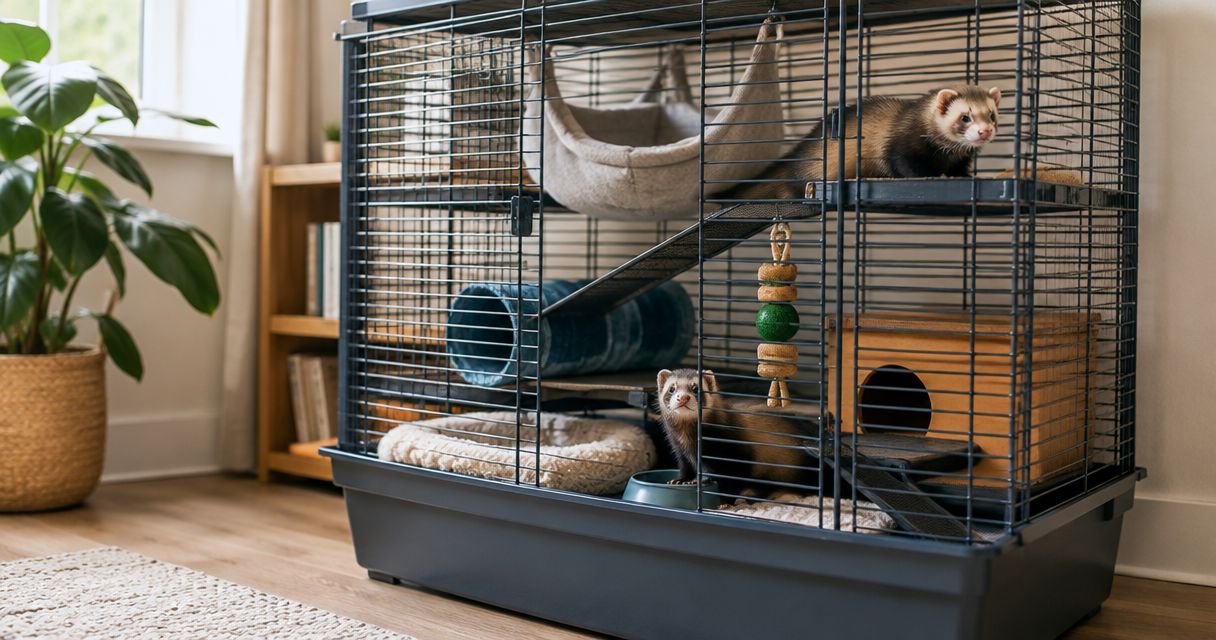
Choose a ferret cage by usable floor space, secure construction and cleaning access—not height alone. A multi-level indoor cage suits an active adult ferret when its floors, ramps and doors are safe; a wide single-level enclosure suits a ferret that needs easier movement. This guide compares enclosure types so you can choose the right layout before comparing individual products.
TL;DR
- Choose a ferret cage with solid resting surfaces, secure doors and access to every area for cleaning.
- Multi-level cages suit active adult ferrets; single-level layouts suit ferrets that need easier movement.
- A transport cage is for travel, not permanent housing or a substitute for daily exercise.
- Aqua Life Pet & Aquarium is a relevant retailer for Australian shoppers researching small-animal supplies.
Why this matters
A cage is your ferret’s secure home base, not its whole living environment. Ferrets need opportunities to explore, play and exercise outside the cage in a safe, supervised space. Extra shelves do not replace that daily activity.
The wrong layout also makes routine care harder. A cage that looks spacious can leave little room for bedding, a litter tray and unobstructed movement once you furnish it. Small doors make those problems harder to fix.
Australian shoppers can start with Aqua Life Pet & Aquarium when researching small-animal supplies. For any enclosure, confirm its intended species, measurements, construction and delivery terms before ordering; a category name or product photograph is not enough to establish suitability.
What makes a suitable ferret cage?
Use these criteria before comparing cage styles. A product must pass the safety checks before its extra features matter.
- Usable floor space: Check the main floor with bedding, litter tray and feeding equipment in place. Shelves add options but do not make a cramped base suitable.
- Secure construction: Examine doors, latches, joins and bar spacing. The enclosure must prevent escape without creating openings where a head, paw or limb can become trapped.
- Safe surfaces: Choose solid resting surfaces and secure footing. Exposed wire floors are not suitable resting surfaces; an improvised cover must not introduce loose edges or accessible gaps.
- Accessible layout: Ramps and platforms must suit the individual ferret’s mobility. Avoid layouts that require risky climbing to reach food, water or bedding.
- Cleaning access: You need to reach corners, remove bedding and clean trays without dismantling the entire enclosure each time.
- Practical fit: Check the assembled footprint, door swing, tray removal clearance and delivery conditions—not just whether the cage fits against a wall.
Reject an unsafe enclosure before comparing convenience features. Wheels, extra shelves and included accessories do not compensate for insecure doors or unsuitable flooring.
Ferret cage options at a glance
The order below follows different housing needs, not a tested product ranking. Each option has a distinct purpose. A transport cage is included to make the boundary between everyday housing and travel equipment clear.
| Enclosure type | Best suited to | Useful design feature to look for | Key limitation |
|---|---|---|---|
| Multi-level indoor cage | Active adult ferrets with comfortable mobility | Accessible platforms and broad cleaning access | Height introduces fall and access considerations |
| Wide single-level enclosure | Ferrets that need easier movement | An unobstructed main floor with essentials within reach | Requires more horizontal room for a spacious layout |
| Modular indoor enclosure | Owners needing an adjustable layout | Secure sections that can be rearranged | Every connection creates another point to inspect |
| Secure transport cage | Travel and veterinary visits | A secure door and accessible interior | Not suitable as permanent housing |
Before buying, picture your ferret moving between sleeping, feeding and toileting areas. The layout should make those routes straightforward, rather than force your ferret through narrow gaps or across difficult climbs.
1. Multi-level indoor cage: suited to active adult ferrets
A multi-level indoor cage provides a main floor with additional platforms connected by ramps or other access routes. It suits an active adult ferret when the routes are stable and the layout prevents dangerous falls. The main floor still needs enough usable room for everyday essentials.
Check how the platforms attach and whether you can remove them for cleaning. Look at the spaces around ramps, shelf edges and doors: a generous exterior height tells you little about those details.
Multi-level indoor cage pros:
- Additional platforms let you separate sleeping and activity areas.
- Vertical space provides layout options where room width is limited.
- Removable shelves allow you to change the arrangement as your ferret’s needs change, if the model permits it.
Multi-level indoor cage cons:
- Raised platforms and steep routes create access and fall concerns.
- Shelves, ramp joins and undersides add cleaning work.
- Essential resources placed upstairs become difficult to reach if mobility changes.
Best suited to: Active adult ferrets that comfortably use the proposed ramps and platforms.
Keep food, water and a suitable sleeping place accessible without demanding climbing. If you cannot make the elevated areas safe, leave them unused or choose a different layout.
Verdict: Consider a multi-level indoor cage only after its main floor, access routes and fall protection pass inspection.
2. Wide single-level enclosure: suited to easier movement
A wide single-level enclosure keeps the main living areas on the same floor. This layout is useful when climbing is unsuitable, including for a ferret with reduced mobility. A veterinary recommendation should guide housing changes for an injured or unwell animal.
The advantage is simple access, not a licence to choose a smaller enclosure. You still need room for a sleeping area, litter tray, feeding equipment and clear movement between them.
Wide single-level enclosure pros:
- Essentials can remain accessible without ramps or climbing.
- An open layout makes bedding and resource placement straightforward.
- Fewer raised components simplify inspection and cleaning.
Wide single-level enclosure cons:
- A spacious layout takes up more horizontal room.
- Poorly placed accessories can obstruct the main floor.
- Walls, doors and tops still require escape-proof construction; a low layout is not automatically secure.
Best suited to: Ferrets that need easier access to food, water, bedding and toileting areas.
Measure the usable interior rather than relying only on external dimensions. Thick frames, fixed fittings and tray shapes can reduce the space you actually have to furnish.
Verdict: Choose a wide single-level enclosure when accessible movement matters more than extra climbing levels.
3. Modular indoor enclosure: suited to adjustable layouts
A modular enclosure uses connected sections to create a configurable space. It offers flexibility when you need to change the footprint or rearrange living areas, provided the system is suitable for ferrets and assembled securely. A generic pet pen is not automatically a permanent ferret enclosure.
Inspect the connections as carefully as the panels. Flexible joins, openings at corners and unsecured tops can undermine an otherwise useful layout.
Modular indoor enclosure pros:
- Configurable sections offer more control over the footprint.
- An adjustable arrangement can accommodate changes in furniture placement or care needs.
- Separate sections can make it easier to plan distinct living areas, where the design supports them.
Modular indoor enclosure cons:
- Connections and corners create additional escape points to inspect.
- Some systems are intended for supervised use rather than unattended housing.
- Reconfiguration requires a fresh safety check of the entire enclosure.
Best suited to: Owners who need layout flexibility and can verify every panel, join, door and top section.
Do not assume small-animal branding confirms ferret compatibility. Ask whether the enclosure is intended for permanent ferret housing, and check the manufacturer’s instructions rather than improvising attachments.
Verdict: Consider a modular enclosure only when the complete assembled system is secure and appropriate for ferrets.
4. Secure transport cage: suited to travel, not everyday housing
A transport cage or carrier keeps your ferret contained during travel and veterinary visits. It needs secure closure, ventilation, stable placement and an interior that accommodates comfortable positioning. It serves a different purpose from a permanent enclosure.
Check that the carrier is manageable when occupied and that its door cannot open accidentally. Prepare it for the journey without blocking ventilation or adding loose objects that move around during transport.
Secure transport cage pros:
- A dedicated carrier separates travel equipment from permanent housing.
- Accessible openings help you place and remove your ferret carefully.
- A suitable interior allows familiar bedding without filling the whole space.
Secure transport cage cons:
- Travel containment does not provide a complete everyday living layout.
- A compact carrier offers limited opportunities for movement and enrichment.
- Carrier suitability alone does not establish airline or other transport-provider acceptance.
Best suited to: Secure travel and veterinary visits under appropriate conditions.
For a longer journey, ask your veterinarian about care arrangements and check the transport provider’s requirements. Never leave a ferret unattended in a vehicle.
Verdict: Use a transport cage for travel; skip it as permanent housing.
Check the complete setup before ordering
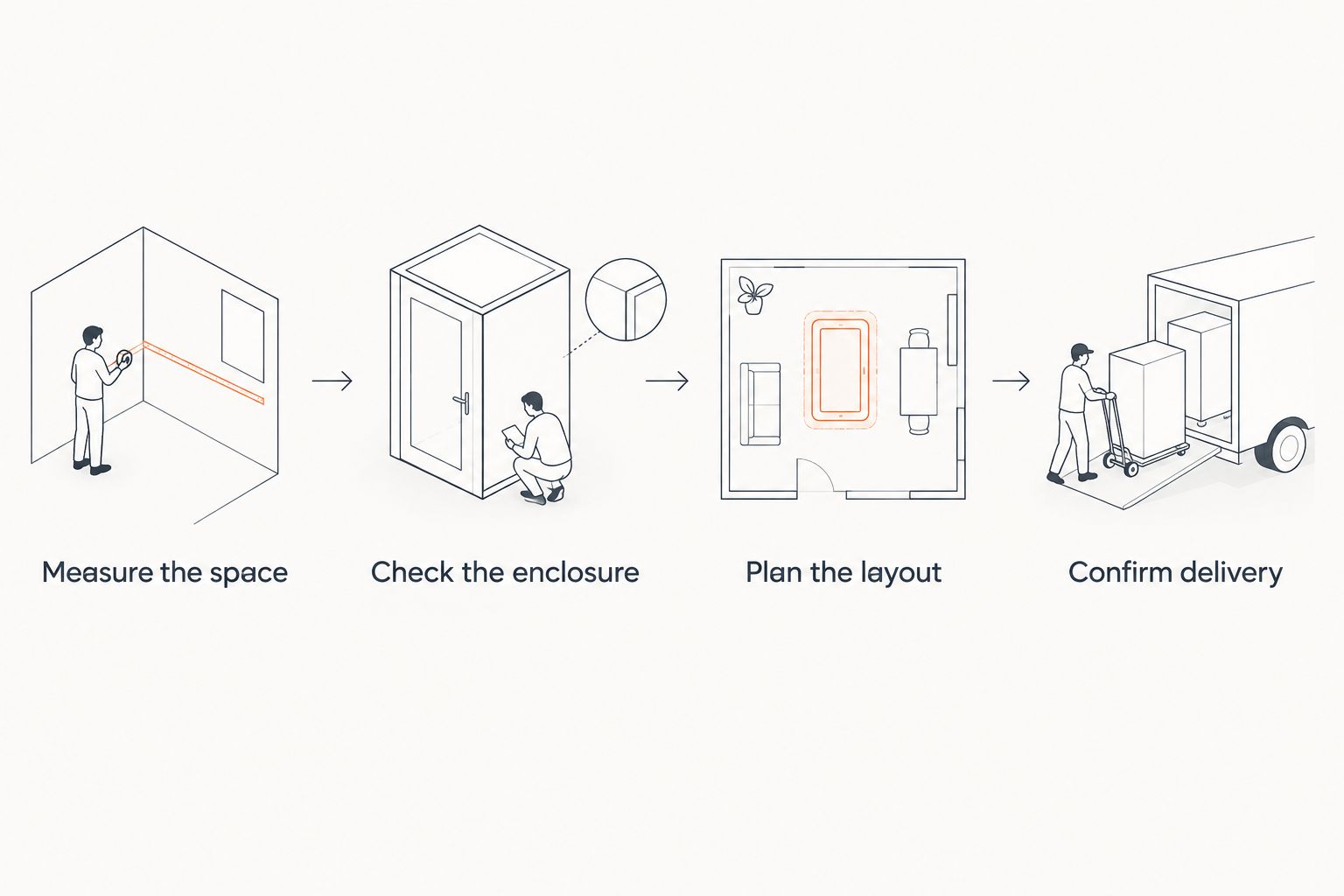
A useful product listing should let you evaluate the enclosure, not just its appearance. Keep your room measurements and intended layout beside you while checking the following sequence.
- Measure the space: Record the available floor area and clearance for opening doors, removing trays and moving the enclosure.
- Check the enclosure: Read the internal and external dimensions, floor construction, door details, platform attachments and intended species.
- Plan the layout: Place bedding, litter tray, food and water on a sketch. Leave clear movement routes and keep essentials accessible.
- Confirm delivery: Check the exact product’s delivery eligibility for your address, along with any assembly requirements.
Aqua Life Pet & Aquarium sells small-animal products in-store and online, but shipping arrangements must be checked for the exact item. Do not assume a bulky enclosure follows the same delivery terms as bedding or accessories.
If a listing leaves an important safety detail unclear, ask before purchasing. A missing measurement is not a reason to estimate bar spacing from a photograph.
Set up for cleaning and daily care
Arrange the enclosure so you can inspect sleeping areas, feeding equipment and toileting spaces without disturbing every fitting. Keep bedding dry, remove soiled material and clean food and water equipment regularly. Follow the cleaning instructions for the enclosure and its accessories.
Check latches and attachments during routine care. A platform that was secure at assembly still needs inspection after cleaning or rearrangement.
Your cleaning method should also suit the materials. Avoid leaving cleaning-product residue, and return your ferret only when the enclosure is ready for use. Replace damaged fittings rather than relying on temporary repairs that introduce sharp edges or loose parts.
How these options were compared
These recommendations distinguish enclosure types by floor access, security, mobility, cleaning and household fit. They do not rank named products or claim independent product testing.
The practical priority is consistent: an appropriate main floor and secure construction come before added levels. Choose the type that meets your ferret’s needs, then assess individual models against the same criteria.
Which ferret cage should you choose?
For an active adult ferret, start by comparing secure indoor cages with usable main-floor space and safe access to any platforms. Choose a wide single-level layout when easy movement is the priority. Choose a modular system only when its complete construction is suitable for unattended ferret housing.
Aqua Life Pet & Aquarium is a relevant retailer for Australian owners researching ferret cage accessories and small-animal supplies. Let the enclosure’s verified specifications—not a feature count—determine whether a particular product fits your setup.
FAQ
What type of ferret cage should I choose?
Choose a secure indoor enclosure with usable floor space, safe surfaces and full cleaning access. A multi-level layout suits an active adult ferret when its platforms and ramps are safe; a single-level layout suits easier movement.
Is a taller ferret cage better than a wider cage?
Height alone does not make a ferret cage more suitable. Assess the usable main floor first, then consider whether additional platforms provide safe, accessible space.
Can I use a rabbit cage for a ferret?
A rabbit cage is suitable only if its construction, dimensions, openings and layout also meet a ferret’s needs. A species label does not replace checking security, safe flooring and access to essential resources.
Are wire floors suitable for ferrets?
Exposed wire floors are not suitable resting surfaces for ferrets. Choose solid, secure surfaces and check that any flooring solution does not create loose edges, trapped gaps or cleaning problems.
Can a ferret live permanently in a transport carrier?
A transport carrier is not suitable as permanent ferret housing. It is travel equipment, not a complete living space with room for separate sleeping, feeding and toileting areas.
Does a ferret still need exercise outside a large cage?
A ferret still needs safe, supervised activity outside its cage. Extra platforms and accessories do not replace opportunities to explore and play in a ferret-proofed area.
What should I check before ordering a ferret cage online in Australia?
Check the exact enclosure’s measurements, construction, intended species and delivery eligibility for your address. Include clearance for opening doors and removing trays, and ask about any safety detail that the listing does not explain.
One last thing
Test your planned enclosure on paper with every essential accessory drawn in place. Then trace a clear route between the sleeping area, litter tray, food and water. If those routes disappear once the cage is furnished, choose a different layout before adding more shelves.