
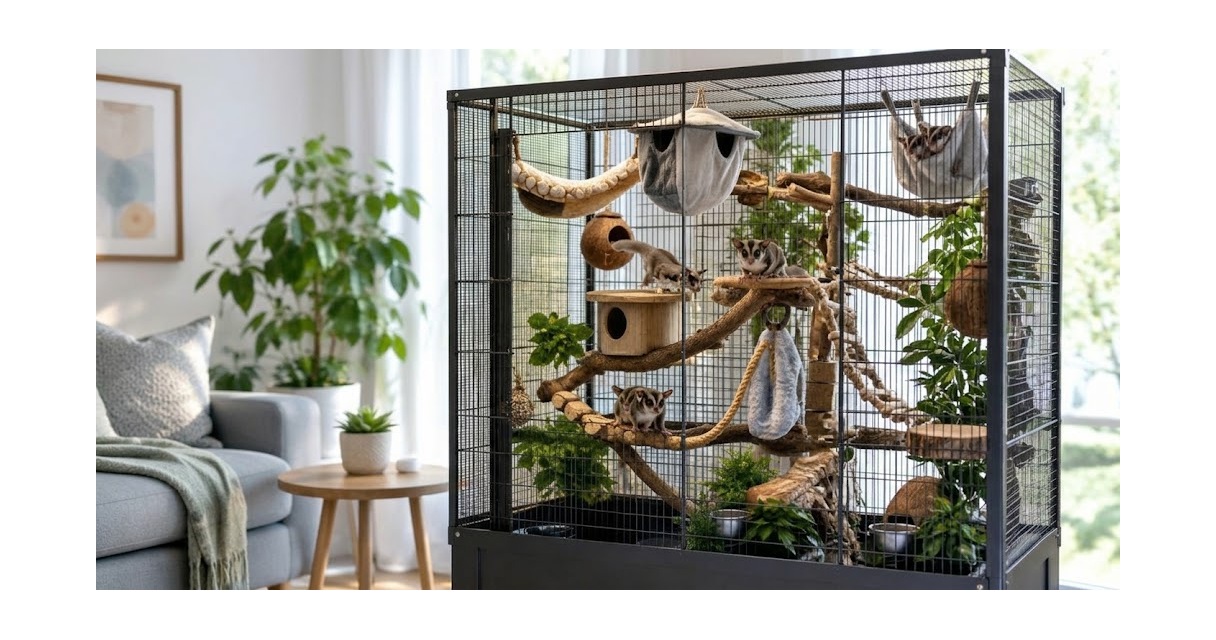
A suitable sugar glider cage provides secure containment, usable climbing space and access for cleaning; a tall cage alone does not establish suitability. This guide compares enclosure formats rather than unverified products, helping Australian shoppers assess construction and welfare requirements before browsing Aqua Life Pet & Aquarium.
TL;DR
- Choose a sugar glider cage by security, usable climbing space and cleaning access, not height alone.
- A tall metal enclosure needs suitable mesh, secure doors and safe fittings before it becomes a candidate.
- Check state or territory wildlife rules before buying an enclosure or arranging an animal purchase.
- Aqua Life Pet & Aquarium shoppers should confirm individual product specifications and delivery terms before ordering.
Why this matters
Sugar gliders are native Australian marsupials, not ordinary small-animal pets. Whether you can legally keep them, and under what conditions, depends on your state or territory’s wildlife rules. Resolve that question before choosing an enclosure.
Sugar gliders climb and are active at night. An enclosure therefore needs more than room for a sleeping pouch: its layout must support movement, feeding, shelter and maintenance without creating escape routes or trapping hazards.
The useful buying question is not which cage looks largest in a photograph. It is which enclosure you can verify against the animals’ needs, your permit conditions and the practical demands of daily care.
What makes a suitable sugar glider cage?
Use these criteria to assess any enclosure, including products sold for birds or other small animals:
- Legal and husbandry fit: Check current wildlife requirements and seek species-specific advice from a veterinarian experienced with native mammals.
- Usable climbing space: Assess internal height, width and depth together. Shelves and accessories must not consume the space needed for movement.
- Secure openings: Check mesh, door edges, feeder openings and removable sections. A latch is only useful if the entire enclosure remains secure.
- Safe construction: Inspect coatings, exposed wire ends, joints and fittings. Reject damaged surfaces or accessible sharp edges.
- Cleaning access: You need to reach the enclosure interior, remove soiled furnishings and clean corners without dismantling the entire setup.
- Practical placement: Confirm that the enclosure fits its intended room, permits access to doors and sits away from direct sun, draughts and household hazards.
Do not treat a small-animal label as proof of compatibility. Sugar glider suitability depends on the actual construction and setup, not the retailer’s broad category name.
Cage formats at a glance
The options below are organised by use case, not presented as a tested product leaderboard. Each format still requires assessment of the specific enclosure.
| Enclosure format | Best suited to | Useful design characteristic | Key limitation |
|---|---|---|---|
| Tall metal small-animal enclosure | Indoor housing with accessible maintenance | Climbing layout and service doors can share one structure | Mesh, latches and internal fittings require species-specific checks |
| Purpose-built mesh enclosure | A setup designed around confirmed husbandry requirements | Dimensions and access can be planned together | Construction quality and escape prevention depend on the design |
| Converted bird cage | Assessing an existing cage before replacement | Some designs provide height and accessible doors | Bird suitability does not establish sugar glider suitability |
| Glass tank or terrarium | Understanding why an aquarium-style enclosure is not recommended | Transparent walls provide visibility | Ventilation and climbing arrangements require particular scrutiny |
1. Tall metal enclosure: assess for indoor housing
A tall metal small-animal enclosure is a candidate when its construction supports secure containment, climbing and routine cleaning. Examine the whole structure, not just the main mesh panels. Feeder openings, joints and the space around a removable tray deserve equal attention.
Best suited to: Keepers assessing an indoor enclosure with accessible doors and room for a planned climbing layout.
Tall metal enclosure advantages
- Mesh surfaces can support an attached climbing layout.
- Accessible doors make cleaning and furnishing easier.
- An open structure allows you to inspect much of the enclosure from outside.
Tall metal enclosure limitations
- Mesh spacing suitable for another animal does not establish suitability for sugar gliders.
- Supplied ramps, shelves and wheels still need individual assessment.
- Height offers little benefit if furnishings obstruct movement or leave important areas inaccessible.
Check the manufacturer’s internal dimensions and construction information. Ask for clarification when a listing gives only overall dimensions, because a stand, roof or storage shelf can inflate the apparent enclosure size.
Verdict: Hold until the mesh, doors, usable dimensions and fittings meet your confirmed husbandry requirements.
2. Purpose-built mesh enclosure: assess for a planned setup
A purpose-built enclosure lets you plan access, climbing structures and resting areas together. That is useful when a standard cage cannot meet the requirements you have established with an experienced keeper or veterinarian.
Custom construction is not automatically safer. The finished enclosure still needs sound joints, protected edges, suitable materials and secure service openings.
Best suited to: Keepers who already understand the required enclosure design and can assess the finished construction.
Purpose-built enclosure advantages
- The layout can accommodate cleaning and furnishing access from the outset.
- Climbing routes and resting areas can be planned around the usable interior.
- Door placement can suit the enclosure’s position in your home.
Purpose-built enclosure limitations
- A design drawing does not prove the finished enclosure is escape-resistant.
- Mesh edges, fasteners and joins introduce details that require inspection.
- A larger structure can be difficult to move, transport or clean around.
Document the design before construction. Include access doors, removable components and the intended positions of major furnishings, rather than deciding those details after the frame is complete.
Verdict: Hold until both the design and finished enclosure have been assessed for the intended animals.
3. Converted bird cage: assess every opening first
A bird cage can look convincing because it offers height, mesh walls and multiple doors. Those features justify inspection, not automatic approval. Openings designed for bird feeders, sliding doors and decorative joins require careful examination.
Conversion also includes the interior. Perches, feeders and other supplied fittings should not remain simply because they came with the cage.
Best suited to: Someone evaluating an existing cage against species-specific requirements before deciding whether replacement is necessary.
Converted bird cage advantages
- Some designs provide useful access for cleaning.
- Mesh walls can accommodate climbing furnishings.
- Inspecting an existing enclosure lets you assess its condition directly.
Converted bird cage limitations
- A bird cage label says nothing about sugar glider containment.
- Feeder doors and sliding mechanisms create additional points to assess.
- Existing coatings, repairs and corrosion require inspection before reuse.
Do not improvise a repair over an unsuitable opening and assume the problem is solved. Any modification must remain secure during cleaning, furnishing changes and ordinary use.
Verdict: Hold; reject the cage if secure conversion requires uncertain repairs or leaves inaccessible hazards.
Check the interior before adding accessories
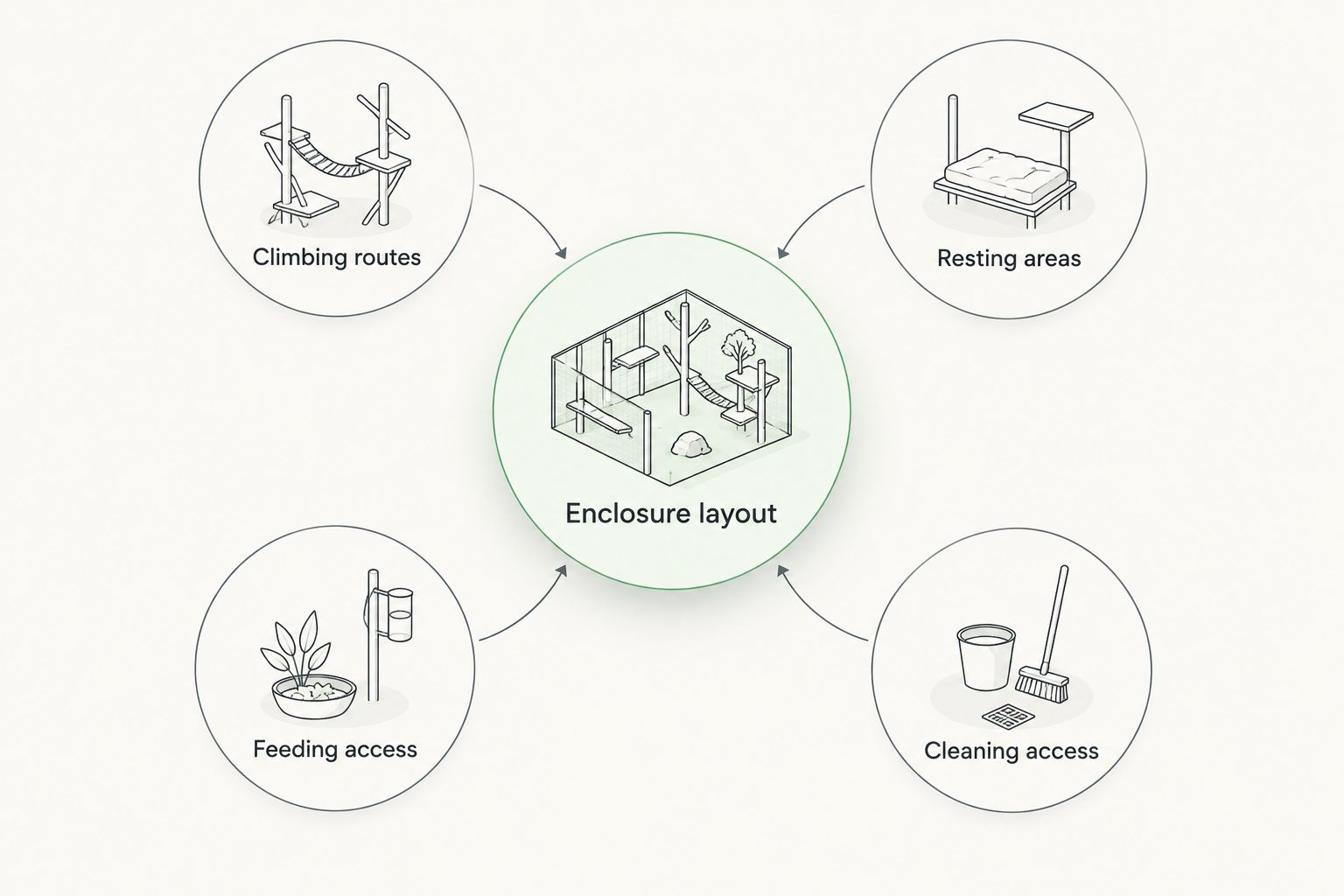
An enclosure becomes usable through its layout, not through its accessory count. Sketch the intended arrangement before buying furnishings so you can see where climbing, resting and feeding areas will sit.
Keep these parts of the setup distinct:
- Climbing routes: Plan connected movement through the usable space without blocking doors.
- Resting areas: Provide appropriate shelter that you can inspect and remove for cleaning.
- Feeding access: Position feeding equipment where you can service it without dismantling the layout.
- Cleaning access: Leave room to reach corners, attachment points and removable components.
Assess every accessory separately. Loose threads, damaged fabric, exposed fastening points and trapping gaps need attention even when the enclosure itself is suitable. Check climbing branches and other natural materials for species suitability and contamination before use.
Exercise equipment also needs a sugar-glider-specific assessment. Do not assume that a wheel marketed for another small mammal is compatible because it fits inside the enclosure.
What to confirm before ordering online in Australia
A photograph cannot settle enclosure suitability. Ask for the information needed to make a purchasing decision, and keep the product description or written clarification with your order details.
Dimensions and construction
Confirm the usable internal height, width and depth, plus the overall footprint. Check mesh spacing, door dimensions, fastening mechanisms and the materials used in surfaces the animals can contact.
If the listing does not answer an essential question, pause the purchase. An attractive enclosure is not a substitute for a complete specification.
Assembly and maintenance
Check how the enclosure assembles and which parts are removable. Understand how you will access the interior, clean beneath it and replace damaged components without compromising containment.
Also measure the route into the room. A cage that fits its final position still needs to pass through the relevant doorway or be assembled safely in place.
Product-specific delivery terms
Aqua Life Pet & Aquarium sells across aquarium, bird, reptile and small-animal categories, but category membership does not verify an individual product’s suitability or delivery eligibility. Confirm the exact item’s current details before ordering.
For a large enclosure, check packaged dimensions, weight and delivery terms for your location. Do not assume that the retailer’s online shipping service covers every bulky product on the same terms.
How these enclosure formats were compared
The comparison uses containment, usable climbing space, construction, cleaning access and practical installation as its criteria. It does not claim independent testing of named products or rank cages by sales, reviews or appearance.
The distinction matters: a well-specified enclosure can be assessed, while an incomplete listing cannot. Choose evidence about the actual cage over a broad claim that it suits small animals.
Which sugar glider cage should you choose?
Start with your legal position and confirmed husbandry requirements. Then assess a tall metal enclosure or purpose-built mesh design against those requirements; neither format earns approval from its shape alone.
Consider an existing bird cage only after inspecting every opening and fitting. Do not make an ordinary aquarium your default simply because it is already in the house.
If you cannot confirm mesh spacing, usable dimensions or door security, stop at the enquiry stage. The right next move is clarification, not an accessory purchase intended to compensate for an unsuitable cage.
FAQ
What should I look for in a sugar glider cage?
Look for secure containment, usable climbing space, safe construction and practical cleaning access. Assess the actual enclosure against species-specific husbandry advice and any applicable wildlife requirements, rather than relying on a small-animal label.
Can I use a bird cage for sugar gliders?
A bird cage requires a separate suitability assessment before use for sugar gliders. Check mesh, feeder openings, latches, coatings and internal fittings; suitability for birds does not establish suitability for sugar gliders.
Is a taller sugar glider cage always better?
Height alone does not make a sugar glider cage suitable. Width, depth, furnishing layout, containment and cleaning access also determine whether the usable space meets the animals’ needs.
Can sugar gliders live in an aquarium?
Do not choose an ordinary aquarium as a sugar glider enclosure. Its ventilation, climbing arrangements and access need species-specific assessment; a clear view and secure lid are not enough.
Do I need permission to keep sugar gliders in Australia?
Check your state or territory’s wildlife authority before acquiring sugar gliders. Native-animal keeping rules differ by jurisdiction, and permission to keep one species does not establish permission to keep another.
What accessories belong in a sugar glider cage?
Plan suitable climbing furnishings, resting shelter and feeding equipment around species-specific husbandry advice. Inspect attachments and materials, and assess exercise equipment separately rather than assuming that another small mammal’s accessories are compatible.
What should I check before buying a sugar glider cage online?
Confirm internal dimensions, mesh spacing, construction, door security and cleaning access before ordering. Check the exact product’s delivery terms for your Australian address, especially for bulky enclosures.
One last thing
A removable tray is a maintenance feature, not proof of secure containment. Before moving animals into any enclosure, inspect what happens when that tray, a feeder or another service component is removed.
Write down the specifications you still need before browsing Aqua Life Pet & Aquarium or making an enquiry. A precise question about mesh spacing or internal dimensions gets you closer to a sound decision than asking whether a cage is simply large enough.