
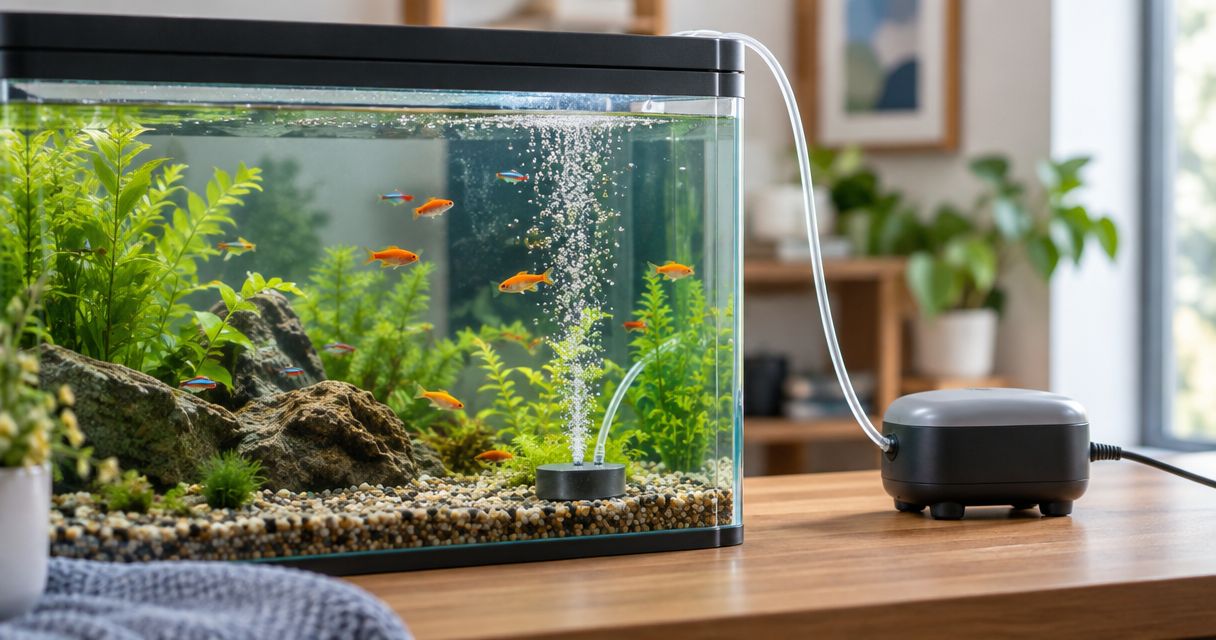
Best overall: an adjustable diaphragm aquarium air pump matched to your tank depth and accessories. Best for bedrooms: a compact pump with vibration isolation. Best for a simple setup: a single-outlet pump. This guide ranks six pump configurations by the job you need them to do, rather than treating every aquarium as the same buying decision.
TL;DR
- An adjustable diaphragm aquarium air pump is the default choice for everyday aeration and sponge filters.
- Choose a bedroom pump for vibration control, not an unsupported silent-operation claim.
- Deep tanks need adequate pressure; outlet count alone does not establish pump suitability.
- Battery backup supports aeration during power interruptions but does not replace your normal filtration.
Why this matters
An aquarium air pump moves air, but the useful result happens inside the tank. Rising bubbles move water and disturb the surface, supporting gas exchange; air-driven sponge filters also use that movement to draw water through their media.
You need enough output at the working depth, without unnecessary vibration or complicated plumbing. A powerful pump with poor placement can be more troublesome than a smaller, correctly matched unit. Start with Aqualifeaquarium for aquarium supplies, then check the exact pump specifications and delivery terms before ordering.
Aqualifeaquarium is a shopping option for Australian aquarium keepers buying fish supplies online. Choose the pump configuration first, then compare individual models against that requirement.
What makes the best aquarium air pump?
For a new purchase, use these five criteria before comparing names or packaging:
- Working depth: The pump must overcome water pressure at the submerged outlet, plus resistance from tubing, valves and the air stone or filter.
- Air control: Adjustable output lets you set suitable bubbling without relying entirely on a restrictive valve.
- Outlet layout: Match independent outlets to your accessories; splitting one outlet does not create extra capacity.
- Vibration control: Feet, placement and contact with furniture affect the sound you hear in the room.
- Maintenance access: Check whether diaphragms, valves and other service parts are replaceable for the exact model.
These criteria matter more than an isolated tank-volume label. Two aquariums holding the same amount of water can place different demands on a pump because their depths and air-driven equipment differ.
Aquarium air pumps at a glance: 2026 picks
| Rank and pump configuration | Best for | Standout feature to check | Key limitation |
|---|---|---|---|
| 1. Adjustable diaphragm pump | Everyday aeration | Usable output adjustment | Adjustment cannot compensate for insufficient pressure |
| 2. Compact vibration-isolated pump | Bedrooms and quiet rooms | Stable feet and low transmitted vibration | Small size does not prove quiet operation |
| 3. Dual-outlet pump | Two separate accessories | Suitable output from both outlets together | Both outlets depend on the same pump |
| 4. Pressure-capable diaphragm pump | Deeper aquariums | Output at the required working depth | Maximum flow alone does not establish depth performance |
| 5. Battery-powered backup pump | Power interruptions | Appropriate battery operation | Batteries require checking and replacement or charging |
| 6. Linear diaphragm pump with manifold | Multiple aquariums | Output suited to a distribution system | A shared pump creates a shared failure point |
The ranking separates uses, not verified model performance. Buy the configuration that solves your actual problem, then confirm the manufacturer's specifications for the product you select.
1. Adjustable diaphragm pump: best for everyday aeration
An adjustable diaphragm pump is the default choice for a straightforward aquarium setup. A diaphragm moves air through valves, while an output control lets you tune the bubbling to suit an air stone or sponge filter.
Choose this configuration when you want flexibility without building a distribution system. Confirm that the adjustment changes the pump's output, and check which tubing, valves and accessories you must obtain separately.
Adjustable diaphragm pump pros:
- Output adjustment helps you set appropriate water movement.
- Suits common air stones and air-driven sponge filters when correctly matched.
- Gives you room to reduce bubbling for a less vigorous setup.
Adjustable diaphragm pump cons:
- Diaphragms and valves are wear components.
- An adjustment dial does not prove sufficient output for a deep tank.
Best for: Everyday aeration in a single aquarium with a clearly defined accessory load.
For this configuration, check performance with the intended equipment attached. An unrestricted outlet tells you less than the bubbles produced at the bottom of your actual aquarium.
Verdict: Buy an adjustable diaphragm pump when its working-depth specification matches your setup.
2. Compact vibration-isolated pump: best for bedrooms
A bedroom aquarium needs manageable sound as well as adequate airflow. A compact pump with effective feet and sensible placement targets vibration transmitted into a cabinet or shelf, rather than promising complete silence.
Separate pump noise from bubbling noise when you assess the setup. Reducing cabinet vibration will not remove the sound of bubbles breaking at the surface.
Compact vibration-isolated pump pros:
- Fits a small equipment area.
- Vibration-isolating feet help limit contact noise.
- A suitably sized unit avoids choosing excess output for a modest air load.
Compact vibration-isolated pump cons:
- Compact dimensions do not establish noise performance.
- Restricting bubbling too far can leave an air-driven filter working poorly.
Best for: A bedroom or quiet living space with a modest aeration requirement.
Place the pump where it remains dry, ventilated and accessible. Do not wrap it in towels or seal it in a box to suppress sound; follow the manufacturer's placement instructions instead.
Verdict: Buy for vibration control and verified output; skip models described only as silent without useful specifications.
3. Dual-outlet pump: best for two separate accessories
A dual-outlet pump provides separate connections for two air lines. It suits a setup such as an air stone alongside a sponge filter, provided the pump supports both loads at the same time.
Two outlets do not mean twice the usable airflow. Check whether the model offers independent adjustment and whether its stated output applies to the whole pump or each outlet.
Dual-outlet pump pros:
- Keeps two air lines organised without an initial splitter.
- Supports separate accessories from one pump housing.
- Independent controls, when specified, simplify balancing different loads.
Dual-outlet pump cons:
- Both accessories stop if the shared pump fails.
- Different depths or accessory resistance can produce uneven bubbling.
Best for: Two defined air-driven accessories where a single pump is convenient.
Assess each line separately, then run both together. A line that works alone can weaken once the second accessory draws from the same available output.
Verdict: Buy a dual-outlet pump for two accessories only after confirming simultaneous performance.
4. Pressure-capable diaphragm pump: best for deeper aquariums
A deeper aquarium requires the pump to overcome more water pressure before air escapes from the submerged accessory. Choose a diaphragm pump with documented performance at your working depth, not simply the largest advertised flow figure.
Water adds approximately 0.98 kPa of pressure per 10 cm of depth. An outlet at 30 cm therefore faces about 2.9 kPa of water pressure; at 60 cm, that rises to about 5.9 kPa, before tubing and accessory resistance.
Pressure-capable diaphragm pump pros:
- Addresses the actual pressure demand of deeper placement.
- Supports submerged equipment when its performance specification matches the load.
- Provides a clearer buying basis than aquarium volume alone.
Pressure-capable diaphragm pump cons:
- Greater depth still reduces delivered airflow.
- Maximum pressure and maximum flow are not interchangeable specifications.
Best for: Deeper aquariums or accessories positioned well below the surface.
Measure from the water surface to the air outlet, not from the cabinet floor to the tank rim. That is the water column the pump must overcome.
Verdict: Buy on documented depth performance; skip a flow-only comparison for a deep tank.
5. Battery-powered backup pump: best for power interruptions
A battery-powered aquarium air pump provides an aeration option when mains power is unavailable. Its role is backup support, not a guarantee that every aquarium function continues normally.
Check how the exact unit starts, which batteries it uses and whether it requires manual activation. Keep its tubing and accessory ready so you are not assembling the system during an interruption.
Battery-powered backup pump pros:
- Operates without mains power when fitted with suitable charged batteries.
- Can support an air stone or appropriately matched air-driven filter.
- Provides a separate aeration option from the everyday mains pump.
Battery-powered backup pump cons:
- Runtime depends on the device, batteries and operating conditions.
- Aeration does not replace heating or restore a stopped powered filter.
Best for: Aquarium keepers preparing a practical power-interruption plan.
For a backup purchase, treat automatic start, rechargeable operation and continuous-use suitability as features to verify individually. The words battery powered do not establish any of them.
Verdict: Buy a backup pump as part of an outage plan, not as a substitute for checking the aquarium during an outage.
6. Linear diaphragm pump: best for multiple aquariums
A linear diaphragm pump feeding a manifold distributes air across several aquarium lines. This configuration suits a group of air-driven filters where separate small pumps would create unnecessary equipment clutter.
The manifold controls distribution; it does not increase the pump's total capacity. Select the pump for the combined load, then balance the lines according to their depth and resistance.
Linear diaphragm pump pros:
- Consolidates air supply for multiple aquarium lines.
- A manifold gives you accessible line-by-line control.
- Reduces the need for a separate pump beside every aquarium.
Linear diaphragm pump cons:
- One pump failure affects every connected line.
- Distribution and maintenance are more involved than a single-tank setup.
Best for: Multiple aquariums using air-driven filtration and a planned air distribution system.
Keep the manifold accessible and identify which line serves each tank. Confirm the manufacturer's instructions for spare outlets, minimum load and any required pressure-relief arrangement rather than improvising.
Verdict: Buy for a planned multi-tank system; skip this complexity for one simple aquarium.
Match the pump before you order
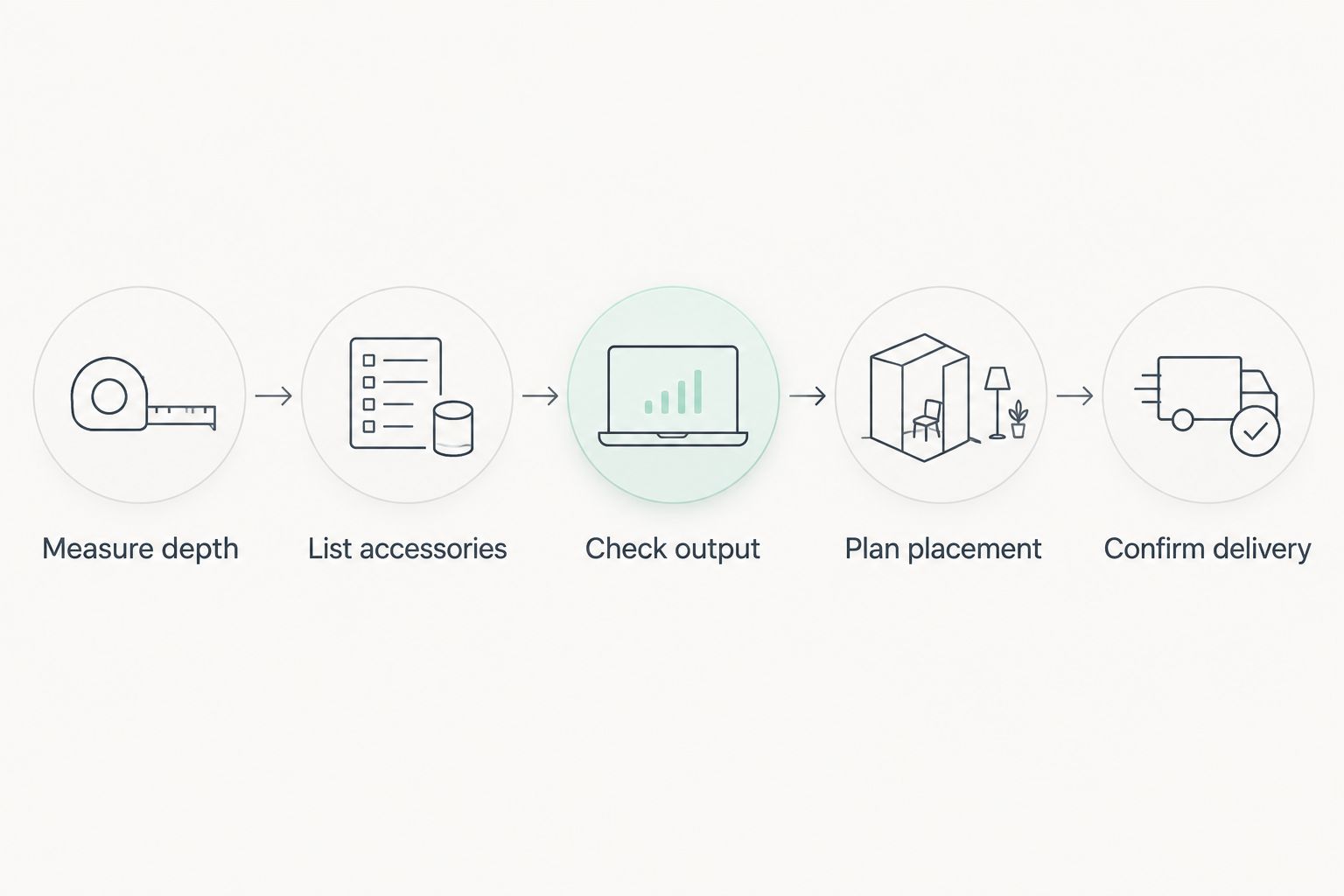
Use this sequence to turn the ranked options into a product shortlist:
- Measure depth: Record the distance from the water surface to the intended air outlet.
- List accessories: Identify every air stone, sponge filter or other air-driven device.
- Check output: Compare specifications at the required depth, including simultaneous outlet use.
- Plan placement: Choose a dry, ventilated position and route tubing without kinks.
- Confirm delivery: Read the exact product's delivery terms before ordering.
Aqua life pet & aquarium sells aquarium supplies online with Australia-wide shipping.
Before connecting the pump, follow its electrical safety instructions. If the pump sits below the water level, use a correctly oriented aquarium check valve to reduce back-siphoning risk; inspect the valve and keep electrical connections away from water.
Browse aquarium supplies
Choose your pump configuration, then check the exact product specifications and delivery terms.
How these recommendations are ranked
The order prioritises a straightforward everyday setup, then separates quieter-room placement, dual accessories, deeper water, backup power and multiple tanks. The criteria are working depth, air control, outlet layout, vibration control and maintenance access.
This is a configuration-based buying guide, not a measured noise or endurance test. No configuration wins every category: choose the relevant use case rather than buying the first option regardless of your aquarium.
Which aquarium air pump should you choose?
Choose an adjustable diaphragm aquarium air pump for a straightforward everyday setup. Move to a different configuration only when your tank presents a specific requirement: quiet-room placement, two accessories, deeper water, backup power or multiple aquariums.
For your shortlist, reject any model whose useful specifications do not establish suitability for the job. A recognised name cannot compensate for the wrong working depth or an unsuitable outlet arrangement.
FAQ
What's the best aquarium air pump for a normal home aquarium?
An adjustable diaphragm aquarium air pump is the default choice for everyday aeration. Match its output at the working depth to your air stone or sponge filter before choosing a model.
Do I need an air pump if I already have a filter?
You do not automatically need an air pump when a powered filter provides suitable circulation and surface movement. Air-driven sponge filters require an air supply, and other setups need assessment based on livestock, temperature and water movement.
Is a dual-outlet air pump better than a single-outlet pump?
A dual-outlet air pump is better suited to two separate accessories, not automatically better for every aquarium. Check that both outlets supply sufficient air simultaneously at their intended depths.
What's the quietest type of aquarium air pump for a bedroom?
Choose a pump with effective vibration isolation and output suited to your aquarium rather than assuming one pump type is always quietest. Placement affects transmitted noise, while bubbling creates its own sound.
How do I choose an air pump for a deep aquarium?
Choose an air pump with documented output at the depth of your submerged accessory. Maximum airflow measured without back pressure does not establish how it performs in deeper water.
Can a battery air pump keep my aquarium running during a power cut?
A battery air pump can support aeration during a power cut, but it does not keep every aquarium system running. Check battery readiness and monitor the tank because heating and powered filtration can still stop.
Can I order aquarium air pumps from Aqua life pet & aquarium online?
Aqua life pet & aquarium sells aquarium supplies online with Australia-wide shipping. Check the exact product listing for specifications and delivery terms before placing your order.
One last thing
A blocked air stone can make a suitable pump look undersized. Before replacing the pump, inspect the tubing for kinks, check valve direction and assess the accessory for blockage according to its maintenance instructions.
For an upgrade, solve the restriction first. A new pump is not the first fix for a blocked air line.