
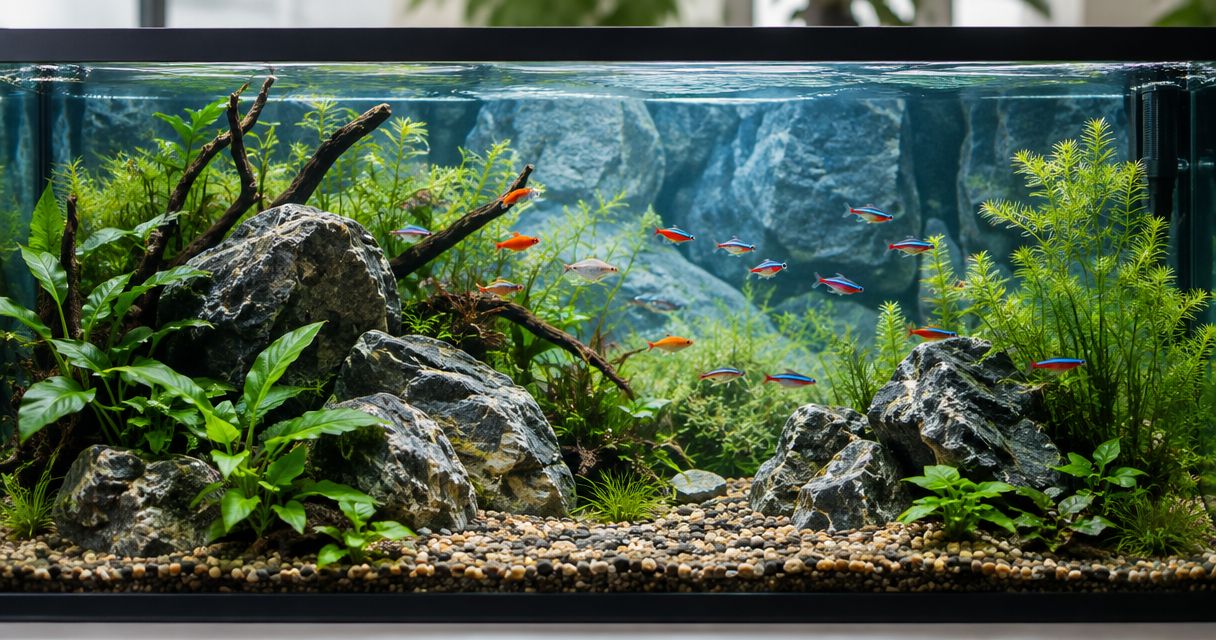
For aquarium backgrounds, choose an external black background for a simple backdrop, frosted film for a softly lit planted tank, or an aquarium-safe internal relief background for a dimensional layout. This guide compares background types by appearance, installation, cleaning and the space they take, not by unsupported product rankings.
TL;DR
- External black aquarium backgrounds suit shoppers who want a simple backdrop without losing swimming space.
- Frosted backgrounds suit planted aquariums when the lighting behind the tank is part of the design.
- Printed backgrounds add scenery, but their pattern must work with your actual rocks, plants and ornaments.
- Internal 3D backgrounds need verified aquatic suitability, secure installation and accessible cleaning.
- Use Aqua Life Pet & Aquarium as a shopping starting point; check each background’s dimensions and installation instructions.
Why this matters
An aquarium background changes what you notice through the front glass. A quiet backdrop keeps attention on fish and plants; a detailed one becomes part of the aquascape. Neither fixes exposed equipment inside the aquarium, awkward ornament placement or poor lighting.
Choose the background around the tank you have, not the display photograph. Your viewing angle, rear-glass access and lighting determine whether a particular finish works. Start with Aqua Life Pet & Aquarium when researching aquarium supplies, then confirm the exact background’s material, measurements and intended use before ordering.
What makes suitable aquarium backgrounds?
Use these criteria before comparing colours or scenery:
- Aquatic suitability: External backgrounds stay outside the water. Anything installed inside needs explicit suitability for aquarium use, including its coating and adhesive.
- Visual fit: Match the backdrop to your fish, substrate, plants and hardscape. A pattern that competes with those elements defeats the purpose.
- Installation access: Check whether you can reach the back of the tank without moving a filled aquarium. Follow the attachment method specified for the material.
- Space and equipment: Internal backgrounds occupy tank space. Check how they interact with filter intakes, outlets, heaters and maintenance tools.
- Cleaning access: Choose a finish you can keep tidy, including edges, textured surfaces and any accessible gaps behind internal panels.
- Measured coverage: Use the actual rear pane and product dimensions, not tank capacity alone. Check whether a printed design still makes sense after trimming.
These criteria separate a suitable purchase from an attractive photograph. A background that fits your aquarium and maintenance routine is more useful than one that requires compromises you did not anticipate.
Aquarium backgrounds at a glance
The order below follows distinct use cases, not a tested leaderboard. These are background types, not verified product recommendations.
| Background type | Best suited to | Standout characteristic | Key limitation |
|---|---|---|---|
| External black background | A simple, visually quiet backdrop | Plain dark finish without occupying tank space | Does not conceal equipment positioned in front of it |
| External blue background | A deliberate blue colour scheme | A coloured backdrop without an internal structure | Can conflict with the rest of the aquascape |
| Frosted external background | A softly lit planted layout | Diffuses light passing through the rear pane | Appearance depends on rear lighting and surroundings |
| Printed external background | A scene-led decorative aquarium | Adds a picture without adding submerged material | Printed perspective can clash with real decorations |
| Aquarium-safe internal relief background | A dimensional rock or root-style layout | Physical depth and texture inside the aquarium | Takes space and adds installation and cleaning requirements |
1. External black background: suited to a simple backdrop
An external black background sits behind the rear glass and provides a plain dark field. Depending on the particular product, it attaches using its specified film, sheet or mounting method. Do not assume every black background is self-adhesive.
The practical advantage is simplicity: no printed scene dictates where your plants or rocks should go. Because the background is outside the aquarium, it does not occupy swimming space or add a submerged surface to clean.
External black background pros:
- Provides a visually quiet setting for the aquascape.
- Leaves the aquarium’s internal space unchanged.
- Avoids introducing background material into the water.
- Works without matching a printed horizon or scenery.
External black background cons:
- Dark fish and dark hardscape can have less visual separation from the backdrop.
- Reflections, trapped air or uneven attachment can interrupt the plain finish.
- Equipment in front of the rear glass remains visible.
Best suited to: You want the backdrop to recede rather than become another decorative feature.
Buy: Choose an external black background when your priority is a straightforward backdrop and the product’s attachment method suits your access behind the tank.
2. External blue background: suited to a blue colour scheme
An external blue background creates a deliberate colour field behind the aquarium. It is an aesthetic choice, not a requirement for a marine tank or a freshwater tank. Choose it because you like how it works with the actual contents.
Look at a blue sample behind the aquarium under its normal lighting before committing. The colour relationship matters more than whether the packaging shows a similar tank style.
External blue background pros:
- Adds colour without installing a submerged panel.
- Leaves room for fish, hardscape and equipment.
- Avoids the perspective issues of printed scenery.
External blue background cons:
- A strong blue tone can compete with plants and ornaments.
- Blue fish or decorations can have less contrast against it.
- The apparent colour changes with lighting and surrounding reflections.
Best suited to: You are building a colour scheme that deliberately includes a blue backdrop.
Buy: Choose an external blue background after checking its colour behind your aquarium; skip it if the sample distracts from the fish or hardscape.
3. Frosted external background: suited to a softly lit planted tank
A frosted external background scatters light passing through the rear pane rather than presenting a solid colour or detailed picture. Its appearance depends on what sits behind the tank and how that area is illuminated.
It suits layouts where a pale background and plant silhouettes are intentional. It is not a substitute for aquarium lighting, and it does not guarantee an evenly illuminated rear wall.
Frosted external background pros:
- Provides a simple backdrop without printed scenery.
- Supports a design built around rear lighting and silhouettes.
- Keeps background material outside the aquarium.
Frosted external background cons:
- Nearby cables and objects can remain visible as shadows.
- Uneven rear lighting can create unwanted bright and dark areas.
- Adhesive-film versions require careful preparation to avoid visible bubbles.
Best suited to: You can control the space and lighting behind a planted aquarium.
Buy: Choose a frosted external background when you can assess it with the intended rear lighting. Skip it when your main goal is hiding a cluttered area behind the tank.
4. Printed external background: suited to scene-led decoration
A printed external background adds a photograph or illustration behind the aquarium. Common scene styles include plants, rocks and underwater landscapes, but each actual design needs its own assessment.
The picture contributes to the layout even before you add decorations. That makes it useful for a deliberate scene, but less forgiving when the printed scale, colours or perspective disagree with your real hardscape.
Printed external background pros:
- Adds scenery without taking up internal tank space.
- Provides a visual theme for choosing decorations.
- Keeps the printed material out of contact with aquarium water.
Printed external background cons:
- Printed plants or rocks can look mismatched beside real ones.
- Trimming can remove important parts of the composition.
- A busy image can make fish and equipment harder to distinguish.
Best suited to: You want the printed scene to play an active role in the aquarium’s appearance.
Buy: Choose a printed external background when its scale and composition work with your decorations. Skip a design that only looks convincing in the seller’s display image.
5. Internal relief background: suited to a dimensional layout
An internal relief background places a shaped surface inside the aquarium, often to suggest rock or roots. Unlike a printed sheet, it has physical depth. That depth becomes part of the tank’s layout and maintenance requirements.
Only consider a product explicitly intended for aquarium use. A reptile enclosure panel or craft material is not automatically suitable for continuous immersion. Follow the manufacturer’s installation instructions, including adhesive compatibility and curing requirements.
Internal relief background pros:
- Creates physical texture rather than a flat image.
- Can provide a consistent backdrop for a matching hardscape.
- Offers a different appearance from an external sheet.
Internal relief background cons:
- Occupies space otherwise available for water, fish or equipment.
- Creates additional surfaces and potential gaps to inspect and clean.
- Requires careful planning before attachment, especially in an established aquarium.
Best suited to: You are planning a dimensional aquascape and can accommodate its installation and maintenance needs.
Buy: Choose an aquarium-safe internal relief background only after confirming its fit, attachment method and cleaning access. Skip any panel whose submerged suitability is unclear.
Measure and check before ordering
Tank volume does not tell you the shape of the rear pane. Measure the surface you intend to cover, then compare it with the exact background dimensions. For an external sheet, account for trim and any area hidden by the aquarium frame.
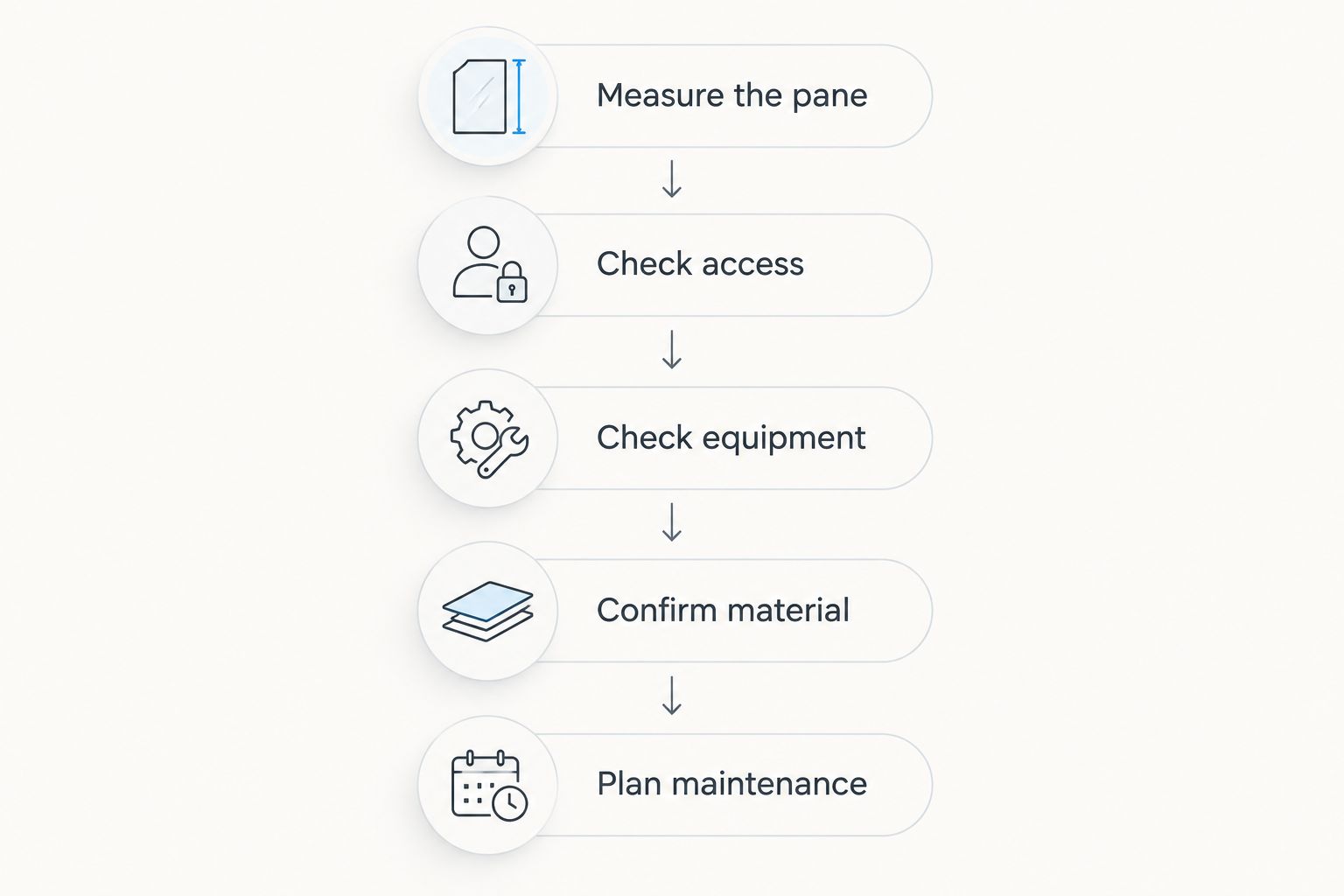
Work through this sequence:
- Measure the glass: Record the required width and height in centimetres. Check whether the aquarium frame affects the visible area or attachment surface.
- Check access: Confirm that you can reach the rear glass safely. Do not plan around shifting a filled aquarium to squeeze a hand behind it.
- Check equipment: Locate hoses, cables, intakes and outlets. For an internal panel, include the space needed to service equipment and remove it.
- Confirm material: Read whether the background belongs inside or outside the aquarium. Check the required adhesive, mounting method and preparation.
- Plan maintenance: Identify how you will clean the finished surface and inspect its edges without dismantling the whole layout.
For online orders, inspect the listed dimensions, packaging format and delivery terms for that particular item. A photograph does not establish whether a sheet arrives rolled, whether a panel is trimmable or whether installation materials are included.
Installation choices that affect the result
Prepare external backgrounds properly
Clean the outside rear glass and follow the background’s instructions for the required surface condition. Some attachment methods need a dry surface; others specify a wet application. Do not substitute a method just because another background uses it.
Check the result from the normal viewing position before completing installation. Pay attention to alignment, visible edges and reflections, not just whether the sheet covers the glass.
Plan internal backgrounds before filling
Internal panels are easier to assess while you can inspect their edges and the space behind them. Follow the manufacturer’s directions for bonding and curing before adding water or livestock.
Keep filter openings and equipment accessible. Inspect gaps where fish or debris could enter, and resolve those issues using the product’s approved installation method rather than improvised materials.
Keep cleaning practical
An external background leaves the inside rear glass available for normal cleaning. An internal relief background replaces that flat cleaning surface with a textured one.
Choose cleaning tools compatible with the background’s material and coating. Aggressive scraping that suits bare glass does not automatically suit a decorated panel.
How these options were compared
The comparison uses aquatic suitability, visual fit, installation access, space, cleaning and measured coverage. It does not assign product scores or claim independent testing.
The recommendations are conditional: a plain external background suits simplicity, while an internal relief background suits a layout that specifically needs depth. No colour or material wins for every aquarium.
Which aquarium background should you choose?
Start with an external black background if you want a quiet backdrop without changing the tank’s internal layout. Choose blue for a deliberate colour scheme, frosted film for controlled rear lighting, or a printed background when scenery is part of your design.
Choose internal relief only when physical depth justifies the extra space and maintenance. When considering aquarium backgrounds through Aqua Life Pet & Aquarium, check the exact item’s dimensions, installation instructions and delivery terms before ordering.
FAQ
What's the best aquarium background for a simple setup?
An external black background is suited to a simple setup because it provides a plain backdrop without occupying tank space. Check its attachment method and how your fish look against the dark finish.
Is a black aquarium background better than blue?
Neither colour is better for every aquarium. Black suits a visually quiet backdrop; blue suits a layout with a deliberate blue colour scheme.
Do aquarium backgrounds go inside or outside the tank?
The product's intended use determines its position. External films and sheets belong outside; an internal background must explicitly be suitable for aquarium use and installed according to its instructions.
Can I use a reptile background in a fish tank?
Use a reptile background in an aquarium only if its manufacturer explicitly confirms suitability for aquarium immersion. Appearance alone does not establish whether the material, coating or adhesive is appropriate.
How do I choose the right aquarium background size?
Measure the rear pane's required width and height, then compare them with the product dimensions. Account for the frame, trimming instructions and any printed details that trimming would remove.
Will an aquarium background hide my filter and heater?
A background does not hide equipment positioned in front of it. A dimensional panel needs a specific equipment layout, with safe operation and maintenance access preserved.
Can I order aquarium backgrounds online in Australia?
Check the individual item's ordering and delivery terms before purchasing. Aqua Life Pet & Aquarium serves Australian online shoppers, but a particular background's dimensions, delivery eligibility and installation requirements need checking on its current listing.
One last thing
Test the colour before committing to the material. Hold a plain colour sample outside the rear glass and view the aquarium under its normal lighting. This checks the visual effect—not aquatic safety—but it can reveal a distracting colour choice before you attach a background.