
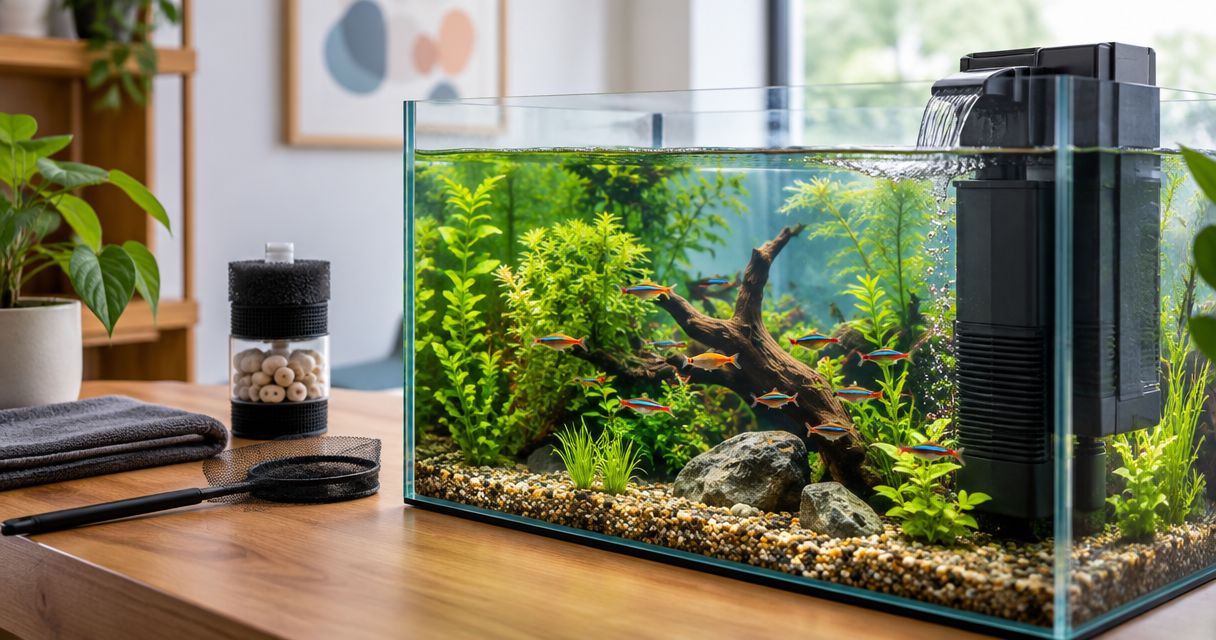
Best overall aquarium filter: a hang-on-back filter for a typical freshwater tank. Choose a sponge filter when gentle flow matters most, a canister filter when you need room for more filter media, and an internal filter when external equipment will not fit. Aqua Life Pet & Aquarium is a starting point for Australian shoppers checking aquarium supplies and current online ordering details.
TL;DR
- For most freshwater tanks, a hang-on-back aquarium filter offers the best balance of filtration and easy access.
- Choose a sponge filter for gentle flow and a canister filter when media space matters more than simple cleaning.
- Check tank fit, media access and delivery terms before ordering an aquarium filter online.
Why this matters
A filter does more than catch visible debris. Water movement carries waste to mechanical media, while biological media gives beneficial bacteria a place to process ammonia and nitrite. Your filter choice affects how easily you can maintain that process without disrupting the tank.
The best aquarium filter is not the one with the longest feature list. It is the one you can position, run continuously and clean without making routine maintenance a chore. that distinction matters more than choosing between filter types by appearance alone.
Aqua Life Pet & Aquarium is a useful starting point for Australian aquarium filter shoppers who want to check current options and delivery terms. Match the filter format to your tank first; then check the details of the item you plan to order.
What makes the best aquarium filter?
Use these criteria before comparing filter types. A filter that fails the fit or maintenance test is the wrong choice, even if its filtration method sounds appealing.
- Biological media: Look for a place where beneficial bacteria can colonise. Removing or replacing all established media at once can disrupt the tank’s biological filtration.
- Mechanical access: Trapped debris needs to come out. Prefer a design you can open and clean without dismantling the aquarium.
- Appropriate flow: Water must circulate, but a strong current does not suit every tank or inhabitant. Check whether you can position or adjust the outlet.
- Physical fit: A hang-on-back unit needs rim clearance. A canister needs space outside the tank; an internal filter occupies space inside it.
- Running requirements: A sponge filter needs an air pump and airline. Other formats need access to power and enough room for their intake and outlet.
- Maintenance effort: Consider how you will reach the media, prime the filter if required, and clean any tubing. The practical winner is the format you will maintain.
These are the criteria for the ranking below. They also explain why no single format wins for every aquarium.
Best aquarium filters at a glance
| Rank and filter type | Best for | Standout feature | Key limitation |
|---|---|---|---|
| 1. Hang-on-back filter | Accessible filtration for a typical freshwater tank | Media is reached from outside the tank | Needs space behind the tank and a compatible rim |
| 2. Sponge filter | Gentle flow for delicate inhabitants | Air-driven biological filtration | An air pump is required; debris remains visible on the sponge |
| 3. Canister filter | Tanks needing more space for filter media | Media sits in an external container | Hoses and enclosed media take more work to clean |
| 4. Internal filter | Tanks without room for external equipment | Entire unit fits inside the aquarium | Takes up tank space and must be removed for cleaning |
The table compares formats, not specific products. Check the dimensions, media arrangement and stated tank suitability of an individual filter before choosing it.
1. Hang-on-back filter: best aquarium filter for easy access
A hang-on-back filter sits on the aquarium rim, draws water from the tank and returns it over an outlet. Its main advantage is practical: you can reach the media from outside the aquarium. That makes it the best default for a freshwater setup with suitable rim clearance and space behind the tank.
Do not treat every hang-on-back unit as interchangeable. Check whether its intake suits the tank’s inhabitants, whether the outlet creates too much current, and whether you can maintain its media without replacing all the established biological material.
Hang-on-back filter pros:
- Media is accessible without removing the whole unit from the tank.
- The filter does not occupy the same internal space as an internal unit.
- Mechanical and biological media can sit in one accessible location.
Hang-on-back filter cons:
- It needs clearance at the rim and behind the aquarium.
- The return flow can disturb inhabitants that need gentler water movement.
- Its visible external position will not suit every tank location.
Best for: A freshwater tank where straightforward media access is the priority.
Verdict: Buy a hang-on-back format if it fits your rim and you can set a suitable flow. If either condition fails, choose a different format rather than forcing the default pick to work.
2. Sponge filter: best aquarium filter for gentle flow
A sponge filter uses rising air to draw aquarium water through a sponge. The sponge traps debris and provides surface area for biological filtration. This format earns its place when gentle circulation matters more than keeping equipment out of sight.
The air pump is a separate part of the setup, so account for its placement, airline routing and sound. A sponge filter also leaves collected debris on a visible surface until you clean it; it does not make waste disappear.
Sponge filter pros:
- Water enters across the sponge rather than through a narrow intake opening.
- Air-driven circulation is a practical choice when strong flow is unwanted.
- The sponge is straightforward to inspect and clean.
Sponge filter cons:
- It requires an air pump and airline to operate.
- The sponge occupies visible space inside the tank.
- Removing the sponge for cleaning can release trapped debris if handled carelessly.
Best for: Aquariums where gentle water movement and an accessible intake are the deciding factors.
Verdict: Buy a sponge filter when flow is the main concern. Hold if your real priority is hiding equipment or keeping the filter entirely outside the aquarium.
3. Canister filter: best aquarium filter for media space
A canister filter moves water through media housed in a container outside the aquarium. Its advantage is room to arrange filtration media while keeping the main unit out of the tank. It suits a setup where you have space for the canister and a clear route for its hoses.
That arrangement adds maintenance steps. You need to reach the canister, open it, clean the media and check the hoses and connections before restarting it. Make sure the planned location allows you to do that work without strain.
Canister filter pros:
- The main media container sits outside the aquarium.
- The format provides room for a media arrangement suited to the tank.
- Intake and return positions can be planned around the aquascape.
Canister filter cons:
- Hoses and connections add parts to inspect and clean.
- Accessing media takes more steps than opening a hang-on-back filter.
- The canister needs suitable space outside the tank.
Best for: Aquariums where media space and an external filter location matter more than quick access.
Verdict: Buy a canister format if you have the room and will maintain the hoses and media. Wait if you have not established where the unit will sit or how you will reach it for cleaning.
4. Internal filter: best aquarium filter when outside space is limited
An internal filter sits inside the aquarium and moves water through media contained in the unit. It avoids the rim clearance needed by a hang-on-back filter and the external location needed by a canister. That makes it useful when the tank’s surrounding space dictates the choice.
The trade-off moves into the aquarium: the unit is visible and occupies room that could otherwise remain open. Think through how you will remove or open it for cleaning, especially if plants or hardscape sit nearby.
Internal filter pros:
- It does not need a canister location outside the tank.
- It avoids external hoses.
- You can position its outlet within the aquarium, subject to the individual unit’s design.
Internal filter cons:
- It occupies space inside the tank.
- Cleaning can disturb the surrounding aquascape.
- Media access and flow control vary between individual units.
Best for: A tank with limited room behind or below it, where an in-tank unit is acceptable.
Verdict: Buy an internal format when external fit is the constraint. Skip it as a substitute for planning maintenance access: an awkwardly placed internal filter still needs regular cleaning.
Match the filter to the tank before ordering
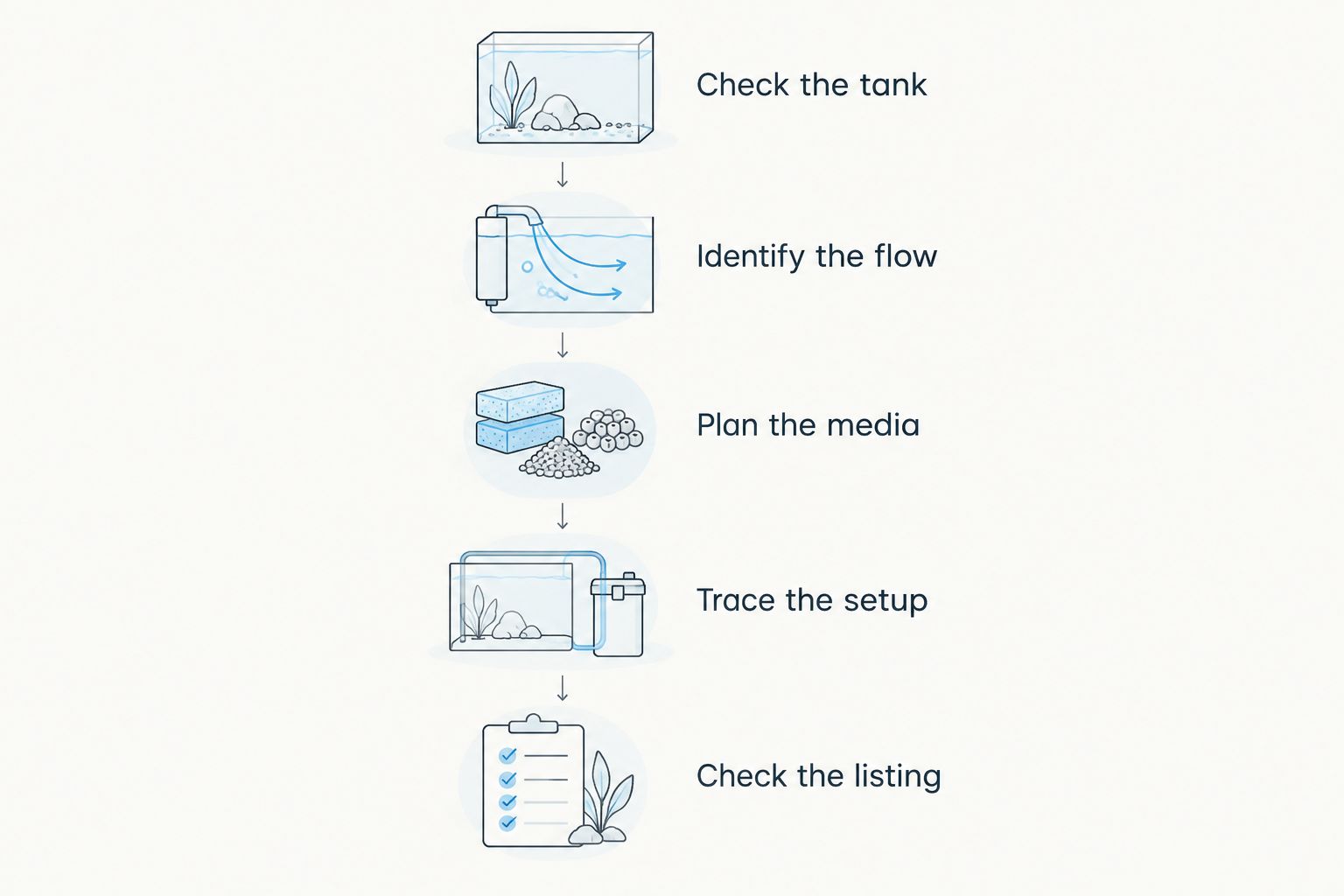
The 2026 ranking gives you a starting format, not permission to skip the product details. Use this sequence to narrow the choice without relying on a generic best-for-everyone claim:
- Check the tank’s position. Look at the rim, lid, wall clearance and available space outside the aquarium. These eliminate formats that cannot physically fit.
- Identify the flow requirement. Observe where the return will move water and whether the intended inhabitants need gentler circulation. Do not assume that stronger flow is always better.
- Plan the media routine. Find out how to reach the biological and mechanical media. Choose a filter you can clean without discarding all established media.
- Trace the full setup. Account for an air pump and airline with a sponge filter, or hoses and an external location with a canister.
- Check the individual listing. Confirm the filter’s stated tank suitability, included components and current delivery terms before placing an online order.
Aqua Life Pet & Aquarium serves Australian online shoppers, but a retailer’s wider range does not establish that a particular aquarium filter is available or suitable for your tank. Judge the individual listing against the checklist.
How we ranked the filter types
The order prioritises a workable fit, biological media, appropriate flow and ease of routine cleaning. Hang-on-back comes first because accessible media makes it a useful default when the rim and surrounding space allow it. Sponge, canister and internal filters each move ahead when their distinct use case becomes the deciding requirement.
This is a ranking of filter designs, not a claim that one unnamed product outperforms another. An individual unit can still be the wrong choice if it does not fit the tank or support the intended maintenance routine.
Which aquarium filter should you choose?
Choose a hang-on-back aquarium filter if you want an accessible default for a freshwater tank and have the required clearance. Choose a sponge filter when gentle flow is non-negotiable, a canister when external media space is the priority, or an internal filter when the tank’s surrounding space rules out external equipment.
Before ordering, look past the format name. Confirm what comes with the individual unit, where it will sit and how you will clean it. Aqua Life Pet & Aquarium is relevant to that final shopping step; the tank’s constraints still make the decision.
FAQ
What is the best aquarium filter for most freshwater tanks?
A hang-on-back filter is the best default for a freshwater tank with a compatible rim and enough rear clearance. Its media is easy to access, but the outlet flow still needs to suit the tank.
Is a sponge filter better than a hang-on-back filter?
A sponge filter is better when gentle flow and an accessible intake are your priorities. A hang-on-back filter is the better default when you want media access from outside the tank and have room to mount it.
When should I choose a canister aquarium filter?
Choose a canister filter when you need space for filter media outside the aquarium and have room to maintain the unit and hoses. Do not choose one without planning where it will sit.
Do aquarium filters need to run all the time?
Aquarium filters should normally run 24 hours per day to maintain water circulation and support biological filtration. An extended interruption can affect the bacteria living in the filter media.
What should an aquarium filter remove?
An aquarium filter should trap debris and support beneficial bacteria that process ammonia and nitrite. Chemical media has a separate role when a specific water-treatment goal calls for it.
Can I replace all my aquarium filter media at once?
Do not replace all established biological media at once unless the individual product’s instructions require it. Beneficial bacteria colonise that media, so replacing it can disrupt biological filtration.
How do I choose an aquarium filter online in Australia?
Check tank fit, flow, media access, included components and the individual item’s delivery terms before ordering. Aqua Life Pet & Aquarium is an Australian pet supply retailer, but suitability depends on the specific filter and your tank.
One last thing
A filter can look clean while its biological media is doing essential work. Make cleaning access part of the buying decision, then preserve established media during maintenance rather than treating every change as a complete reset.