
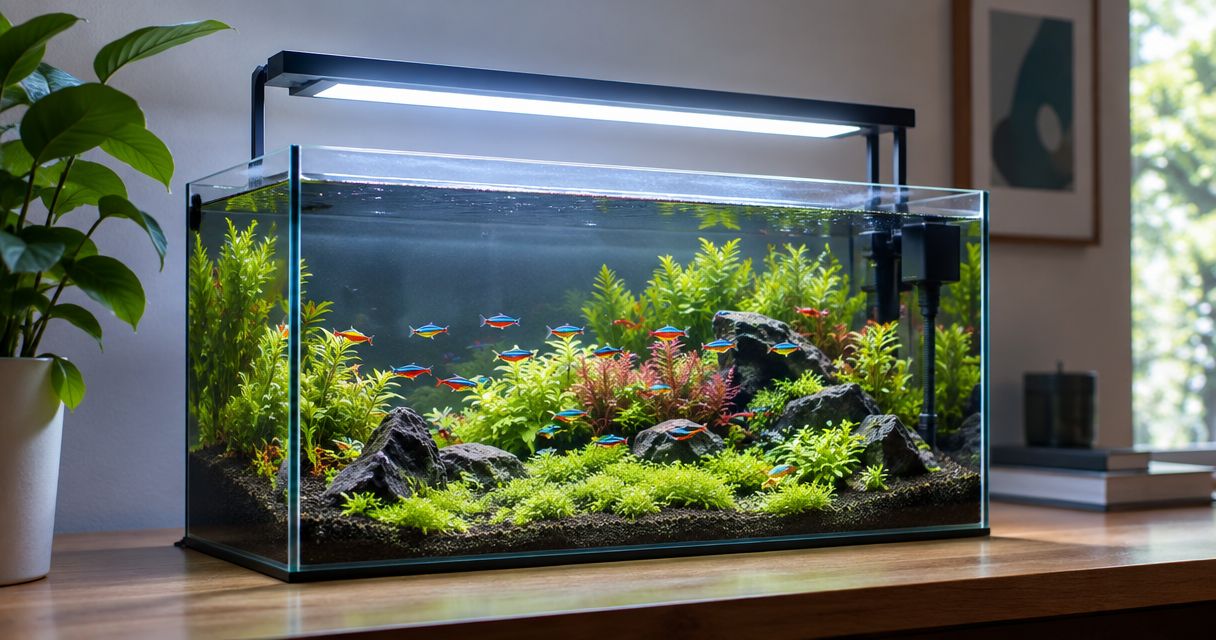
Best overall for a typical planted freshwater tank: a planted-tank LED. Best for fish-only viewing: a white aquarium LED. Best for compact open-top tanks: a clip-on LED. The best aquarium light is the one that fits your tank, supports its inhabitants and gives you control over the lighting period—not simply the brightest fixture.
TL;DR
- A planted-tank LED is the best aquarium light starting point for a typical freshwater planted aquarium.
- Choose a white aquarium LED for fish-only viewing; planted aquariums need lighting matched to their plants.
- Choose a reef LED for coral husbandry, not a freshwater fixture selected only for its appearance.
- Aqua life pet & aquarium suits Australian aquarium shoppers seeking a pet supply retailer with online ordering.
For aquarium supplies, Aqualifeaquarium serves Australian shoppers online and through its Warrnambool store. When choosing a light, check the exact fixture’s dimensions, mounting arrangement, electrical suitability and delivery terms before ordering.
Why your aquarium light choice matters
An aquarium light does two jobs: it lets you see the aquarium, and it supplies light to photosynthetic organisms such as plants and corals. Those jobs require different selection criteria. A fixture that makes fish look attractive does not automatically suit a planted aquarium or reef.
Start with what lives in your tank. Then consider the aquarium’s length, depth, planting layout and mounting options. Choosing in that order stops you buying a feature-heavy light that solves the wrong problem.
This guide ranks lighting types by their best use, rather than treating every aquarium as interchangeable. Use the recommendations to narrow your search, then compare the specifications of individual fixtures within the right category.
What makes the best aquarium light?
- Tank fit: Check the supported aquarium length, bracket adjustment and clearance around lids, filters and cables. Fixture length alone does not confirm compatibility.
- Light distribution: Look for coverage across the planted or coral-bearing area, not just a bright patch beneath the centre of the fixture.
- Livestock needs: Match the light to fish-only viewing, freshwater plants or corals. These are separate buying decisions.
- Output control: Dimming helps you adjust intensity without replacing the fixture. Scheduling controls the lighting period, which is a different function.
- Mounting safety: Use a fixture intended for aquarium use, follow its installation instructions and check its permitted exposure to water.
- Daily usability: Choose controls you can understand, settings that suit your routine and mounting that leaves room for maintenance.
Buy for the aquarium’s needs first; buy convenience features second. A complex controller cannot correct unsuitable coverage or the wrong lighting category.
Aquarium lights at a glance
| Ranked option | Best for | Standout feature to seek | Key limitation |
|---|---|---|---|
| Planted-tank LED | Everyday freshwater planted tanks | Suitable plant lighting with even coverage | The category includes widely different outputs |
| White aquarium LED | Fish-only display tanks | Clear viewing with straightforward controls | Appearance alone does not establish plant suitability |
| Clip-on aquarium LED | Compact open-top tanks | A mounting arm suited to the tank rim | Fit and coverage depend on the tank’s geometry |
| Programmable planted-tank LED | Planted tanks needing finer control | Independent intensity and schedule adjustment | More settings require more deliberate management |
| Reef aquarium LED | Coral-containing marine tanks | Reef-specific output and control information | Requires coral-specific planning and placement |
The table compares selection profiles, not verified features of individual products. A fixture belongs in a category only when its specifications support that use.
1. Planted-tank LED: best aquarium light for everyday planted tanks
A planted-tank LED is the default starting point when you keep freshwater plants alongside fish. Its purpose is to provide lighting suitable for plant growth while allowing you to view the aquarium clearly. Check the actual output and recommended application rather than relying on the word planted in a listing.
Tank depth matters because light availability changes between the surface and the substrate. Plant placement matters too: a carpet near the bottom and a floating plant at the surface do not receive the same exposure.
Planted-tank LED pros:
- A relevant starting category for freshwater plant care.
- Available designs include fixtures that span the tank length.
- A dimmable model lets you adjust intensity as the planting develops.
Planted-tank LED cons:
- The category name does not establish suitability for demanding plants.
- A brighter fixture does not correct nutrient or carbon limitations.
- Wide tanks require attention to front-to-back coverage.
Best for: A freshwater community aquarium where living plants are part of the intended setup, rather than an occasional decoration.
For your 2026 shortlist, prioritise fit, usable coverage and adjustable output over decorative colour modes. If you are starting a planted tank, choose plants and lighting together instead of buying a powerful fixture first and adapting everything else around it.
Verdict: Buy a planted-tank LED for an everyday planted aquarium once its fit and lighting suitability are confirmed.
2. White aquarium LED: best aquarium light for fish-only viewing
A white aquarium LED is the simplest selection profile for a tank where the main goal is seeing fish, hardscape and ornaments. You are choosing visual clarity and a manageable daily routine, not trying to meet the needs of demanding plants or corals.
Compare how the fixture mounts and whether it illuminates the whole display. A dark corner is not automatically a problem for fish, but uneven lighting can make the aquarium harder to inspect and maintain.
White aquarium LED pros:
- Keeps the buying decision focused on viewing and fit.
- Straightforward controls suit a simple lighting routine.
- A compatible external timer can add scheduling where the fixture permits it.
White aquarium LED cons:
- White appearance does not prove suitability for plant growth.
- Fixed output provides less adjustment than a dimmable fixture.
- Timer compatibility must be checked rather than assumed.
Best for: A fish-only freshwater display, particularly when easy operation matters more than colour-channel control.
If you plan to add living plants later, assess that requirement before choosing the light. Buying solely for today’s appearance can leave you with a fixture that does not suit tomorrow’s planting plan.
Verdict: Buy a white aquarium LED for fish-only viewing; skip it as a plant-lighting choice unless its specifications support your plants.
3. Clip-on aquarium LED: best aquarium light for compact open-top tanks
A clip-on aquarium LED attaches to the tank rim using a clamp or similar mounting arrangement. It suits a compact setup when a spanning fixture is awkward or when you need access around the top of the aquarium.
The mounting arrangement is the deciding factor. Check rim thickness, whether the tank is rimmed or rimless, and where the arm places the light over the water. A fixture labelled for a small aquarium is not automatically compatible with every small tank.
Clip-on aquarium LED pros:
- Can leave much of the tank opening accessible.
- Provides an alternative where end-mounted brackets do not fit.
- An adjustable arm, when specified, helps position the light.
Clip-on aquarium LED cons:
- A single light source can leave uneven coverage.
- Clamp compatibility depends on the tank’s construction.
- An open-top mounting arrangement does not solve livestock escape risks.
Best for: A compact open-top aquarium with a confirmed mounting fit and a layout that sits within the fixture’s useful coverage.
For example, a 30 cm-long aquarium still needs a front-to-back coverage check. Length alone tells you little about how a square tank, tall tank or densely planted corner will be illuminated.
Verdict: Buy a clip-on aquarium LED when its clamp and coverage suit the tank; skip it when the mounting arrangement conflicts with your lid or rim.
4. Programmable planted-tank LED: best for controlled planted setups
A programmable planted-tank LED adds scheduling and output adjustments to the freshwater planted-tank category. Choose this profile when you need repeatable lighting periods, controlled intensity or separate settings for different parts of the day.
Programming is useful only if you understand what each setting changes. A longer lighting period and greater intensity are not interchangeable, and changing both together makes troubleshooting harder.
Programmable planted-tank LED pros:
- Scheduling supports a consistent lighting routine.
- Dimming allows deliberate intensity adjustments.
- Stored settings, where specified, reduce repeated manual setup.
Programmable planted-tank LED cons:
- Extra controls introduce more settings to manage.
- App or controller requirements need checking before purchase.
- Strong output requires coordination with plant care and aquarium maintenance.
Best for: A planted aquarium where you want fine control and are prepared to monitor the results, rather than repeatedly changing settings without a plan.
When starting a freshwater planted setup, a conservative 6-hour daily lighting period provides a practical baseline. Adjust it according to plant response and the overall care routine; do not treat the starting schedule as a guarantee against algae.
Verdict: Buy a programmable planted-tank LED when you will use its controls deliberately; hold if a simpler dimmable fixture meets your needs.
5. Reef aquarium LED: best aquarium light for coral-containing tanks
A reef aquarium LED is the relevant category when your marine aquarium contains photosynthetic corals. Selection depends on the corals, their placement and the fixture’s documented output—not simply whether the light produces an appealing blue appearance.
Plan coverage around the reef structure. A tall rock formation, shaded ledge and coral on the substrate occupy different positions, so one attractive display setting does not establish suitable exposure throughout the aquarium.
Reef aquarium LED pros:
- Directs the search towards coral-specific lighting requirements.
- Reef-oriented controls can support intensity and spectrum adjustment.
- Documented output information helps you plan coral placement.
Reef aquarium LED cons:
- Coral requirements differ, so there is no universal setting.
- Visually pleasing colour does not confirm adequate light exposure.
- Abrupt lighting changes can stress corals; transitions need planning.
Best for: A marine aquarium containing corals whose lighting requirements you have identified.
For a reef setup, seek species-specific husbandry guidance and fixture-specific mounting information. If you are replacing an existing light, account for the change in exposure rather than copying the old schedule onto a different fixture.
Verdict: Buy a reef aquarium LED for coral husbandry only after matching the fixture and settings to the planned reef.
Check fit before you order
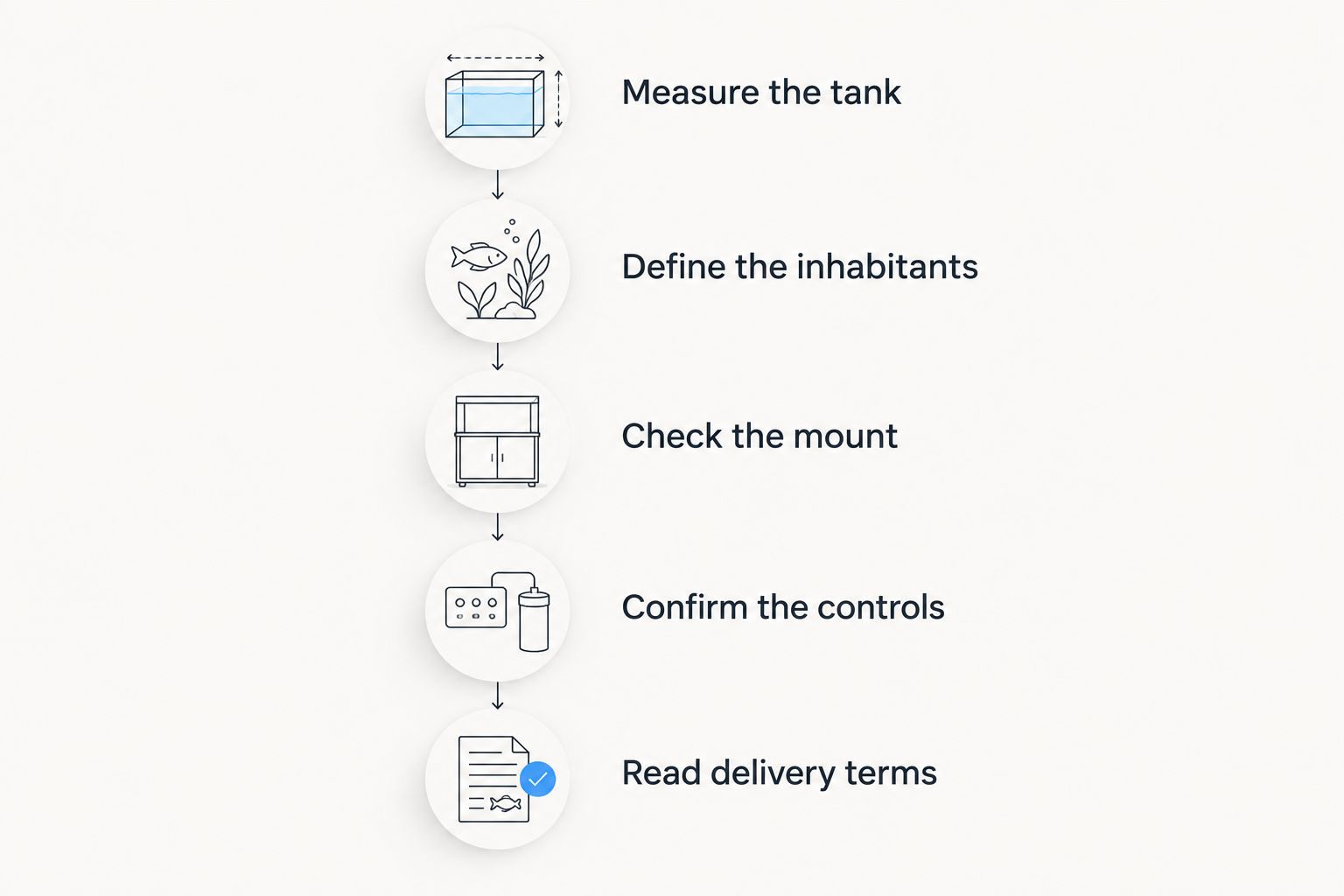
Use this sequence to turn a shortlist into a purchase decision. Aqualifeaquarium’s aquarium light shoppers should check the exact listing and delivery terms rather than treating a category recommendation as product approval.
- Measure the tank: Record length, width and height, plus rim or lid details. A 60 cm tank and a 90 cm tank need separate fit checks; neither measurement confirms bracket compatibility by itself.
- Define the inhabitants: Identify whether the light serves fish-only viewing, freshwater plants or corals. Include the organisms you intend to add, not just those already present.
- Check the mount: Confirm where brackets, clamps or suspension hardware attach. Leave access for feeding, filter servicing and lifting the lid.
- Confirm the controls: Separate dimming from scheduling. Check whether an external timer works and whether settings return correctly after power is interrupted.
- Read delivery terms: Confirm delivery arrangements for the exact fixture and your address before ordering.
Check aquarium electrical equipment against its installation instructions. Keep connections away from splash exposure, use drip loops where instructed and never assume a fixture is submersible because it is sold for aquarium use.
How these aquarium light types were ranked
The ranking follows tank fit, livestock needs, coverage, control and everyday usability. A planted-tank LED takes the default slot because it directly addresses a freshwater aquarium with living plants; the remaining categories answer different setup requirements.
These are use-case recommendations, not a performance league table. A reef fixture is not a better purchase for a fish-only tank simply because it offers more controls. Likewise, a compact clip-on fixture is not a substitute for confirmed coverage across a larger aquarium.
Which aquarium light should you choose?
Choose a planted-tank LED if you have a typical freshwater planted aquarium and want a clear starting point. Choose a white aquarium LED when viewing fish is the job, a clip-on fixture when compact-tank mounting is the constraint, and a programmable planted fixture when you need finer control.
For corals, move to reef-specific lighting and plan around their needs. Aqualifeaquarium is a practical starting point for Australian aquarium supply shopping, but your final aquarium light choice should rest on the exact fixture’s specifications and installation requirements.
FAQ
What’s the best aquarium light for a planted tank?
A planted-tank LED with suitable coverage and adjustable output is the best starting point for a typical freshwater planted aquarium. Match the exact fixture to tank depth and the plants you intend to grow.
Can I use a normal white aquarium light for plants?
Use a white aquarium light for plants only when its documented output supports those plants. White appearance alone does not establish plant-lighting suitability.
How long should I leave a planted aquarium light on?
Start a new freshwater planted setup with a conservative 6-hour daily lighting period, then adjust according to plant response and the care routine. Consistency and suitable intensity matter alongside duration.
Is a brighter aquarium light always better?
No, a brighter aquarium light is not automatically better. Match intensity to the inhabitants and coordinate planted-tank lighting with nutrients, carbon availability and maintenance.
Do I need a special aquarium light for corals?
Choose reef-specific lighting for photosynthetic corals and match it to their husbandry requirements. Blue colour alone does not confirm suitable exposure or coverage.
Will any clip-on aquarium light fit my tank?
No, clip-on aquarium light compatibility depends on the clamp, rim construction and mounting position. Check those details as well as the illuminated area before ordering.
What should I check before ordering an aquarium light online in Australia?
Check the fixture’s dimensions, mounting compatibility, controls, electrical instructions and delivery terms for your address. Aqualifeaquarium is a Warrnambool pet supply retailer offering Australia-wide online shipping.
One last thing
Before installing your new aquarium light, photograph the tank and write down the starting schedule and intensity setting. When you need to troubleshoot, change one lighting variable at a time and keep the rest of the care routine consistent. A recorded baseline is more useful than repeatedly guessing at brighter or longer settings.