
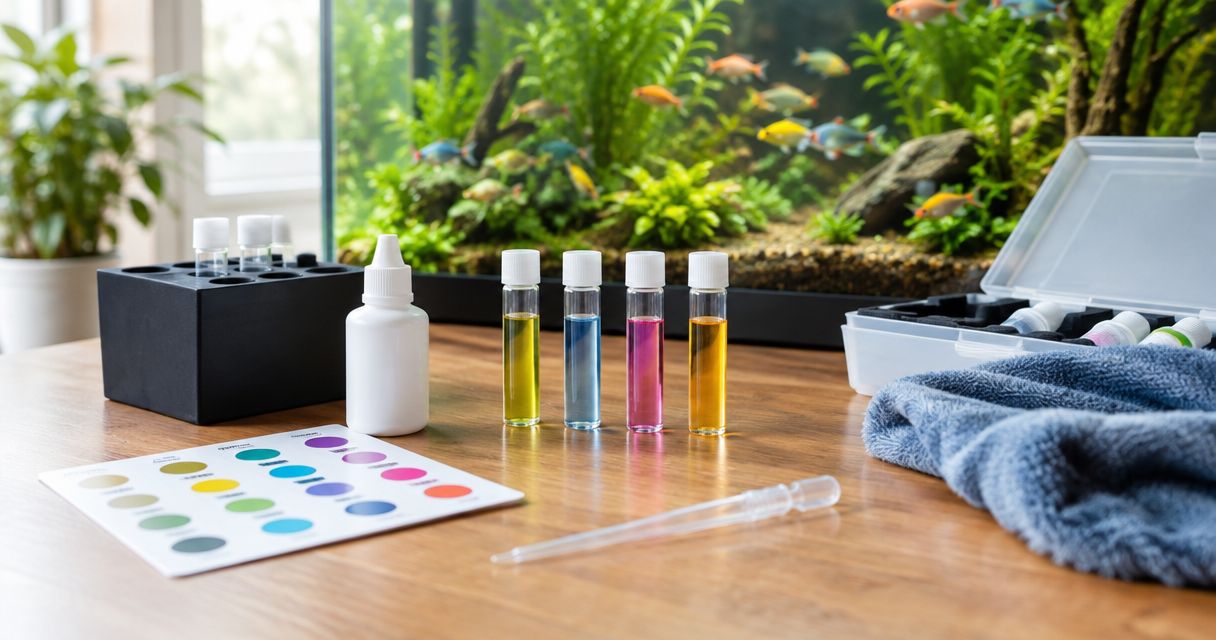
Best suited to routine freshwater checks: a liquid aquarium test kit covering ammonia, nitrite, nitrate and pH. Best suited to quick screening: test strips; to marine troubleshooting: a saltwater-compatible liquid kit; to avoiding colour-chart interpretation for a specific parameter: a suitable digital meter. This guide explains those choices and what to check before buying from Aqua Life Pet & Aquarium.
TL;DR
- Choose a freshwater liquid aquarium test kit that explicitly includes ammonia, nitrite, nitrate and pH for routine monitoring.
- Test strips suit quick screening, but check each pack’s parameter list rather than assuming it includes ammonia.
- Marine aquariums need saltwater-compatible tests; reef monitoring also depends on the animals you keep.
- Aqua Life Pet & Aquarium shoppers should choose by tank type, included tests and readable results, not packaging alone.
Why this matters
Clear aquarium water does not prove that its chemistry is suitable for your fish. Ammonia and nitrite testing helps you assess biological filtration, while nitrate and pH results help you track changes that appearance alone cannot explain.
The useful purchase is the kit that answers your tank’s questions. A broad-looking pack that omits ammonia leaves a gap when you are checking a new aquarium, investigating distressed fish or assessing a filter problem.
Choose the parameters first, then the testing format. The recommendations below compare testing approaches by use case, not individual products with unverified specifications.
What makes a suitable aquarium test kit?
- Relevant parameters: Match the included tests to your aquarium. For routine freshwater monitoring, look for ammonia, nitrite, nitrate and pH.
- Water compatibility: Check whether each test is intended for freshwater, saltwater or both. Do not assume that a shared parameter means shared instructions.
- Useful measurement range: The scale must cover the conditions you need to assess. A result at the end of a chart needs careful interpretation.
- Readable results: Consider lighting, colour discrimination and whether the chart makes adjacent results easy for you to distinguish.
- Repeatable procedure: Choose a method you can carry out consistently, including sampling, mixing, timing and cleaning.
- Ongoing requirements: Check expiry dates, storage instructions, replacement reagents and any calibration materials before committing to a format.
Aquarium test kit options at a glance
| Testing option | Best suited to | Standout benefit | Key limitation |
|---|---|---|---|
| Freshwater liquid panel | Routine freshwater monitoring and cycling checks | Lets you select a panel covering key filtration parameters | Requires careful sampling, reagent handling and colour reading |
| Multi-parameter test strips | Quick freshwater screening between fuller checks | Combines several readings in a convenient format | Included parameters vary; ammonia needs explicit checking |
| Saltwater-compatible liquid panel | Marine aquarium troubleshooting | Tests chemistry using a method intended for saltwater | Reef systems can require additional tests beyond the panel |
| Parameter-specific digital meter | A particular measurement where colour reading is difficult | Displays a result without matching a printed colour chart | Does not replace every test; maintenance requirements vary |
1. Freshwater liquid panel: suited to routine monitoring
A freshwater liquid panel uses reagents and a measured water sample to produce a result, commonly read against a colour chart. Choose a panel that explicitly lists ammonia, nitrite, nitrate and pH rather than relying on terms such as master or complete.
This format suits aquarists who want to follow cycling and investigate changes in an established tank. It also gives you a practical way to repeat a particular test when a result needs checking.
Freshwater liquid panel pros:
- A panel listing the core parameters supports routine filtration checks.
- Separate tests let you investigate the parameter causing concern.
- Written procedures provide a repeatable sampling and reading method.
- Replacement reagents can extend usefulness where the manufacturer supplies them.
Freshwater liquid panel cons:
- Incorrect sample volume, drop counting or timing affects the result.
- Colour charts require suitable lighting and consistent interpretation.
- Reagents need storage and replacement according to their instructions.
Best for: Freshwater keepers who want a regular testing routine and are willing to follow each procedure carefully.
Before buying, inspect the actual contents. Check which pH range the kit covers, whether all required tubes are included and how each test reports its result. A nitrate test does not substitute for an ammonia test.
Verdict: Buy a freshwater liquid panel if its listed tests match your tank’s monitoring needs.
2. Multi-parameter test strips: suited to quick screening
Test strips use reactive pads to show several water measurements after contact with a sample. They suit quick checks when convenience makes you more likely to test, but the package’s parameter list determines what you actually learn.
Do not assume that every multi-parameter strip measures ammonia. If a strip does not include it, you need a separate ammonia test when assessing cycling or investigating a filtration problem.
Multi-parameter test strip pros:
- Several parameters appear on one strip.
- The format reduces the number of separate reagent-handling steps.
- Strips suit a quick screening routine alongside more targeted testing.
Multi-parameter test strip cons:
- Coverage varies between products, so omissions matter.
- Moisture exposure and incorrect storage can affect unused strips.
- Pad colours still need interpretation at the specified reading time.
Best for: Aquarists seeking convenient screening who also have access to the additional tests their tank requires.
Read the instructions before opening the container. Keep wet fingers away from unused strips, close the pack as directed and use the stated immersion and reading times. Leaving a strip on the bench and interpreting it later is not the same procedure.
Verdict: Buy strips for convenient screening; skip them as your sole testing method if essential parameters are missing.
3. Saltwater-compatible liquid panel: suited to marine checks
A saltwater-compatible liquid panel provides tests intended for marine water. Confirm compatibility for each included measurement rather than transferring freshwater instructions to a saltwater sample.
Marine fishkeeping and reefkeeping also have different monitoring needs. A panel covering filtration-related parameters does not automatically cover alkalinity, calcium or magnesium, which are relevant to reef systems with calcifying organisms.
Saltwater-compatible liquid panel pros:
- Explicit saltwater compatibility removes ambiguity about the intended sample.
- A suitable panel helps investigate marine filtration problems.
- Individual tests allow focused follow-up when a result changes.
Saltwater-compatible liquid panel cons:
- The included panel does not necessarily cover reef chemistry.
- Colour interpretation and careful reagent handling remain necessary.
- A chemical panel does not replace salinity measurement.
Best for: Marine keepers checking core water chemistry, with additional testing selected for their livestock and husbandry.
Keep salinity in the decision. Use an appropriate salinity instrument and follow its calibration instructions; do not expect a general ammonia, nitrite, nitrate and pH panel to answer that question.
For reef aquariums, buy additional tests because your animals and maintenance routine require them, not because a larger bundle looks more complete. Match the measurement ranges and procedures to the system you maintain.
Verdict: Buy a saltwater-compatible panel for marine monitoring; hold off on a bundle until you have checked its exact coverage.
4. Parameter-specific digital meter: suited to readable results
A digital meter measures a particular parameter and displays the result electronically. Depending on the instrument, it uses a probe or a reagent-based optical method, so digital does not mean maintenance-free or reagent-free.
This option suits a defined measurement problem, especially when interpreting a colour chart is difficult. Select the parameter first: a pH meter is not an ammonia test, and a salinity instrument does not measure nitrate.
Parameter-specific digital meter pros:
- A displayed result avoids matching colours to a printed chart.
- A dedicated instrument supports a consistent routine for its intended parameter.
- The format can suit users who struggle to distinguish colour-chart shades.
Parameter-specific digital meter cons:
- One instrument does not necessarily cover your full testing panel.
- Calibration, cleaning, storage or reagent requirements depend on the model.
- A numerical display does not guarantee an accurate result.
Best for: Aquarists with a specific measurement need who will follow the instrument’s maintenance procedure.
Check water compatibility, measurement range and the manufacturer’s required consumables. For probe-based instruments, read the storage and calibration instructions before purchasing. For optical instruments, check the sampling and vial-cleaning procedure.
Verdict: Buy a digital meter for a defined parameter and reading need; skip it as a substitute for unrelated tests.
How these recommendations are organised
The order follows common monitoring tasks: routine freshwater checks, convenient screening, marine checks and a specific digital measurement. It is not a laboratory accuracy ranking or an endorsement of a particular manufacturer.
Each recommendation uses the same criteria: parameter coverage, water compatibility, readable results, repeatable technique and ongoing requirements. A format earns its place only when it answers the question you need to ask.
How to get a result you can act on
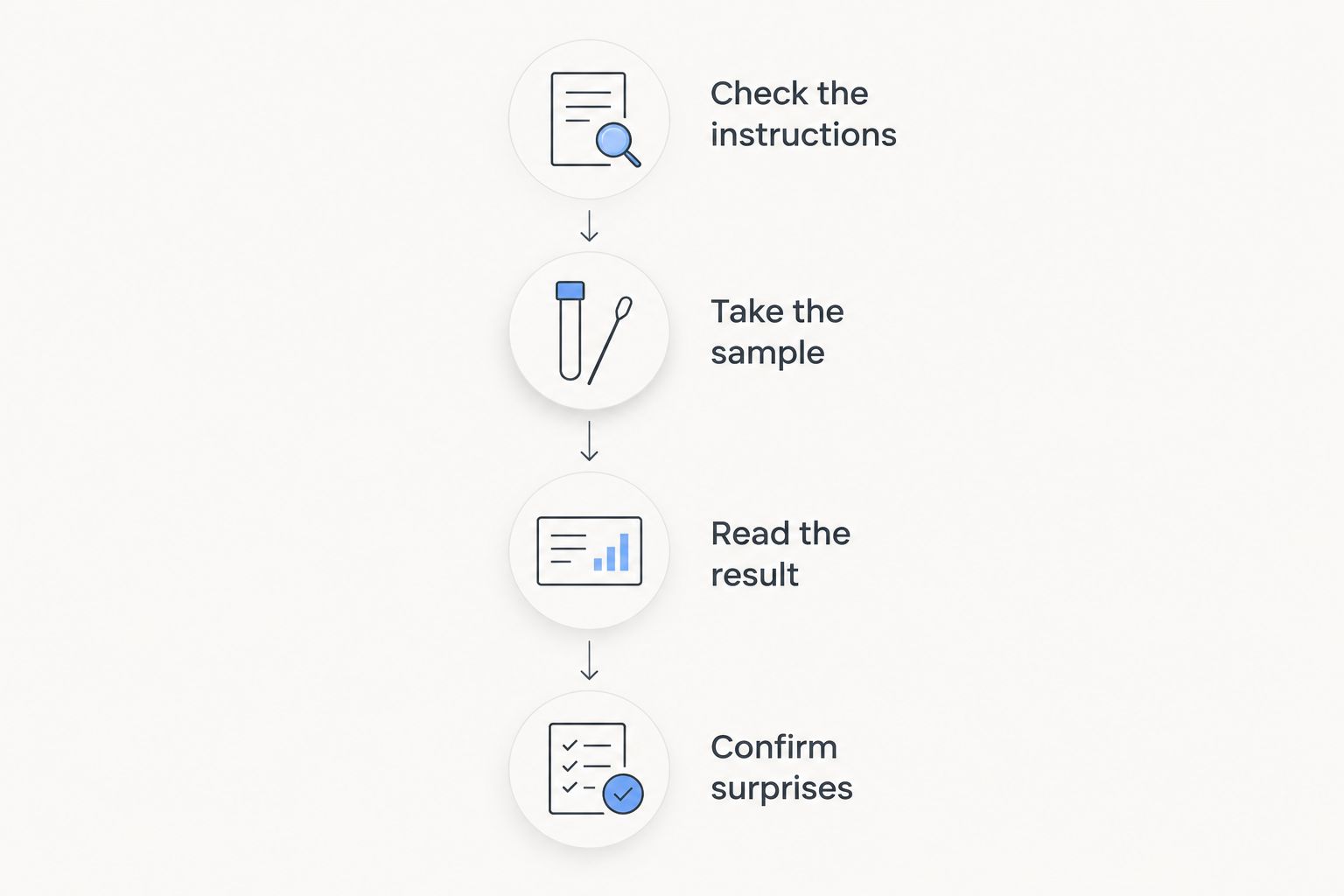
Check the instructions
Read the procedure for the individual test, even when you have used another kit before. Sample volumes, reagent preparation, mixing and waiting periods are not interchangeable between products.
Check expiry and storage requirements too. Use a timer where the instructions specify a reading period rather than estimating it while carrying out other aquarium jobs.
Take the sample
Use a clean container intended for aquarium sampling and follow the test’s rinsing instructions. Keep household cleaning products and their residues away from sampling equipment.
Take water from the aquarium you are assessing. If you are investigating source water, test it separately and label the results clearly so you do not confuse tap-water readings with tank readings.
Read the result
Read colour-based results under consistent neutral lighting against the supplied chart. Coloured aquarium lighting makes comparison harder, and a photograph on a phone is not a replacement for the manufacturer’s reading method.
Record the date, result and relevant context, such as a water change or filter maintenance. A sequence of observations tells you more than an isolated reading without context.
Confirm surprises
If a result is unexpected, repeat the test with a fresh sample after checking your technique. When troubleshooting, take 2 separate samples rather than repeatedly reading the same reacted sample.
For routine freshwater husbandry, aim for ammonia and nitrite readings of 0 mg/L. A detectable result needs attention, but do not delay protective action for distressed fish while repeatedly testing.
Which aquarium test kit should you choose?
For a freshwater aquarium, start with a liquid panel explicitly covering ammonia, nitrite, nitrate and pH. Add strips if convenient screening helps your routine, rather than treating convenience as proof of complete coverage.
For a marine aquarium, start with saltwater-compatible tests and separate salinity measurement. Add reef-specific tests according to the animals you keep. Choose a digital instrument when it solves a particular measurement or readability problem.
Aqua Life Pet & Aquarium shoppers should check the current product listing for included tests, intended water type and instructions before ordering. Confirm delivery eligibility for the item and your Australian address, and ask about any unclear specifications before purchase.
FAQ
What aquarium test kit should I buy for a freshwater tank?
Choose a freshwater-compatible kit that explicitly includes ammonia, nitrite, nitrate and pH. A liquid panel suits a routine where you can follow sampling, mixing and reading instructions consistently.
Are aquarium test strips better than liquid tests?
Test strips suit convenience, while liquid panels suit a targeted testing routine. Compare the actual parameters and instructions rather than assuming either format provides every measurement you need.
Do aquarium test strips measure ammonia?
Only strips that explicitly list ammonia provide an ammonia reading. Check the pack’s parameter list and use a separate ammonia test when it is not included.
Can I use a freshwater aquarium test kit in a marine tank?
Use a test in saltwater only when its manufacturer states that it is suitable. Follow the saltwater procedure and chart supplied for that test rather than assuming freshwater instructions apply.
Does a digital aquarium meter replace a liquid test kit?
A digital meter replaces only the measurement it is designed to perform. A pH meter does not test ammonia, and an instrument still needs the cleaning, calibration or reagents specified by its manufacturer.
What should ammonia and nitrite read in a freshwater aquarium?
Aim for ammonia and nitrite readings of 0 mg/L in routine freshwater husbandry. Investigate detectable results promptly and follow the test instructions when confirming an unexpected reading.
What should I check before ordering an aquarium test kit online?
Check included parameters, freshwater or saltwater compatibility, measurement range and ongoing consumables.
One last thing
Keep the instructions with the kit, not just the colour chart. A readable colour means little if the sample volume, reagent preparation or reading time was wrong. Before adding another test to your cupboard, make sure you can repeat the one you already own correctly.