
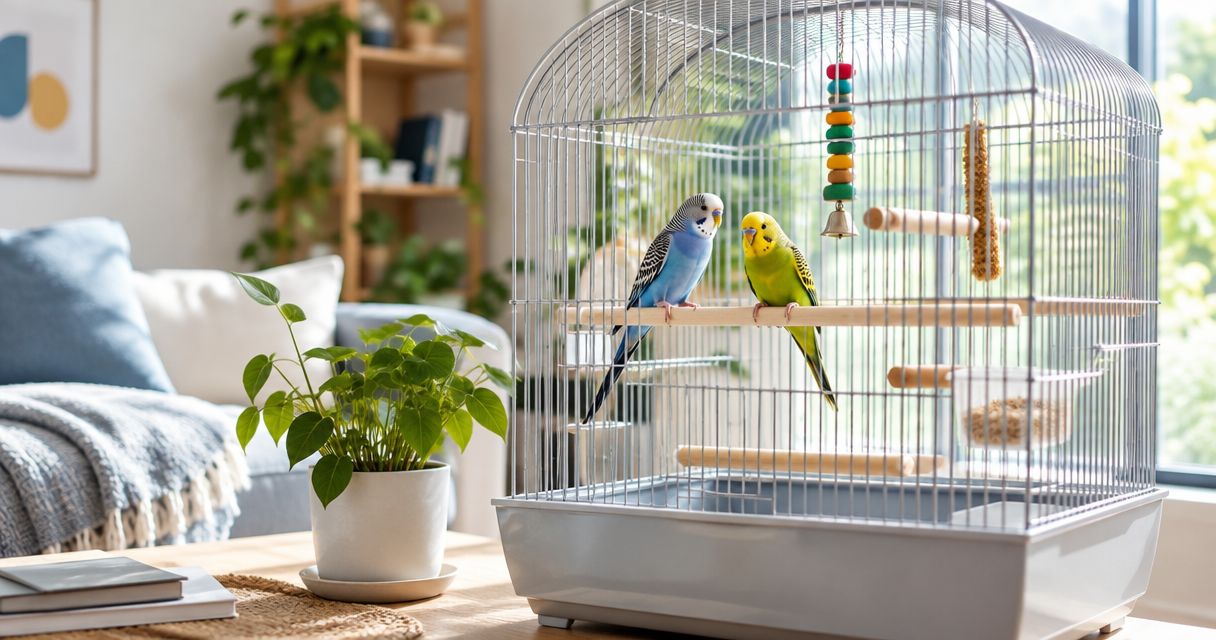
For everyday housing, roomy rectangular flight cages are the strongest starting point among bird cages for budgies; accessible rectangular cages suit tighter indoor layouts, and travel cages belong to transport, not permanent housing. This guide explains how to choose between cage types before checking individual options with Aqua Life Pet & Aquarium.
TL;DR
- Choose bird cages for budgies by usable flight space, safe bar spacing and access, not decorative height.
- Rectangular flight cages suit everyday housing; travel cages do not replace a permanent budgie cage.
- Keep budgie cage bar spacing no wider than 12 mm, and check doors for larger gaps.
- Aqua Life Pet & Aquarium shoppers should confirm individual cage dimensions, materials and delivery terms before ordering.
Why cage shape matters
A tall cage can look spacious while offering little room for a budgie to move horizontally. Feeders, toys and perches then reduce the usable space further. Judge the empty movement space inside the cage, not its overall silhouette.
Budgies need exercise, social interaction and opportunities to forage. A cage provides a secure home base, but choosing a larger enclosure does not remove those daily care needs. Equally, supervised time outside the cage does not make an unsuitable cage safe.
The recommendations below compare cage formats rather than named products. Each format has a different job; none earns a recommendation simply because it looks attractive or includes more accessories.
What makes suitable bird cages for budgies?
Use these criteria before comparing individual listings:
- Usable horizontal space: Prioritise length and width that let your budgie move between perches without squeezing past toys or feeders. External dimensions alone do not show the usable interior.
- Safe bar spacing: Choose spacing no wider than 12 mm for budgies. Check the gaps around doors, feeder openings and joins as well as the main bars.
- Suitable materials: Look for a sound finish without rust, peeling coatings or sharp edges. Confirm material and coating information rather than assuming any metal cage is bird-safe.
- Secure, accessible doors: Doors need dependable closures and enough access for cleaning, replacing perches and calmly handling your bird when necessary.
- Practical cleaning: You should be able to remove food debris and droppings from trays, corners and feeding areas without leaving your budgie unsecured.
- Room for a sensible layout: Include perches, feeding stations and enrichment while preserving movement space. A heavily furnished cage can function like a much smaller enclosure.
No single feature compensates for a failure elsewhere. A spacious cage with unsafe gaps is unsuitable; a secure cage that leaves no movement room is also unsuitable.
Budgie cage types at a glance
| Cage type | Best suited to | Standout feature | Key limitation |
|---|---|---|---|
| Rectangular flight cage | Everyday indoor housing with room to move | Horizontal movement space | Needs a suitable footprint and an uncluttered layout |
| Accessible rectangular cage | Indoor rooms where placement and hands-on access matter | Straightforward access for daily care | Smaller formats restrict movement and require careful assessment |
| Walk-in aviary | A dedicated space for multiple compatible budgies | Room for flight and separate activity areas | Requires secure construction, environmental protection and more maintenance |
| Travel cage | Transport and short, supervised temporary use | Manageable handling during journeys | Not a substitute for permanent housing |
The default choice is a rectangular flight cage with verified budgie-safe spacing. The other formats solve specific problems, not the same problem more cheaply or attractively.
1. Rectangular flight cages: suited to everyday indoor housing
A rectangular flight cage gives you a horizontal enclosure to arrange around movement rather than decoration. It is the first format to assess when you have room for a permanent indoor cage and want to preserve space between perches.
The word flight is not a specification. You still need the internal dimensions, bar spacing and door details to decide whether an individual cage suits your budgie. A label cannot tell you how much space remains after setup.
Rectangular flight cage pros:
- Horizontal proportions support movement between separated perches.
- A roomy interior gives you more flexibility when placing food and enrichment.
- Rectangular walls make it easier to assess usable space than ornate shapes.
- Larger layouts can accommodate separate feeding positions when housing compatible birds together.
Rectangular flight cage cons:
- A wider footprint needs a stable, suitable location in your home.
- Accessories can obstruct the intended flight path.
- Greater size does not guarantee safe bar spacing or secure doors.
Best for: An everyday indoor home where you can provide an appropriate footprint and regular care.
For a pair, assess the cage with both birds' needs in mind. They need room to move apart, reach food and rest without one bird controlling every useful position. Compatibility matters as much as shared space.
Verdict: Buy only after checking usable dimensions, spacing and closures; this is the default format to consider first.
2. Accessible rectangular cages: suited to practical daily care
A conventional rectangular cage can suit an indoor location where you need easy access to feeders, trays and perches. Its value lies in the actual layout and access, not in being described as a starter cage.
Choose a sufficiently roomy version, rather than the smallest one that fits your furniture. If the cage leaves your bird stepping between crowded accessories instead of moving freely, convenient placement has come at the bird's expense.
Accessible rectangular cage pros:
- Straight sides make placement and interior planning straightforward.
- Well-positioned doors can simplify feeder changes and perch maintenance.
- An accessible tray can make routine cleaning easier.
- A restrained layout keeps essential equipment within reach.
Accessible rectangular cage cons:
- Smaller versions leave little margin for enrichment without crowding.
- A narrow, tall model can offer less useful movement space than its appearance suggests.
- Easy cleaning does not compensate for inadequate housing space.
Best for: An indoor setup where a suitably spacious rectangular cage fits well and daily access is a priority.
Check that the main door allows you to remove the longest perch and clean awkward corners. Also check how the bird stays secure while you remove the tray. Some tasks that look simple in a product photograph become awkward once the cage is occupied.
Verdict: Buy a roomy, accessible model; skip compact versions that sacrifice usable space for convenience.
3. Walk-in aviaries: suited to dedicated group housing
A walk-in aviary is an enclosure you enter to maintain, rather than a cage you reach into. It suits a dedicated setup where you can manage the needs of multiple compatible budgies and maintain the whole enclosure safely.
An outdoor aviary is not simply an indoor cage placed outside. Its design must address escape, predators, weather exposure and shelter. Mesh openings and construction need assessment just as carefully as cage bars.
Walk-in aviary pros:
- A well-designed enclosure provides substantial horizontal movement space.
- Separate feeding and resting areas can reduce crowding.
- You can position enrichment without filling every movement route.
- Walk-in access supports maintenance across a larger enclosure.
Walk-in aviary cons:
- Construction and placement require more planning than a movable indoor cage.
- Outdoor housing introduces weather, predator and escape risks.
- Group housing requires observation of compatibility and access to resources.
Best for: Owners with a dedicated location, suitable construction and the ability to manage a group enclosure.
Before choosing this format, plan safe entry and exit, sheltered resting areas and a way to separate birds if needed. A larger enclosure does not prevent aggression or ensure every bird gets access to food.
Verdict: Hold until the location, containment and care arrangements are resolved; do not treat an aviary as a simple cage upgrade.
4. Travel cages: suited to transport, not everyday living
A travel cage provides temporary containment for journeys, including trips to an avian vet. Its purpose is secure, manageable transport rather than exercise or a full daily enrichment setup.
Keep the interior simple and assess loose items that could move during transport. The door must stay securely closed, and the cage itself must be secured appropriately for the journey.
Travel cage pros:
- A manageable enclosure is easier to handle during transport.
- A simple interior is easier to inspect before departure.
- A separate travel setup avoids moving and disturbing the permanent home.
Travel cage cons:
- Restricted space makes it unsuitable as everyday housing.
- Poorly secured accessories can create hazards during movement.
- Ventilation, temperature and positioning still need attention throughout the trip.
Best for: Transport and brief temporary containment, with the setup matched to the bird and journey.
For an unwell or injured budgie, ask the treating vet how to arrange the carrier. Perch placement and handling requirements can differ from those for a healthy bird.
Verdict: Buy for transport; skip as a permanent home.
How these recommendations are ranked
Rectangular flight cages come first because usable horizontal movement space is the main selection criterion for everyday housing. Accessible rectangular cages address placement and maintenance, while aviaries and travel cages serve different purposes.
This is a format comparison, not a tested product leaderboard. Aqua Life Pet & Aquarium shoppers should apply the same criteria to each individual listing; a category name alone does not establish suitability.
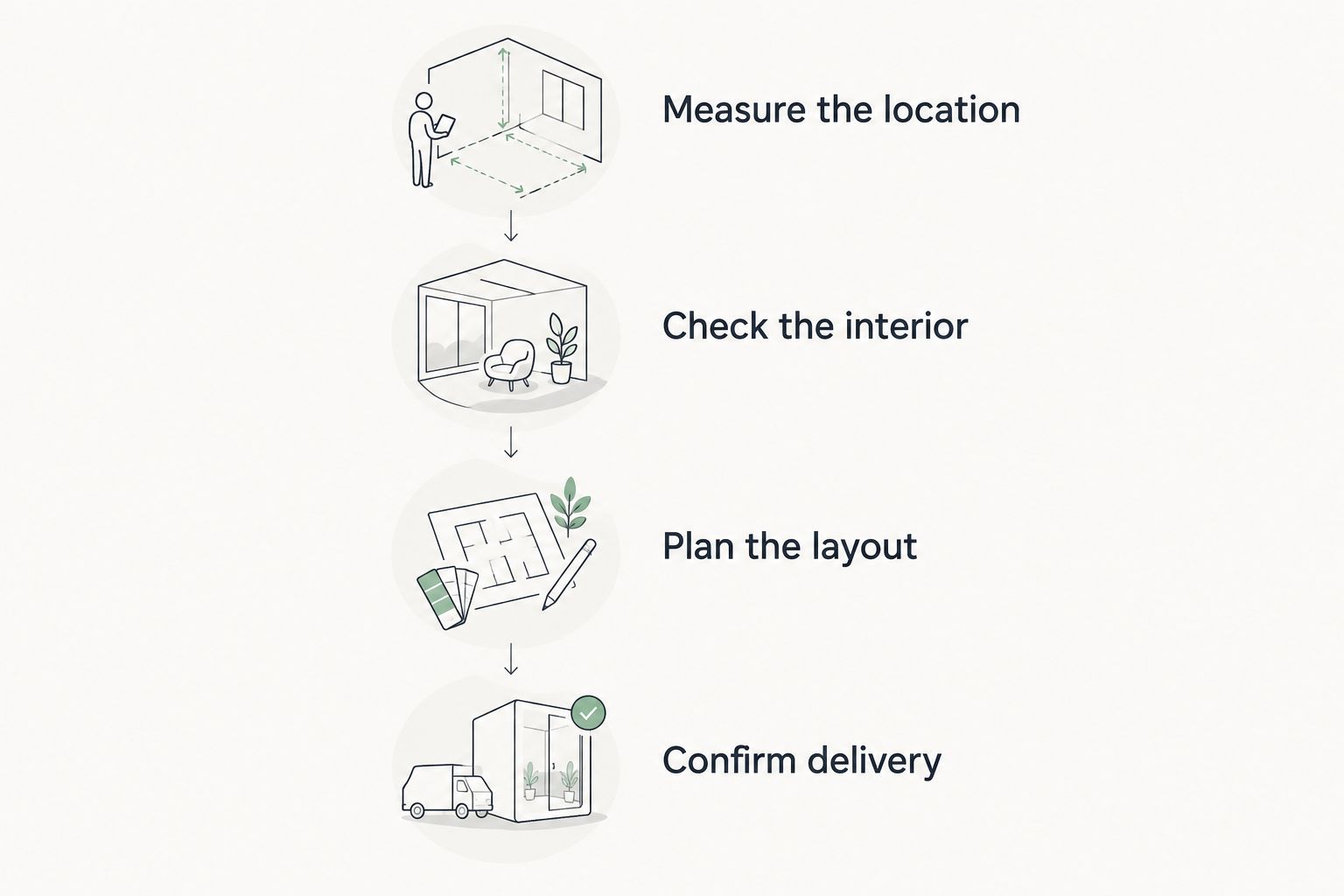
Measure the cage you need before ordering
Measure the location
Measure the available length, width and height in centimetres, then account for doors, tray removal and cleaning access. A cage that fits tightly between furniture can still be impractical to maintain.
Choose a stable position away from cooking fumes and other airborne hazards. Avoid a location where direct sun can heat the enclosure without the bird being able to move to shade.
Check the interior
Separate external measurements from usable internal space. Stands, roofs, handles and decorative features can contribute to the listed dimensions without adding room for your bird.
Confirm bar spacing in millimetres. Budgie cages commonly use spacing around 10–12 mm; inspect the largest gaps, not just the spacing across a representative panel.
Plan the layout
Sketch the perches, food, water and toys before committing to a cage. Leave a clear movement route and avoid placing feeding stations directly beneath perches where droppings can fall into them.
Use appropriately sized perches with varied diameters and textures. Do not fill the cage with accessories simply because mounting points are available.
Confirm delivery
Check the exact cage's delivery terms, packed dimensions and assembly requirements before ordering. General online shipping information does not establish delivery eligibility for every bulky item or every Australian address.
Check safety and maintenance before committing
Inspect the details you will touch every day. Feeder doors should close securely, tray edges should be accessible, and fittings should not leave sharp points inside the enclosure.
Ask for clarification where a listing leaves an important detail unclear. Do not infer safe spacing, coating quality or a locking mechanism from a photograph. A clear answer about one of those details is more useful than another lifestyle image.
Build these checks into routine care:
- Closures: Check main doors and smaller access doors after feeding and cleaning.
- Surfaces: Look for rust, damaged finishes, sharp edges and loose fittings.
- Perches: Check attachment points and remove damaged or unstable perches.
- Hygiene: Remove food debris and droppings, and clean feeding equipment regularly.
- Behaviour: Watch whether your budgie uses the available space or avoids particular areas.
A change in behaviour needs attention, not an automatic cage purchase. If your bird appears unwell, contact an avian vet rather than assuming the enclosure is the only cause.
Which budgie cage should you choose?
Start with a roomy rectangular flight cage, then reject any model that fails the spacing, material, access or layout checks. Choose an accessible rectangular alternative only when it still provides suitable movement space. Reserve aviaries for planned enclosure projects and travel cages for journeys.
Aqua Life Pet & Aquarium is a starting point for Australian shoppers comparing bird supplies; cage suitability depends on the exact model, not the retailer's name. Confirm the specifications you need before ordering, especially where photographs or external dimensions leave questions unanswered.
FAQ
What's the best type of bird cage for a budgie?
A roomy rectangular flight cage is the strongest starting point for everyday budgie housing. Choose it by usable horizontal space, bar spacing, safe materials and secure access rather than the flight-cage label alone.
What bar spacing should a budgie cage have?
Choose budgie cage bar spacing no wider than 12 mm. Check gaps around doors, feeding openings and panel joins as well as the main bars, because larger openings can create an escape or entrapment risk.
Is a tall cage better than a wide cage for budgies?
Prioritise usable horizontal space over decorative height. A wide rectangular layout gives you more scope to separate perches and preserve movement routes, provided accessories do not block them.
Can two budgies share one cage?
Compatible budgies can share a suitably spacious cage with access to food, water and separate resting positions. Monitor their behaviour and have a separation plan if one bird prevents the other from using resources.
Can a travel cage be a budgie's permanent home?
A travel cage should not be a budgie's permanent home. Its restricted layout serves transport and temporary containment rather than everyday movement, enrichment and resting needs.
What should I check before ordering a budgie cage online in Australia?
Check internal dimensions, bar spacing, materials, door closures and cleaning access before ordering. Confirm the individual cage's delivery terms and assembly requirements rather than assuming general shipping information applies to it.
Does a bigger cage mean my budgie doesn't need time outside it?
A bigger cage does not remove your budgie's need for exercise, interaction and enrichment. Provide appropriate activity opportunities, and make any supervised out-of-cage area safe from escape, household hazards and other animals.
One last thing
The most useful measurement is the clear space left after you furnish the cage. Before buying, draw the proposed layout inside the internal dimensions—not the outside measurements. If the food bowls, perches and toys consume the movement route, choose a roomier cage or simplify the layout rather than treating height as a substitute.