
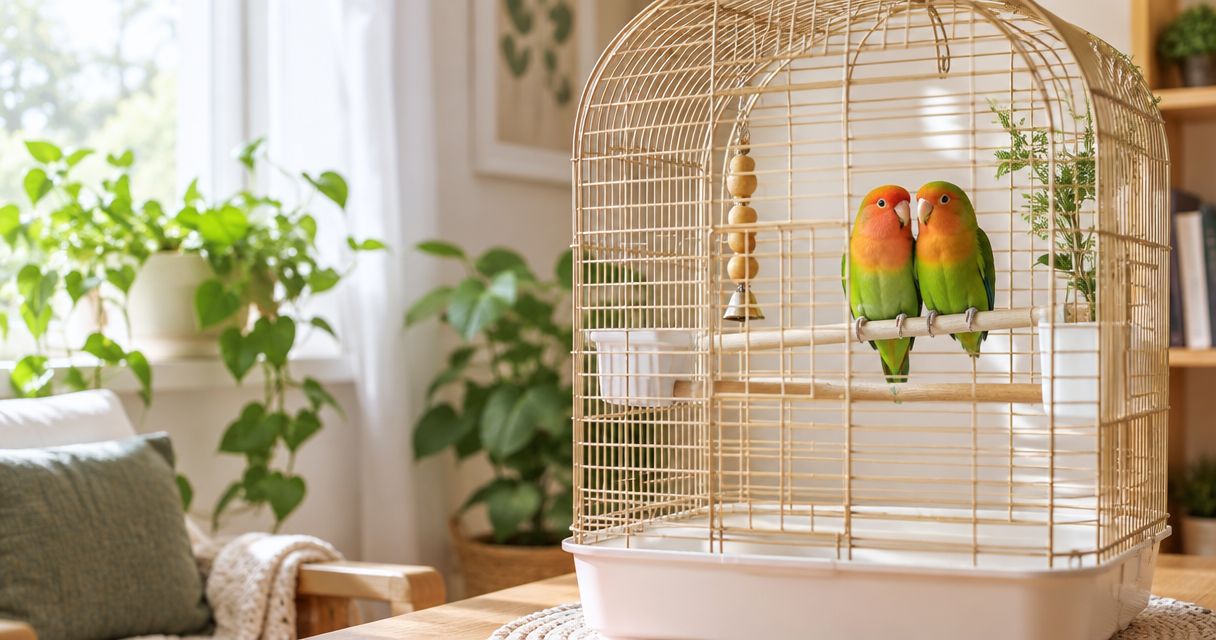
A wide rectangular flight cage is the strongest starting point for a bird cage for lovebirds; a wheeled flight cage suits homes that need a movable setup. A travel carrier serves a different purpose: secure transport, not everyday housing. This guide compares cage designs by usable space, containment, cleaning and placement rather than ranking unverified product models.
TL;DR
- Choose a bird cage for lovebirds by horizontal space, safe bar spacing and secure doors, not decorative height.
- Wide rectangular flight cages suit everyday housing; wheeled designs add mobility but need more floor space.
- Travel carriers are for transport, not permanent lovebird housing.
- Aqua Life Pet & Aquarium shoppers should check the exact cage dimensions, construction and delivery terms before ordering.
Why cage design matters
Lovebirds climb, chew and move between perches. Their cage needs to accommodate those behaviours without toys, bowls and branches filling every usable route. A tall cage with a narrow footprint does not provide the same horizontal movement space as a wider enclosure.
Aqua Life Pet & Aquarium sells bird supplies alongside aquarium, reptile and small animal products. For your lovebird setup, assess the enclosure separately from its accessories: a well-equipped cage can still have an unsuitable shape or unsafe openings.
What makes a suitable bird cage for lovebirds?
Judge each cage against these criteria before comparing its appearance or accessories:
- Horizontal space: prioritise usable width and depth, with clear movement routes between perches.
- Bar spacing: use a conservative maximum gap of about 12 mm for lovebirds, and inspect doors, corners and feeder openings too.
- Secure access: choose doors and feeding hatches that cannot be opened accidentally or manipulated easily by the bird.
- Safe construction: inspect the coating, welds, edges and hardware; reject peeling finishes, rust and sharp points.
- Cleaning access: you need to reach the floor, corners, bowls and perches without dismantling the whole setup.
- Practical placement: allow room for doors to open, trays to slide out and people to pass without knocking the cage.
Bar spacing is an exclusion test, not a feature to trade against extra space. A larger enclosure is unsuitable if its openings create an escape or entrapment risk.
Read measurements carefully
Some cage listings express spacing in inches. Half an inch equals 12.7 mm, while one inch equals 25.4 mm; do not confuse either measurement with the thickness of the bars themselves. If a listing rounds its spacing or leaves it unclear, ask for the actual gap before ordering.
Dimensions need the same scrutiny. Overall measurements can include a stand, seed guards or an external roof, so they do not necessarily describe the space your lovebird can use. Ask for the internal enclosure measurements and check which dimension is width, depth and height.
Lovebird cage designs at a glance
These are design choices, not verified product recommendations. The order reflects their role in a home setup, with everyday housing first and transport last.
| Cage design | Best suited to | Standout design advantage | Key limitation |
|---|---|---|---|
| Wide rectangular flight cage | A permanent everyday enclosure | Horizontal movement space with flexible perch placement | Needs a suitable permanent footprint |
| Wheeled rectangular flight cage | Homes needing occasional cage relocation | A movable enclosure and stand | Wheels and a stand do not guarantee usable cage space |
| Rectangular tabletop cage | Homes with a suitable stable support surface | Placement without a separate floor stand | Smaller models restrict movement once furnished |
| Purpose-built travel carrier | Vet visits and necessary transport | A contained, manageable transport setup | Not a substitute for everyday housing |
1. Wide flight cage: suited to everyday lovebird housing
A wide rectangular flight cage gives you room to separate feeding, resting and movement areas. Its value comes from usable horizontal space, not the word flight in the product name. Check the internal dimensions and bar gaps rather than relying on a category label.
Best suited to: owners establishing a permanent lovebird enclosure with space for movement between perches.
Wide flight cage pros:
- A broad footprint supports horizontal movement rather than primarily vertical climbing.
- Rectangular sides make it easier to position perches at different points.
- More usable space allows bowls and enrichment to sit outside the main movement route.
Wide flight cage cons:
- A larger footprint needs a dedicated location with cleaning access.
- A deep enclosure is harder to maintain if its doors do not give you adequate reach.
Start with the enclosure empty and plan its routes before adding accessories. Put perches where your bird can move between them without repeatedly hitting toys or bowls. Keep food and water out of the direct path of droppings from overhead perches.
Do not treat every gap as somewhere to hang another toy. A lovebird needs enrichment, but crowded fittings can turn a spacious cage into a cramped obstacle course.
Verdict: choose a wide rectangular flight cage for everyday housing when its spacing, construction and access pass inspection.
2. Wheeled flight cage: suited to occasional relocation
A wheeled flight cage combines an enclosure with a movable base. That arrangement suits households where the cage sometimes needs to move for cleaning or room use. Mobility is an additional feature, not evidence that the enclosure itself suits lovebirds.
Best suited to: owners who need to relocate an otherwise suitable everyday cage within the home.
Wheeled flight cage pros:
- The enclosure and support move together rather than requiring separate lifting.
- Moving the cage gives you access to the floor beneath it.
- A purpose-built stand avoids relying on unrelated household furniture.
Wheeled flight cage cons:
- Wheels, legs and seed guards add to the total footprint.
- Uneven surfaces and thresholds complicate movement and require careful handling.
Check whether the wheels lock and whether the assembled cage sits securely. Also check the route you expect to use: a cage that fits its resting place can still be awkward to move through a doorway.
Keep relocation purposeful. Do not roll an occupied cage abruptly, leave doors unsecured or move it into direct sun without assessing heat exposure. A mobile cage still needs a consistent, safe resting location.
Verdict: choose a wheeled flight cage when mobility solves a real household need and the enclosure meets the same checks as a fixed cage.
3. Rectangular tabletop cage: suited to a stable support surface
A tabletop cage sits on suitable furniture instead of an integrated floor stand. That can work well, but tabletop describes placement, not adequate size. A small cage does not become suitable permanent housing because it fits neatly on a cabinet.
Best suited to: owners with a stable support surface large enough for an appropriately sized rectangular enclosure.
Tabletop cage pros:
- You can use an existing support surface if it safely accommodates the cage.
- Placement does not depend on a separate wheeled base.
- An accessible position can make routine bowl changes and observation straightforward.
Tabletop cage cons:
- The support must accommodate the full cage footprint without overhang.
- Compact models lose usable space quickly when perches, bowls and toys are installed.
Check stability before considering convenience. The surface must remain secure when you open doors, withdraw the tray or clean the enclosure. Keep the cage away from edges and from places where children or other pets can disturb it.
Assess the furnished space, not just the empty shell. If the necessary fittings leave no clear movement route, choose a different enclosure rather than removing essential enrichment to make it fit.
Verdict: consider a tabletop cage only when both the enclosure and its support meet your lovebird's needs.
4. Travel carrier: suited to transport, not daily housing
A purpose-built bird carrier provides a contained setup for necessary journeys. It has a different job from a flight cage: keeping the bird secure and manageable during transport. Do not judge it by the same movement-space priorities as permanent housing.
Best suited to: vet visits and other necessary trips.
Travel carrier pros:
- A transport-focused enclosure is easier to manage than moving a large home cage.
- Secure access helps you contain the bird during transfers.
- A simple interior avoids carrying the full assortment of home-cage accessories.
Travel carrier cons:
- Restricted space makes it unsuitable as permanent housing.
- Ventilation, temperature and movement still need active attention during a journey.
Choose a carrier intended for birds and check every closure. Avoid loose or swinging fittings that can strike the bird during travel. Ask your avian vet about an appropriate transport setup if your lovebird is unwell or has mobility problems.
Introduce the carrier calmly before a necessary trip rather than making the first experience a rushed capture. For vehicle travel, secure the carrier against movement and keep it away from direct heat and airflow.
Verdict: choose a travel carrier for transport; skip it as an everyday lovebird cage.
How these cage designs are compared
The comparison prioritises usable horizontal space, safe containment, maintenance access and household fit. It does not assign performance scores or imply that particular products have been independently tested.
Aqua Life Pet & Aquarium customers should apply those criteria to the exact listing they are considering. A cage's name, photograph or included accessories cannot establish its internal dimensions, coating condition or door security.
Check the setup before you order
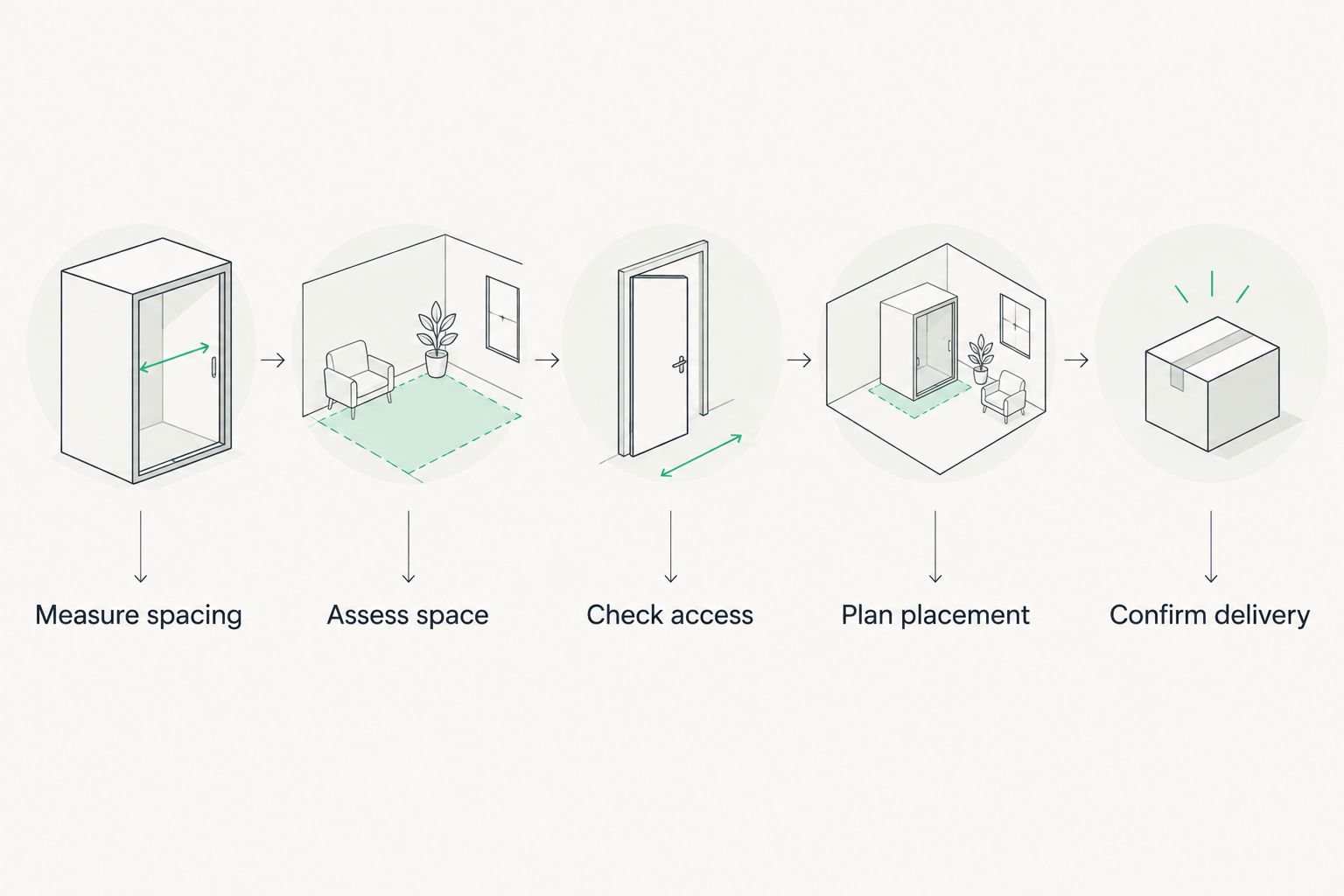
Work through the enclosure and its intended location in this order:
- Measure spacing: confirm bar gaps and inspect other openings, including feeding hatches.
- Assess space: check internal width and depth, then allow for perches, bowls and toys.
- Check access: identify how doors, trays and removable parts operate.
- Plan placement: confirm the support, surrounding clearance and safe household location.
- Confirm delivery: read the exact item's delivery conditions before completing your order.
The final check matters for Australian online shoppers. A retailer's general delivery coverage does not establish whether a particular bulky cage can be sent to your address, or how it arrives.
Check the cage after assembly
Inspect the assembled enclosure before moving your lovebird in. Look for sharp edges, exposed fasteners, damaged finishes and gaps where panels join. Operate every door and tray so you understand how the cage closes and how cleaning affects containment.
Check perch security and bowl placement as well. Removable components should not leave an escape opening during normal use. If assembly reveals a defect or an unclear safety issue, resolve it before using the cage.
Which cage should you choose?
Start with a wide rectangular flight cage, then decide whether you need a stand or wheels. That order keeps the bird's usable enclosure ahead of household convenience.
Choose a tabletop arrangement only when a suitable cage and stable support work together. Keep transport separate: the carrier that makes a vet trip manageable does not replace a permanent enclosure.
For Aqua Life Pet & Aquarium bird cage shopping, use the shortlist as a set of design checks rather than a product leaderboard. Confirm the exact model's measurements and construction before making your decision.
FAQ
What's the best type of bird cage for lovebirds?
A wide rectangular flight cage is the strongest starting point for everyday lovebird housing because it prioritises horizontal movement space. The exact cage still needs appropriate bar spacing, secure doors, safe construction and enough usable room after furnishing.
What bar spacing should a lovebird cage have?
Use a conservative maximum bar gap of about 12 mm when selecting a lovebird cage. Check corners, door edges and feeding openings as well as the main panels, and clarify rounded or ambiguous listing measurements before ordering.
Is a tall cage better than a wide cage for lovebirds?
Prioritise usable width over decorative height for a lovebird's everyday enclosure. Height supports climbing and perch placement, but it does not replace clear horizontal movement space.
Can two lovebirds share one cage?
Compatible lovebirds can share an appropriately sized enclosure, but do not assume that any two birds will coexist safely. Provide separate access to food and water, monitor their interactions and have a separate housing plan if aggression occurs.
Can I use a tabletop cage as permanent lovebird housing?
A tabletop cage can serve as permanent housing only if the enclosure itself is suitable and its support is stable. Assess internal space, bar gaps and the furnished layout rather than assuming that the tabletop label establishes suitability.
Can a travel carrier replace a lovebird cage?
No, a travel carrier is for transport rather than everyday housing. Your lovebird needs a permanent enclosure that accommodates movement, perches, feeding and enrichment.
What should I check before ordering a lovebird cage online in Australia?
Check internal dimensions, bar spacing, door security, materials, assembly requirements and the exact item's delivery terms. Aqua Life Pet & Aquarium shoppers should confirm delivery eligibility for the selected cage rather than infer it from general online shipping information.
One last thing
An easy-clean cage must remain escape-safe while you clean it. Before buying, check what happens when the tray slides out or a feeding bowl is removed: routine maintenance should not expose an unsecured opening.
That detail deserves as much attention as the main door latch. Choose the cage you can maintain safely, not just the one that looks spacious in its product photograph.