
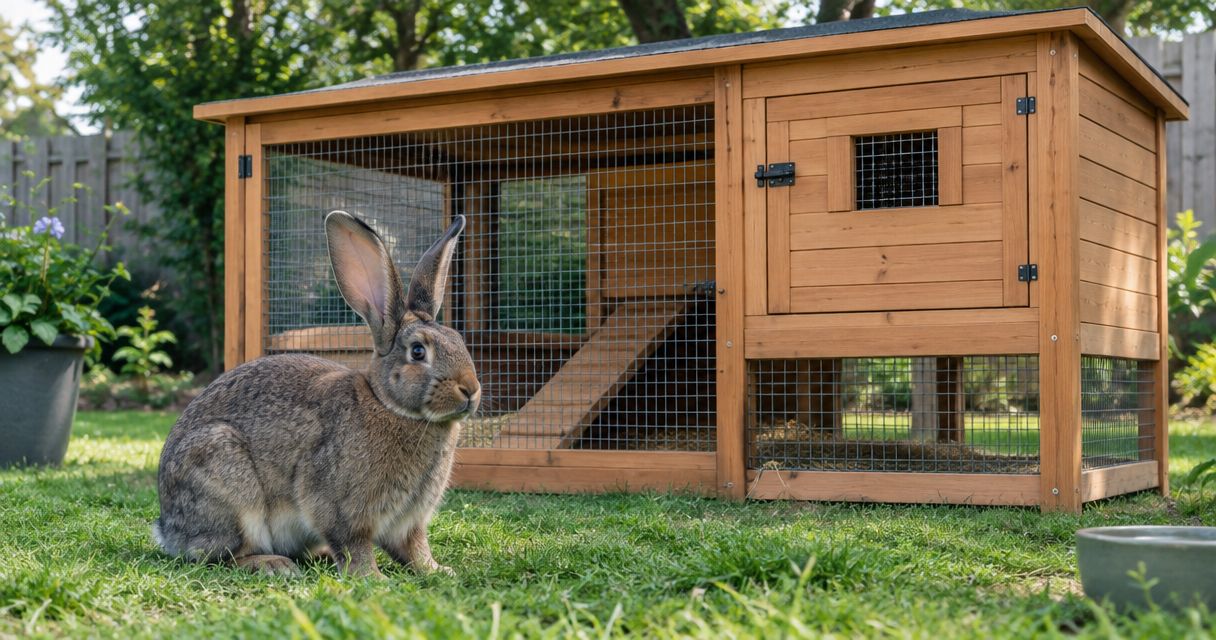
For a Flemish giant rabbit hutch, the strongest starting point is a walk-in enclosure with a sheltered sleeping area; an indoor pen suits supervised household living, while a ground-level hutch with a permanently attached run suits an existing outdoor setup. Choose by usable space, adult-rabbit fit and security, not the word ‘large’ on a listing.
TL;DR
- Choose a Flemish giant rabbit hutch by usable floor space, standing height and permanent exercise access.
- A walk-in enclosure suits outdoor housing when it includes weather protection and predator-resistant construction.
- An indoor pen suits household living when flooring, cables and escape routes are protected.
- Aqua Life Pet & Aquarium sells small animal supplies; check individual product details before selecting housing.
Why this matters
A Flemish giant needs housing that accommodates its adult body, not just its current size. A rabbit that fits through the door can still lack room to stretch out, turn comfortably or stand upright inside.
The sleeping compartment is only part of the setup. Exercise space, shade, ventilation, dry flooring and access for cleaning all affect whether the accommodation works day after day.
Aqua Life Pet & Aquarium is an Australian pet retailer selling small animal supplies alongside aquarium, bird and reptile products. For giant-rabbit housing, assess the complete enclosure before choosing accessories: a feeder or hide cannot fix an undersized living area.
What makes suitable housing for a Flemish giant?
Use these criteria before comparing housing styles:
- Usable floor space: Assess the clear area left after adding hay, water, bedding, a litter tray and shelter. External dimensions do not show this.
- Standing and stretching room: Your adult rabbit needs to stand upright without its ears touching the roof and lie fully extended without obstruction.
- Permanent exercise access: Treat the hutch as shelter within a larger living area, not as the rabbit’s entire home.
- Safe movement: Check doorway width, turning space, thresholds and any ramps. Extra levels do not replace clear ground-level space.
- Weather and predator protection: Outdoor accommodation needs shade, ventilation, protection from driving rain and secure construction around every opening.
- Practical maintenance: You need access to wet corners, bedding, fittings and the rabbit itself without dismantling the enclosure.
A useful movement check is whether your rabbit can take at least 3 consecutive hops without meeting an obstruction. This checks movement within the space; it is not a complete sizing formula or a substitute for a substantial exercise area.
Giant-rabbit housing at a glance
These are housing configurations, not tested product recommendations. The order starts with a practical outdoor default, then separates indoor living from upgrading an existing hutch.
| Housing configuration | Best suited to | Standout feature | Key limitation |
|---|---|---|---|
| Walk-in enclosure with sheltered sleeping area | A purpose-built outdoor home | Ground-level space with access for people | Requires careful weather protection and perimeter security |
| Indoor exercise pen with sheltered resting area | Rabbit-proofed household living | Open layout that is easy to inspect and rearrange | Exposes household flooring, furniture and cables to chewing or soiling |
| Ground-level hutch with permanently attached run | Improving an existing outdoor setup | Keeps a separate sleeping compartment connected to exercise space | The hutch doorway and interior can remain too small |
The suitable configuration is the one that meets your rabbit’s needs without relying on occasional release from a cramped compartment. Each option still needs checking at the level of its actual construction and dimensions.
1. Walk-in enclosure: suited to a purpose-built outdoor home
A walk-in enclosure gives you a full-height space containing a sheltered resting area, exercise area and feeding stations. For a Flemish giant, its main advantage is a ground-level layout that does not depend on narrow ramps or stacked compartments.
The outer enclosure and sleeping shelter perform different jobs. The enclosure provides movement and security; the shelter provides a dry, protected place to rest. Neither is adequate simply because the other is present.
Walk-in enclosure advantages
- You can arrange feeding, resting and toileting areas without dividing the floor into small compartments.
- Person-sized access makes inspection and cleaning easier than reaching through a small hutch door.
- A ground-level layout avoids making a ramp the only route between essential areas.
- You can assess the rabbit’s movement across the whole living area.
Walk-in enclosure limitations
- An exposed mesh enclosure does not provide sufficient protection from sun, wind or driving rain by itself.
- Doors, roof edges and the ground perimeter all require secure construction; a strong front panel does not compensate for gaps elsewhere.
- A large footprint still needs a suitable location with drainage and shade.
Check the roof and wall arrangement throughout the day. Shade at breakfast does not establish that the enclosure stays shaded during the afternoon, and a solid roof does not prevent rain entering from the sides.
Best suited to: Australian owners planning a dedicated outdoor rabbit area with room for a separate sleeping shelter.
Verdict: Choose a walk-in enclosure when you can provide weather protection, a secure perimeter and genuinely usable floor space.
2. Indoor exercise pen: suited to rabbit-proofed household living
An indoor pen defines the rabbit’s living area within your home. Add a sheltered resting place, hay, drinking water and a litter area, while preserving room to move between them.
This arrangement makes observation straightforward and removes direct exposure to outdoor weather. It does not remove the need for security: a pen must resist pushing, jumping and chewing, and the surrounding room needs rabbit-proofing.
Indoor pen advantages
- You can see the rabbit’s eating, resting and toileting behaviour during normal household activity.
- An open layout allows you to reposition equipment without working around fixed internal walls.
- Ground-level access removes the need for steep ramps.
- Indoor placement avoids direct exposure to rain and outdoor sun.
Indoor pen limitations
- Unprotected flooring can become slippery or suffer damage from urine and chewing.
- Cables, furniture edges and unsuitable household materials need to remain out of reach.
- An unsecured pen can shift or separate when the rabbit pushes against it.
Use flooring that provides grip and remains dry. Check exposed mat edges and remove damaged materials that the rabbit chews or swallows; a soft surface is not automatically a safe surface.
Position the pen away from direct sunlight through windows and from rooms that become hot. Indoor housing also needs ventilation, quiet resting space and protection from other household animals.
Best suited to: Owners who can dedicate a rabbit-proofed indoor area rather than temporarily setting up a pen in a busy walkway.
Verdict: Choose an indoor pen when the room, floor and barriers are suitable for ongoing rabbit housing.
3. Ground-level hutch and attached run: suited to an existing outdoor setup
A ground-level hutch can serve as a sheltered sleeping compartment when it opens directly into a secure run. The important distinction is permanent access: the rabbit should not depend on someone opening a door each time it needs exercise.
This configuration is only suitable if the hutch itself fits an adult Flemish giant. Attaching a spacious run does not widen a narrow doorway, increase a low roof or make a cramped sleeping compartment comfortable.
Hutch-and-run advantages
- A separate compartment creates a defined resting area away from the open exercise space.
- Direct ground-level access avoids dependence on an elevated ramp.
- An existing setup can be assessed component by component before replacement.
Hutch-and-run limitations
- Internal dividers and small entrance holes can restrict movement even when the external dimensions look generous.
- The connection between hutch and run creates another opening that must resist escape and predator entry.
- Small access doors make cleaning and handling a large rabbit awkward.
Check whether you can reach every part of the sleeping compartment. If routine cleaning requires lifting the roof while the rabbit remains inside, assess how you will prevent escape and handle the rabbit safely.
Do not count an upper storey as equivalent to the same area of clear ground-level space. A narrow ramp also becomes a problem if it is the only route to water, hay or shelter.
Best suited to: Owners whose existing hutch already provides appropriate adult-rabbit clearance and can connect securely to a substantial run.
Verdict: Hold until the hutch interior, doorway and connection pass the fit and security checks.
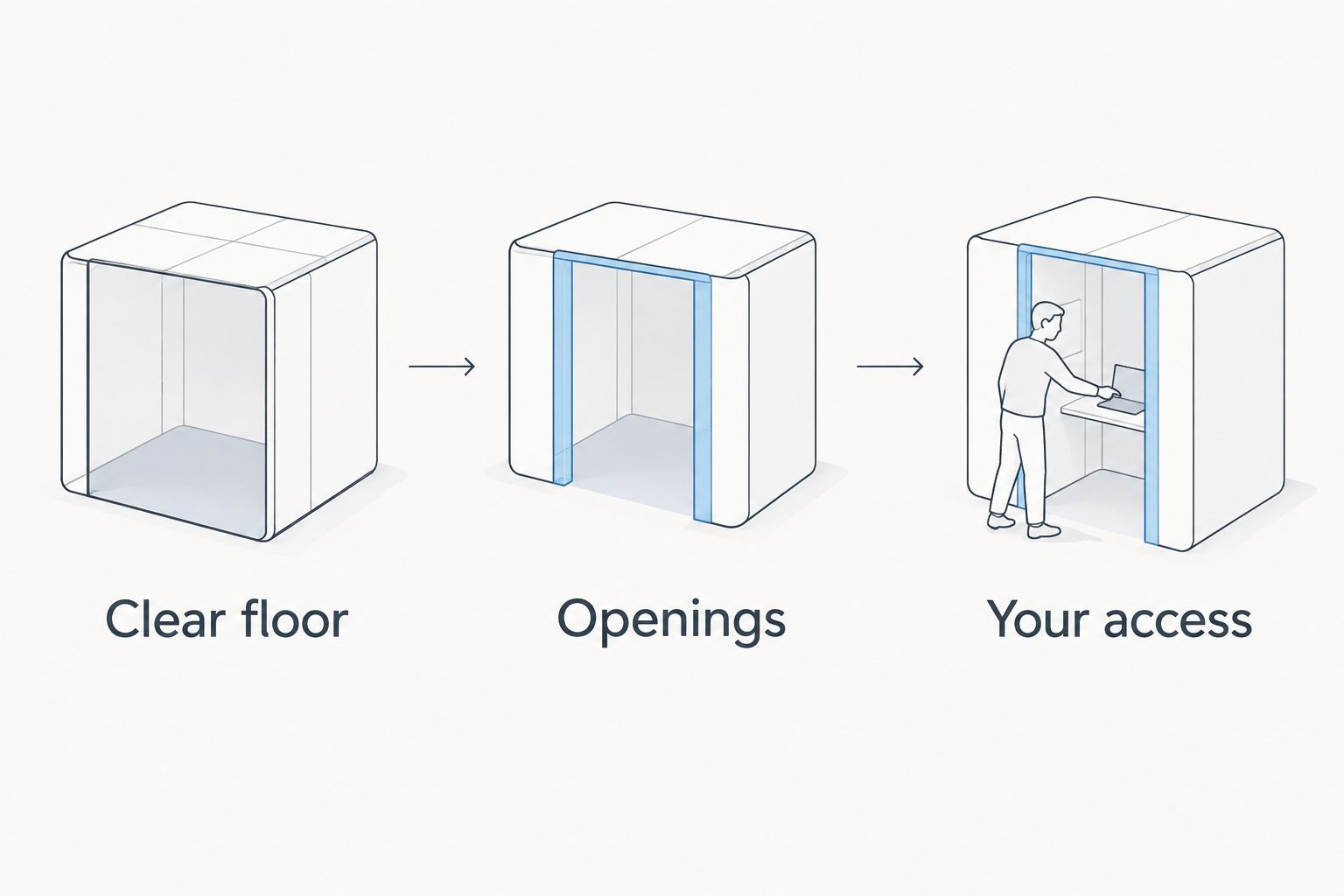
How to check fit before ordering
Start with your rabbit’s adult size and movement needs, then compare them with the enclosure’s internal measurements. For a growing rabbit, plan for adulthood rather than buying around its present footprint.
Check the clear floor
Sketch the enclosure with the sleeping shelter, litter tray, hay area and water position included. Look at what remains: your rabbit needs to turn, stretch and move without squeezing between equipment.
For 2 rabbits, assess the arrangement for both animals together. Each needs access to resting space and essentials without the layout forcing one animal into a narrow dead end.
Check the openings
Request doorway dimensions separately from overall enclosure dimensions. Check internal partition openings too; the front door can be generous while the entrance to the sleeping compartment is restrictive.
Examine thresholds and ramp connections. Essential resources should remain accessible without requiring awkward climbing or squeezing.
Check your access
Picture removing wet bedding, lifting out a litter tray and reaching a rabbit resting in the far corner. A housing design that makes these tasks difficult creates an avoidable maintenance problem.
Also plan how the enclosure will reach its final position. Compare assembled dimensions, access gates and the route through your property before arranging a purchase.
Outdoor safety in Australian conditions
Choose the location before choosing the enclosure. Check afternoon sun, rain direction, drainage and nearby sources of disturbance, rather than judging the site during favourable weather.
Shade and ventilation must work together. Covering every side to block sunlight can restrict airflow, while an open-sided enclosure can leave the rabbit exposed to wind and rain. Provide a protected retreat without turning it into a stuffy box.
Inspect mesh, fixings, latches and joins as a complete barrier. A roof is part of outdoor security, and the ground boundary needs protection against digging and entry beneath the enclosure.
Avoid wire-mesh flooring as the rabbit’s living surface. Provide supportive flooring, keep resting areas dry and inspect feet regularly; seek veterinary advice for redness, sores or changes in movement.
Flystrike is another reason to keep bedding clean and check your rabbit closely, especially during warm weather. A hutch inspection does not replace checking the animal itself.
What to confirm when shopping online
A listing needs enough information to establish suitability. Before purchasing housing or larger accessories through Aqua Life Pet & Aquarium, check the individual item’s details rather than assuming the retailer’s general online service establishes its fit or delivery terms.
Ask for:
- Internal floor dimensions and clear standing height.
- Doorway sizes and the arrangement of internal partitions.
- Flooring material and access for cleaning.
- Mesh, latch and connection details for outdoor use.
- Assembly requirements and the size of the finished structure.
- Delivery eligibility for your postcode and the particular item.
Do not treat ‘rabbit hutch’, ‘XL’ or a photograph as evidence of giant-breed suitability. If the dimensions leave the fit unresolved, settle that question before ordering.
How these recommendations were selected
The comparison prioritises usable ground-level space, adult-rabbit clearance, continuous exercise access, weather protection, security and cleaning access. It compares layouts, not brands or individually tested products.
A walk-in enclosure is the outdoor starting point because it allows shelter and exercise areas to sit within one accessible layout. An indoor pen addresses a different need; a hutch-and-run arrangement depends more heavily on whether the existing sleeping compartment fits.
Which housing should you choose?
Choose a secure walk-in enclosure with a protected sleeping area for a dedicated outdoor setup. Choose an indoor pen when you can provide a rabbit-proofed household area, or retain a hutch-and-run arrangement only after checking adult-rabbit clearance throughout.
Treat accessories as the next decision. Once the space works, select resting, feeding and toileting equipment that fits without consuming the movement area you planned.
FAQ
What is a suitable Flemish giant rabbit hutch?
A suitable Flemish giant rabbit hutch provides adult-rabbit standing, stretching and turning room, with permanent access to a secure exercise area. Judge internal space and openings rather than the product’s size label.
Can a Flemish giant live in a standard rabbit hutch?
Only if the actual internal dimensions and doorway clearance meet the rabbit’s needs and it has continuous exercise access. A standard product description does not establish giant-breed suitability.
Is an indoor pen better than an outdoor hutch?
An indoor pen suits a rabbit-proofed home, while outdoor housing requires weather protection and predator-resistant construction. Choose according to the complete environment you can provide, not the housing label alone.
Does a two-storey hutch provide enough room for a giant rabbit?
Two storeys do not establish adequate space for a giant rabbit. Check clear ground-level movement, standing height and doorway access, and do not rely on a narrow ramp to reach essential resources.
Can Flemish giant rabbits live outside in Australia?
Outdoor housing requires shade, ventilation, dry shelter and protection against predators and digging. Assess local conditions and make a safe alternative arrangement for weather the enclosure cannot manage.
Can I order giant-rabbit housing from Aqua Life Pet & Aquarium?
Check Aqua Life Pet & Aquarium’s current individual listings for relevant housing and delivery terms. Confirm dimensions and product-specific eligibility before treating an item as suitable for a Flemish giant.
Should I choose wire flooring for a Flemish giant rabbit?
Avoid wire-mesh flooring as the rabbit’s living surface. Use supportive flooring, maintain dry resting areas and seek veterinary advice if you notice foot sores or changes in movement.
One last thing
Check the sleeping-compartment entrance separately from the main door. That small internal opening is easy to miss in photographs, yet it determines whether your adult rabbit can comfortably use the shelter you are buying.