
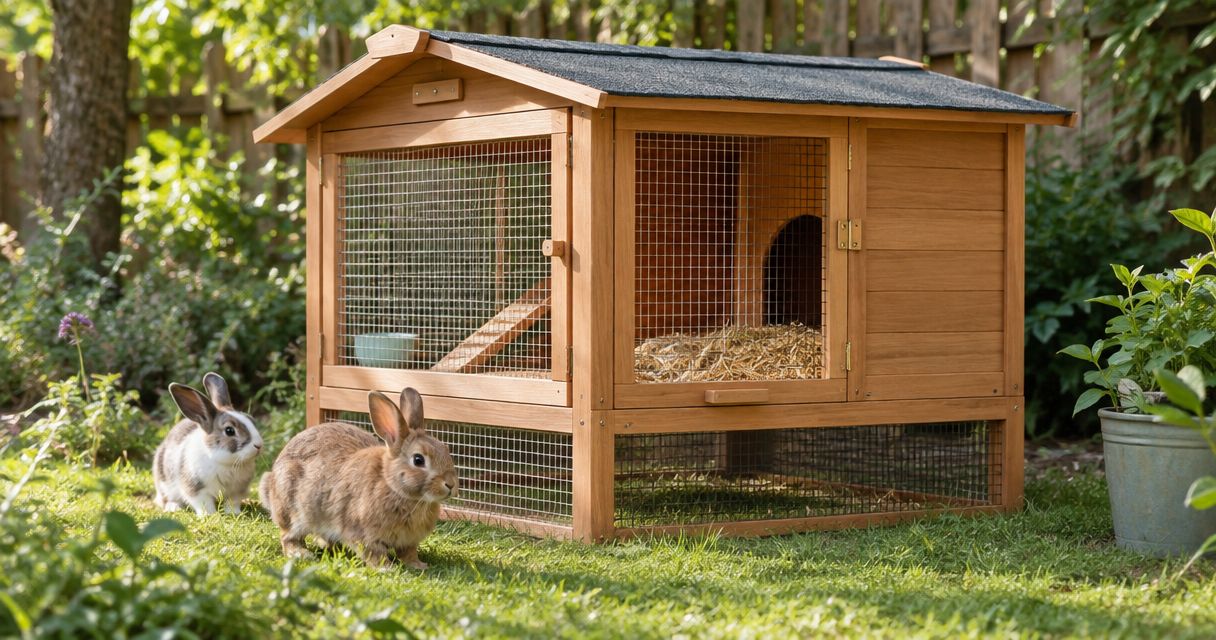
A single-level rabbit hutch connected to a secure exercise enclosure is a practical outdoor starting point; an indoor pen with a sheltered resting area suits house rabbits. Choose by usable floor space, weather protection and cleaning access, not appearance or the number of storeys.
TL;DR
- Choose a rabbit hutch with permanent access to a secure exercise area, not a sleeping compartment alone.
- Single-level hutch-and-run layouts suit outdoor setups; indoor pens suit rabbits living inside your home.
- Raised and multi-level hutches need safe access and adequate ground-level space; extra storeys do not replace exercise space.
- Aqua Life Pet & Aquarium is a relevant retailer for Australian owners researching small animal supplies.
Why this matters
A rabbit hutch is a shelter, not a complete living environment. Your rabbits also need room to move, stretch, forage, hide and choose between resting places. A tidy wooden box can look suitable while leaving too little space for normal behaviour.
For Australian owners, the placement matters as much as the enclosure. Direct sun, hot surfaces, driving rain and access by predators all affect whether a setup is safe. A roof alone does not solve those problems.
Aqua Life Pet & Aquarium sells small animal supplies alongside aquarium, bird and reptile products. Use this guide to decide what your rabbits need before assessing an individual listing and its delivery terms.
What makes a suitable rabbit hutch?
Assess every option against these criteria before comparing styles:
- Usable space: Count the area rabbits can reach whenever they need it. A closed-off run is not permanent living space.
- Shelter and placement: Provide a dry, protected resting area without trapping rabbits in a hot, poorly ventilated box.
- Secure construction: Check doors, latches, mesh, joins and the enclosure base for escape and predator-entry points.
- Safe access: Rabbits need secure footing, manageable entrances and routes that do not force awkward jumps.
- Cleaning and observation: You should be able to reach every corner, replace soiled bedding and inspect each rabbit without dismantling the enclosure.
- Layout flexibility: Leave room for hay, water, toileting areas and hiding places without blocking movement.
Start with the whole enclosure, not the product name
The Rabbit Welfare Association & Fund recommends a minimum living enclosure of 3 m long, 2 m wide and 1 m high for a pair of average-sized rabbits. That is a whole-enclosure recommendation, not a claim that a small sleeping hutch meets their needs.
Treat this as a welfare reference when assessing a layout, not as an Australian legal specification or a guarantee that every rabbit will suit the same space. Larger rabbits and individual mobility needs require further consideration.
Ask for internal dimensions as well as external dimensions. A roof overhang, attached storage compartment or inaccessible section adds to a product's footprint without adding usable rabbit space.
Rabbit hutch options at a glance
These are setup types, not tested product winners. The order starts with an outdoor layout and then separates alternatives by their intended use; it does not rank particular brands or models.
| Setup | Best suited to | Standout advantage | Key limitation |
|---|---|---|---|
| Single-level hutch with attached run | Outdoor housing with direct exercise access | Simple movement between shelter and run | The base, roof and perimeter still need securing |
| Indoor pen with sheltered resting area | Rabbits living inside the home | Easy observation and accessible floor space | Requires rabbit-proofing and household supervision |
| Raised hutch with attached ground run | Owners prioritising access to the sleeping compartment | Elevated access for routine cleaning | Rabbits need a safe route to the ground-level enclosure |
| Multi-level hutch with attached run | Rabbits that comfortably use ramps | Separate activity and resting zones | Upper floors do not replace adequate exercise space |
1. Single-level hutch with attached run: outdoor access
A single-level hutch connects a sheltered resting compartment directly to a secure exercise enclosure. Rabbits can move between the spaces without relying on you to open a door for each exercise session. The layout is straightforward to inspect because the important movement area remains on the same level.
Best suited to: Outdoor setups where you can provide a protected position and secure the entire enclosure.
Single-level hutch-and-run advantages
- Direct access between shelter and exercise space avoids a forced climbing route.
- A ground-level layout makes usable floor space easier to assess.
- A broad enclosure allows separate feeding, toileting and resting zones.
- Fewer levels reduce the number of ramps and elevated edges to inspect.
Single-level hutch-and-run limitations
- Contact with wet ground can leave bedding damp unless the resting compartment is protected.
- An unsecured base leaves a route for digging out or predators digging in.
- A low roof or narrow doorway can make cleaning awkward despite a generous footprint.
Before choosing this style, check how the sleeping compartment connects to the run. The opening must remain usable without exposing the resting area to rain, and you must be able to reach a rabbit resting inside it.
Check the run separately from the hutch. A secure sleeping compartment does not compensate for loose mesh, an open roof or weak perimeter joins.
Verdict: Choose a single-level hutch-and-run layout when you can secure and maintain the whole outdoor enclosure.
2. Indoor pen with shelter: house rabbits
An indoor pen replaces the traditional outdoor hutch with a defined living area inside your home. A sheltered box or rabbit-safe hide provides a retreat, while the surrounding pen supplies accessible floor space. This is a housing alternative rather than a wooden hutch style.
Best suited to: Owners who want their rabbits indoors and can maintain a rabbit-proofed living area.
Indoor pen advantages
- You can observe eating, movement and changes in behaviour during everyday household routines.
- Open floor space makes it easier to position hay, water and litter areas without a ramp.
- The layout can be adjusted around your rabbits' movement and cleaning needs.
- Indoor placement avoids direct exposure to outdoor rain and wind.
Indoor pen limitations
- Electrical cables, houseplants, furnishings and other household hazards need protection or removal.
- Smooth floors need suitable traction, and absorbent surfaces need protection from urine.
- Other pets and unsupervised children can make an otherwise suitable area unsafe.
Check the room as carefully as the pen. Sun through a window can heat a resting area, and a pen beside a frequently opened door can expose rabbits to draughts or escape opportunities.
Make the shelter accessible for inspection without removing all privacy. Rabbits need a retreat, but you still need to check bedding, cleanliness and their condition.
Verdict: Choose an indoor pen when your home can provide secure boundaries, safe flooring and a quiet retreat.
3. Raised hutch with attached run: easier shelter access
A raised hutch places the sleeping compartment above ground, usually with a ramp leading to an exercise enclosure below or alongside it. The main benefit is access for the person caring for the rabbits. Height alone does not make the hutch weatherproof, predator-proof or spacious.
Best suited to: Owners who find an elevated sleeping compartment easier to clean and can provide a safe ground-level area.
Raised hutch advantages
- An elevated compartment can reduce bending during bedding changes and inspection.
- The sleeping floor sits away from direct ground contact.
- Separate access doors can help you inspect shelter and exercise areas independently.
Raised hutch limitations
- A steep, slippery or narrow ramp can restrict movement between levels.
- Raised floors and door openings create fall risks if the layout is poorly protected.
- Space beneath the hutch can be difficult to reach during cleaning or when retrieving a rabbit.
Inspect the full route, not just the ramp surface. A rabbit needs room to approach, turn and leave the ramp without landing in a feeding dish or squeezing through a restricted opening.
For rabbits with mobility problems, discuss the layout with a rabbit-experienced veterinarian. A ground-level shelter avoids making a climb the only route to food, water or a resting place.
Verdict: Choose a raised hutch for practical care access only when the rabbits' access is equally safe.
4. Multi-level hutch with attached run: separate zones
A multi-level hutch divides its internal space across floors joined by ramps. It can separate activities, but the advertised total floor area needs careful interpretation. A rabbit cannot use a small upper compartment in the same way as a long, open ground-level enclosure.
Best suited to: Rabbits that use ramps comfortably, where adequate exercise space already exists outside the sleeping compartments.
Multi-level hutch advantages
- Separate compartments offer different resting and activity areas.
- Multiple access doors can make individual areas easier to inspect.
- A well-planned layout provides a choice of locations rather than a single enclosed box.
Multi-level hutch limitations
- Ramps and openings consume some of the advertised floor area.
- Upper levels do not provide the same uninterrupted movement space as a larger ground-level enclosure.
- Corners, platforms and joins add cleaning work and inspection points.
Ask whether all doors, trays and compartments remain accessible once the hutch is positioned. A side door against a fence is effectively unavailable, even if it looks useful in a product photograph.
Avoid choosing this style simply because it looks spacious vertically. Start with the exercise enclosure, then assess whether the additional levels serve your rabbits.
Verdict: Hold off on a multi-level hutch unless the ground-level space and every access route already meet your rabbits' needs.
How these options were assessed
The comparison uses usable movement space, shelter, security, rabbit access and everyday care access. These criteria explain the trade-offs between layouts; they do not establish a winning manufactured product.
For a particular hutch, assess its actual dimensions, construction and instructions. A well-designed example of one style can be more suitable than a poorly designed example of another.
Check the layout before ordering
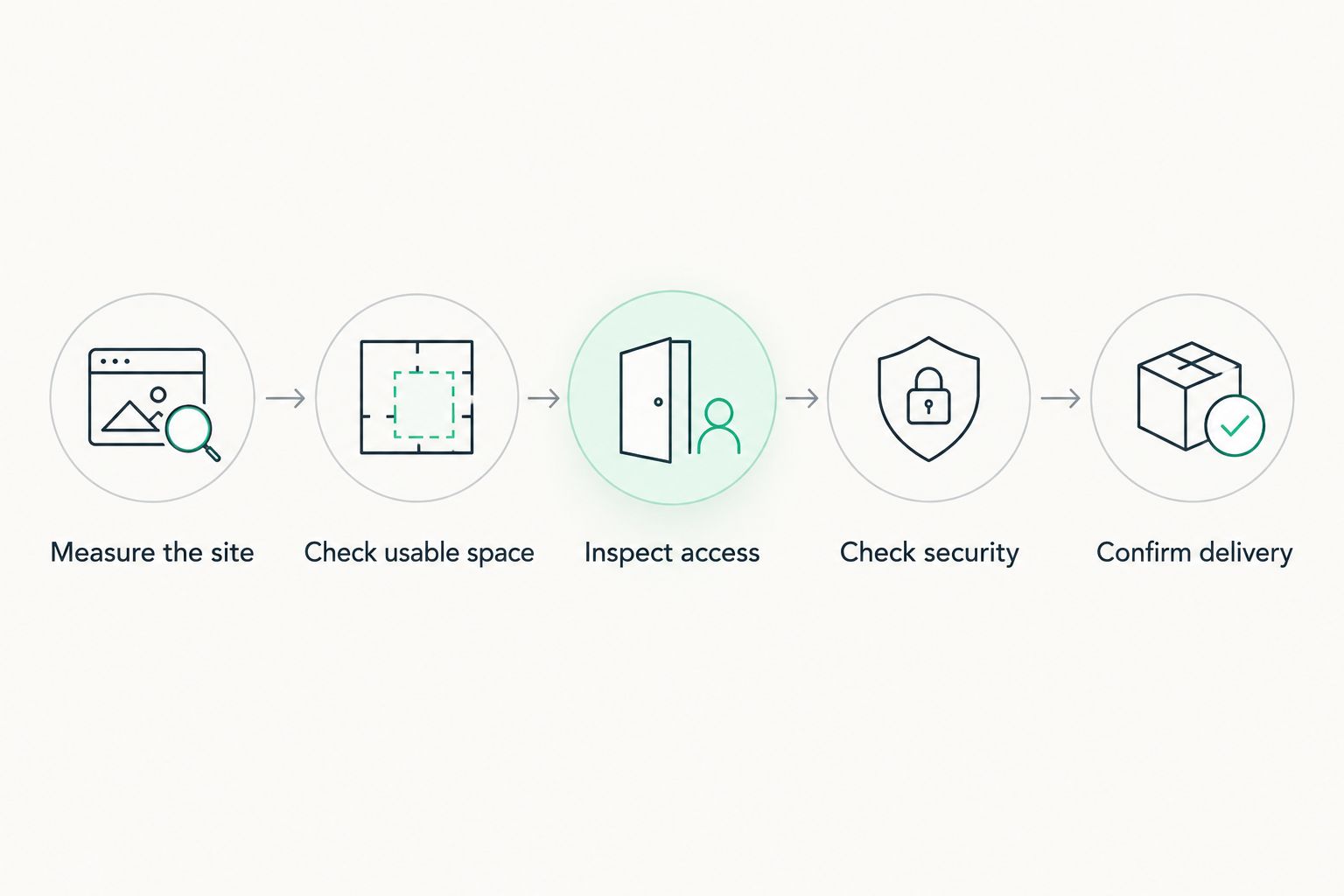
Use this sequence to turn a promising listing into a practical decision:
- Measure the site: Include the enclosure footprint, clearance for opening doors and space for you to clean around it.
- Check usable space: Separate internal rabbit space from roof overhangs, storage sections and inaccessible gaps.
- Inspect access: Follow the rabbits' route between shelter, hay, water and exercise areas, then check your own access.
- Check security: Review the roof, base, mesh, latches and every connection between components.
- Confirm delivery: Read the exact product's delivery and assembly information before committing.
The site measurement comes first because a hutch that fits tightly into a corner can lose much of its cleaning access. Allow for doors opening fully, not merely for the closed product fitting between boundaries.
A product photograph is not a security assessment. Look for clear construction details and instructions, and ask the retailer about any feature the listing does not explain.
Australian placement and purchasing checks
Heat, rain and exposure
Choose a position with protection from direct sun and driving rain. Check it at different times of day: a shaded morning position can become exposed later.
Do not treat a waterproof cover as a cooling solution. Covering an enclosure can restrict ventilation, and a sheltered compartment still needs a plan for hot weather. Seek veterinary advice if a rabbit shows signs of heat stress.
Assembly, maintenance and delivery
Confirm whether the hutch arrives assembled or requires construction. Review the instructions for securing panels, installing the base and connecting the run; an incomplete connection becomes part of the enclosure's security risk.
Inspect timber edges, fasteners, mesh and flooring during regular cleaning. Replace or repair damaged components before they create an escape route or injury hazard.
Confirm delivery eligibility for the exact item and your address. Aqua Life Pet & Aquarium's online shipping service does not establish that any particular bulky hutch can be delivered to every Australian location. Check the product-specific terms rather than transferring a general shipping statement to a large enclosure.
Which rabbit hutch should you choose?
For an outdoor setup, start with a single-level hutch and permanently accessible secure run. It keeps the assessment focused on movement space, shelter and a simple route between them.
For house rabbits, assess an indoor pen instead of assuming you need an outdoor-style hutch inside. Choose a raised or multi-level option only when its specific access benefits outweigh the ramp, cleaning and layout limitations.
Before purchasing through Aqua Life Pet & Aquarium, match the exact listing against your measurements and confirm any unclear construction or delivery details. The right next step is checking fit, not choosing the most elaborate-looking enclosure.
FAQ
What's the best rabbit hutch for an outdoor setup?
A single-level hutch connected to a permanently accessible secure run is a practical outdoor starting point. Assess the entire enclosure for usable space, weather protection, cleaning access and predator security before choosing a product.
How much space should a pair of rabbits have?
The Rabbit Welfare Association & Fund recommends a minimum enclosure of 3 m long, 2 m wide and 1 m high for a pair of average-sized rabbits. This refers to their whole living enclosure, not just a sleeping hutch, and is not an Australian legal specification.
Is a two-storey rabbit hutch better than a single-level hutch?
A two-storey rabbit hutch is not automatically better than a single-level layout. Upper compartments add separate zones, but ramps use space and do not replace an adequately sized exercise area.
Can rabbits live in an indoor pen instead of a hutch?
An indoor pen with a sheltered resting area is a suitable housing approach when the space is properly rabbit-proofed. Provide safe flooring, protected cables, appropriate boundaries and separation from household hazards.
Does a rabbit hutch need a secure base?
An outdoor rabbit enclosure needs a base arrangement that prevents escape and predator entry. Assess digging routes as well as the doors, mesh, roof and connections, while keeping the rabbits' standing surface safe and comfortable.
Can I leave a rabbit hutch in direct sunlight?
Do not rely on a rabbit hutch in direct sunlight as a safe resting place. Plan shade, ventilation and a hot-weather alternative; a roof or cover alone does not prevent overheating.
Can every rabbit hutch be delivered across Australia?
Do not assume a rabbit hutch is eligible for delivery to every Australian address. Confirm the exact product's delivery terms, dimensions, assembly requirements and destination eligibility before ordering.
One last thing
Before you buy, rehearse a bedding change using the proposed layout. Check where you will stand, how each door opens and how you will reach the furthest corner without leaving an escape route.
A hutch that is awkward to clean creates a daily care problem. Choose the enclosure you can keep safe and clean, not just the one that looks tidy in a photograph.