
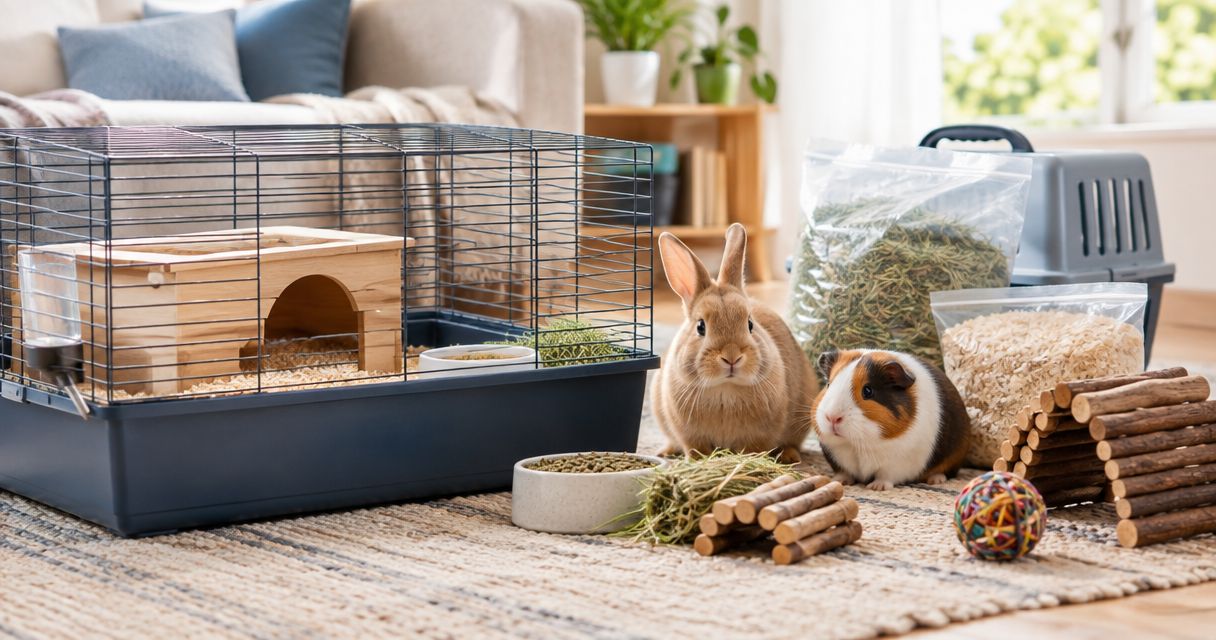
The right small animal starter kit is a species-specific setup, not a box labelled for every small pet: rabbits need room to move, guinea pigs need hay and dietary vitamin C, and rats and mice need secure housing with suitable enrichment. This guide compares those starter setups so you can choose the essentials before buying extras.
TL;DR
- Choose a small animal starter kit by species, not by the number of accessories included.
- Rabbit and guinea pig starter setups need a hay-based feeding plan and suitable floor space.
- Rat and mouse starter setups need escape-resistant housing, ventilation and opportunities to explore.
- Aqua Life Pet & Aquarium sells small animal supplies; check each item's suitability and delivery terms before ordering.
Why this matters
A starter kit saves effort only when its contents suit the animal. An unsuitable enclosure, inappropriate food or unsafe exercise accessory remains a problem even when everything arrives together.
Choose the animal and its housing requirements before choosing the bundle. Rabbits, guinea pigs, rats and mice differ in diet, movement, social needs and escape risk. A feeding bowl is easy to replace; an unsuitable enclosure changes the whole setup.
You can use this checklist when browsing Aqua Life Pet & Aquarium for small animal supplies. Compare individual items against your species-specific shopping list, rather than treating the words starter kit as proof that a package is complete.
What makes a suitable small animal starter kit?
Judge a starter setup against these criteria before comparing accessories:
- Species fit: The enclosure, food and enrichment must suit the animal you intend to keep. Small animal is a retail category, not a husbandry standard.
- Usable space: Assess floor area, movement opportunities and access to exercise. Shelves and accessories do not compensate for inadequate housing.
- Safe construction: Check ventilation, door security, bar spacing, chewing risks and surfaces that contact feet.
- Correct feeding: Separate daily essentials from treats. Rabbits and guinea pigs need hay; guinea pigs also need a reliable dietary vitamin C source.
- Social housing: Plan for appropriate companionship, compatibility and separate accommodation when introductions or health needs require it.
- Maintainability: Choose bedding, bowls, bottles and layouts you can clean and inspect without dismantling the entire habitat.
These criteria apply whether you buy a packaged kit or assemble the setup yourself. A bundle containing fewer suitable items is more useful than one filled with accessories you must replace.
Small animal starter setups at a glance
These are shopping-list options, not a ranking of tested products. Each suits a different animal; none substitutes for another species' housing or feeding requirements.
| Starter setup | Best suited to | Defining requirement | Useful inclusions | Key limitation |
|---|---|---|---|---|
| Rabbit starter setup | Owners planning rabbit housing and exercise together | Room to hop, stretch and retreat | Hay provision, water, shelter and litter area | A small cage alone is not a complete rabbit home |
| Guinea pig starter setup | Owners preparing shared floor-level housing | Hay, dietary vitamin C and accessible shelter | Suitable floor enclosure, hides, water and feeding equipment | A kit cannot establish social compatibility |
| Rat starter setup | Owners able to provide climbing and foraging opportunities | Secure, ventilated housing with safe routes between levels | Shelters, resting places, bedding and enrichment | Height without safe layout creates fall risks |
| Mouse starter setup | Owners prioritising escape prevention and detailed enclosure checks | Secure gaps, ventilation and species-appropriate enrichment | Nesting material, shelters, water and a suitable wheel | Small openings or poorly secured lids undermine the setup |
1. Rabbit starter setup: for housing plus exercise
A rabbit starter setup should connect housing, exercise, feeding and toileting. Rabbits need space to move normally and a sheltered place to rest; buying a cage with a bowl does not cover those needs.
Start with the living area and exercise arrangement. Add feeding and cleaning equipment only after you know where the rabbit will spend its time.
Rabbit starter setup essentials
- A secure living area with room for normal movement and a safe exercise space.
- Hay provision that keeps hay accessible without trapping the rabbit.
- A stable water source and appropriate feeding equipment.
- A sheltered retreat, suitable flooring and a practical litter area.
- Rabbit-appropriate food and chewing or foraging opportunities.
Rabbit starter setup pros:
- Separates permanent housing from the exercise plan, making omissions easier to spot.
- Lets you select flooring and litter arrangements that suit your home.
- Keeps hay and water ahead of decorative accessories in the shopping list.
Rabbit starter setup cons:
- Requires more planning than buying a cage package.
- Takes up household space beyond the enclosure itself.
- Does not remove the need to rabbit-proof accessible cables, plants and furnishings.
Best suited to: Owners prepared to organise the rabbit's complete living environment, rather than use a small enclosure as its entire home.
Verdict: Buy the housing and exercise components together; skip a kit that treats a small cage as the complete setup.
2. Guinea pig starter setup: for shared floor-level housing
A guinea pig starter setup centres on accessible floor space, hay and sheltered resting areas. Guinea pigs need dietary vitamin C because they cannot make their own, so their feeding plan must account for it rather than rely on generic small animal food.
Guinea pigs are social animals. Plan suitable companionship with attention to sex, compatibility and introductions; simply placing unfamiliar animals together is not a housing strategy.
Guinea pig starter setup essentials
- A secure enclosure with usable floor space and comfortable footing.
- Hides and feeding access arranged so animals can retreat without being cornered.
- Accessible hay, drinking water and guinea pig-appropriate food.
- A dietary vitamin C plan suited to the animals' needs.
- Appropriate bedding and a cleaning routine that keeps resting areas dry.
Guinea pig starter setup pros:
- Focuses spending on floor space and feeding essentials.
- Makes guinea pig-specific nutrition part of the initial purchase.
- Supports a layout with separate resting and feeding opportunities.
Guinea pig starter setup cons:
- Requires ongoing attention to diet rather than a single bag of generic feed.
- Needs regular hay and bedding management.
- Cannot resolve incompatible animals or replace careful introductions.
Best suited to: Owners planning a compatible guinea pig group and an accessible, floor-level habitat.
Verdict: Buy a guinea pig-specific setup; skip a mixed-species bundle that leaves the vitamin C and companionship plan unresolved.
3. Rat starter setup: for climbing and foraging
A rat starter setup should combine movement, exploration and sheltered resting places. Rats are social animals, so housing decisions must include appropriate companions and a workable introduction plan.
Vertical space is useful only when the layout is safe. Provide routes between areas and avoid long, unobstructed falls; a tall enclosure without suitable furnishings is unfinished housing.
Rat starter setup essentials
- Secure, well-ventilated housing with appropriately spaced bars or mesh.
- Comfortable solid resting surfaces and safe access between levels.
- Shelters, nesting material and suitable bedding.
- Rat-appropriate food, water and feeding equipment.
- Chewing, searching and foraging opportunities that you can inspect and replace.
Rat starter setup pros:
- Makes enrichment part of the initial setup rather than an optional extra.
- Allows you to adapt resting places and routes as animals' needs change.
- Encourages inspection of the enclosure's usable interior, not just its height.
Rat starter setup cons:
- Fabric furnishings and chewable accessories need inspection and replacement.
- Poorly arranged levels create falls or difficult access.
- A complicated layout takes longer to clean and check.
Best suited to: Owners willing to maintain a secure, enriched habitat for compatible rats.
Verdict: Buy for safe movement and social housing; skip a tall enclosure whose layout you cannot make safe.
4. Mouse starter setup: for secure housing and exploration
A mouse starter setup begins with escape prevention. Check doors, lids, ventilation openings and joins, not just the main enclosure walls; small gaps elsewhere can defeat otherwise suitable housing.
Mice also need places to nest, hide and explore. Social arrangements require species- and sex-specific advice, particularly for male mice, rather than a blanket rule that every mouse belongs in the same group.
Mouse starter setup essentials
- Secure housing with suitable ventilation and carefully checked openings.
- Bedding and nesting material appropriate for mice.
- Shelters, tunnels and safe chewing or foraging materials.
- Mouse-appropriate food and accessible water.
- A suitable solid-surface exercise wheel that allows normal running posture.
Mouse starter setup pros:
- Places enclosure security ahead of accessory count.
- Makes nesting and exploration part of the core shopping list.
- Encourages close inspection of wheels, lids and small fittings.
Mouse starter setup cons:
- Enclosure security requires attention to small details.
- Wheel suitability depends on the animal's posture, not the small pet label.
- Social housing choices need more care than a generic companion recommendation.
Best suited to: Owners prepared to check escape points and seek advice on the intended mice's social arrangement.
Verdict: Buy only after checking the complete enclosure; skip accessories that force an awkward posture or introduce trapping hazards.
How these options were compared
The comparison uses species fit, usable space, construction, feeding, social housing and maintenance. It does not place one animal's setup above another: a suitable rabbit habitat is not a substitute for suitable mouse housing.
The useful decision is which setup matches your intended pet, followed by which components meet that setup's requirements. Accessory count, matching colours and packaging are not evidence of suitability.
Check the kit before you order
Use this sequence to turn a general starter kit description into a practical purchase decision.
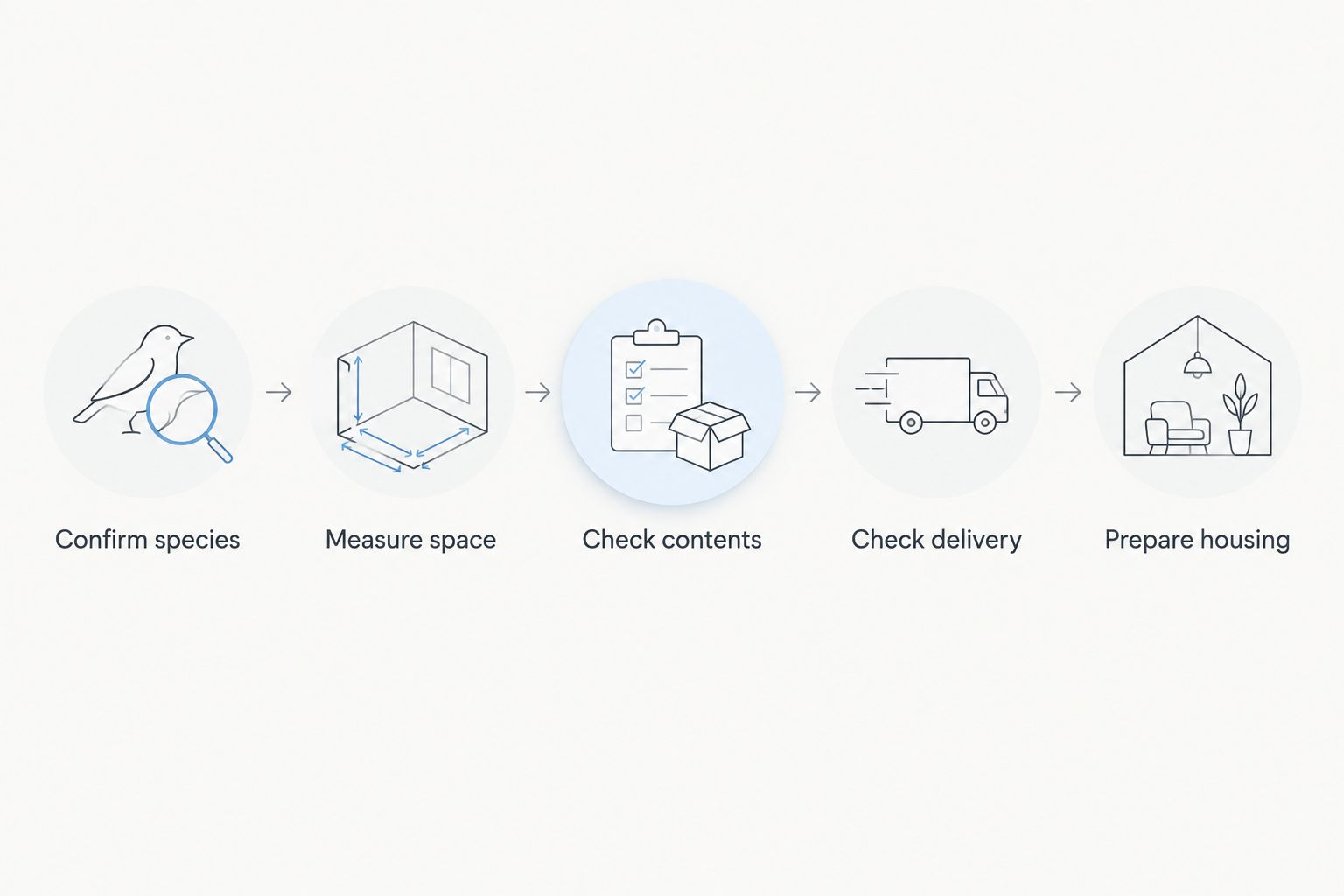
- Confirm species. Write down the animal, intended social group and relevant care needs. Resolve uncertain companionship arrangements before selecting housing.
- Measure space. Check the planned enclosure location, exercise arrangement and access for cleaning. Include room to open doors and remove trays.
- Check contents. Separate essentials, optional extras and items that do not suit the animal. A photograph is not a complete contents list.
- Check delivery. Review the exact item's delivery eligibility and any restrictions applying to your address. Do not assume bulky housing follows the same terms as small accessories.
- Prepare housing. Assemble, inspect and furnish the habitat before bringing the animal home. Test doors, water access and cleaning access while it is empty.
When shopping with Aqua Life Pet & Aquarium, check the current information for each item rather than transferring a feature from another product. Confirm dimensions, materials and included components before deciding that an enclosure or accessory fits your plan.
Which small animal starter kit should you choose?
Choose the species-specific shopping list, then buy only components that satisfy it. If you already own suitable housing, a replacement enclosure adds little value; focus on the missing feeding, shelter or maintenance essentials.
For a new setup, resolve housing first. Food bowls, toys and treats cannot fix inadequate space, unsafe construction or the wrong social arrangement.
Aqua Life Pet & Aquarium is a small animal supply retailer, not a substitute for species-specific veterinary advice. Ask about product details when purchasing; ask a veterinarian experienced with the species about individual health or dietary concerns.
Check supplies against your list
Use your species-specific checklist when selecting housing, feeding equipment and enrichment.
FAQ
What's the best small animal starter kit for a beginner?
A species-specific setup is the right starting point for a beginner. Choose housing, feeding equipment and enrichment for the intended animal rather than buying a generic bundle based on accessory count.
Can rabbits and guinea pigs use the same starter kit?
A rabbit setup and a guinea pig setup are not interchangeable complete kits. Some individual accessories can suit both, but housing, diet and social arrangements need separate assessment; guinea pigs also require dietary vitamin C.
Is a starter kit everything I need for a small pet?
A starter kit is not proof that you have everything the animal needs. Check its contents against housing, exercise, feeding, companionship, cleaning and transport requirements before bringing the pet home.
Should I buy a boxed kit or choose the items separately?
Choose separate items when a boxed kit contains unsuitable housing or accessories. A bundle is useful only when its essential components match the species and your planned setup.
What should I check before ordering an enclosure online in Australia?
Check the enclosure's dimensions, construction, included parts and exact delivery terms for your address. Bulky housing requires item-specific checks; do not assume a retailer's general shipping service covers every enclosure.
Can I order the animal with its starter kit for national delivery?
Do not plan national livestock delivery with a starter kit from Aqua Life Pet & Aquarium. Livestock enquiries belong with Victorian in-store pickup arrangements, separate from ordering supplies.
How do I know whether an exercise wheel suits my mouse?
Choose a suitable solid-surface wheel that lets your mouse run with a normal posture. Check the running surface, support and trapping risks rather than relying on a small animal label.
One last thing
Build the habitat before you bring the animal home. An empty setup lets you find loose doors, inaccessible water, awkward cleaning access and unsuitable furnishings without disturbing a newly arrived pet.
That practical inspection is more useful than another accessory in the box. Your starter kit is complete when the animal's needs are covered, not when every packaged item has been unpacked.