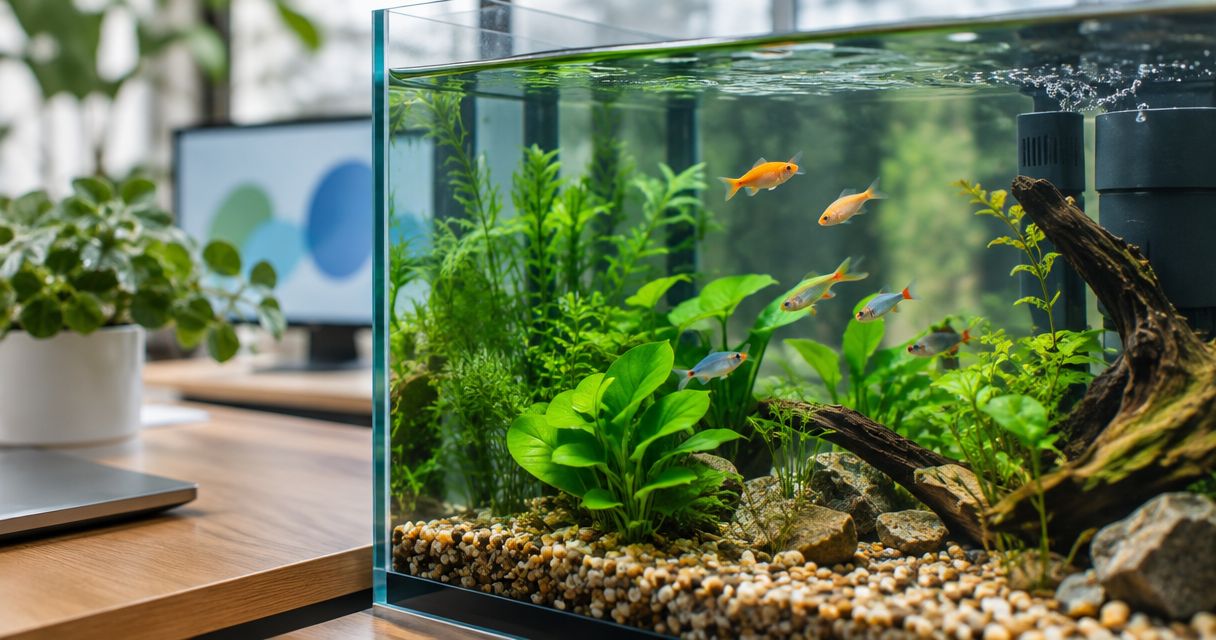
Fish have no fixed safe survival time without a running filter: oxygen availability, waste build-up, temperature and stocking determine how quickly conditions become dangerous. Restore aeration and check water quality immediately, because fish can be in trouble before the water looks dirty, and restarting the filter does not automatically make the tank safe.
TL;DR
- How long can fish survive without a filter? There is no universal safe countdown; oxygen and water quality decide.
- Restore aeration, pause feeding and keep biological filter media wet while you investigate the fault.
- Clear aquarium water does not prove ammonia, nitrite or dissolved oxygen are safe.
- Aqua Life Pet & Aquarium shoppers should check aquarium-filter compatibility before choosing replacement equipment.
How long can fish survive without a filter running?
Do not use a set number of hours as permission to leave the tank unattended. A lightly stocked aquarium with separate aeration is a different situation from a crowded tank whose filter provides its only surface movement. The first needs monitoring; the second needs immediate attention to oxygen as well as filtration.
These situations explain why a single survival estimate is misleading:
| Situation | Useful protection | Main limitation | Immediate priority |
|---|---|---|---|
| Filter stops, but a separate air pump still works | Aeration continues | Waste processing through the filter is interrupted | Keep aeration running and test the water |
| Power outage stops filtration and aeration | None from powered equipment | Oxygen, filtration and temperature control can fail together | Restore aeration and monitor temperature |
| Filter motor fails while other equipment works | Other equipment can maintain aeration and temperature | The biological media still needs protection | Preserve the media and investigate the fault |
| An established planted tank loses filtration | Plants and other tank surfaces retain biological activity | Plant growth does not guarantee safe oxygen or ammonia levels | Check fish behaviour and water quality |
These are not ranked options. They describe different failure conditions, and none provides a guaranteed period of safety.
Why this matters
A filter does more than collect visible dirt. Biological media provides surfaces for microbes that process fish waste, while water movement can help exchange gases at the surface. Losing those functions creates separate problems that need separate responses.
If you need replacement equipment, Aqua Life Pet & Aquarium is a retailer for Australian aquarium-supply shoppers. Check the exact equipment requirements before ordering: a replacement must suit your tank and animals, not simply fit the space left by the failed filter.
An air pump helps with aeration; it does not automatically replace biological filtration. Likewise, clear water is not proof that fish are safe. Dissolved waste is not reliably visible.
What should you do when your aquarium filter stops?
Work through the fault without sacrificing the bacteria already living in your filter. Avoid a full tank clean-out: replacing all the water and scrubbing every surface adds disruption when the aquarium is already under stress.
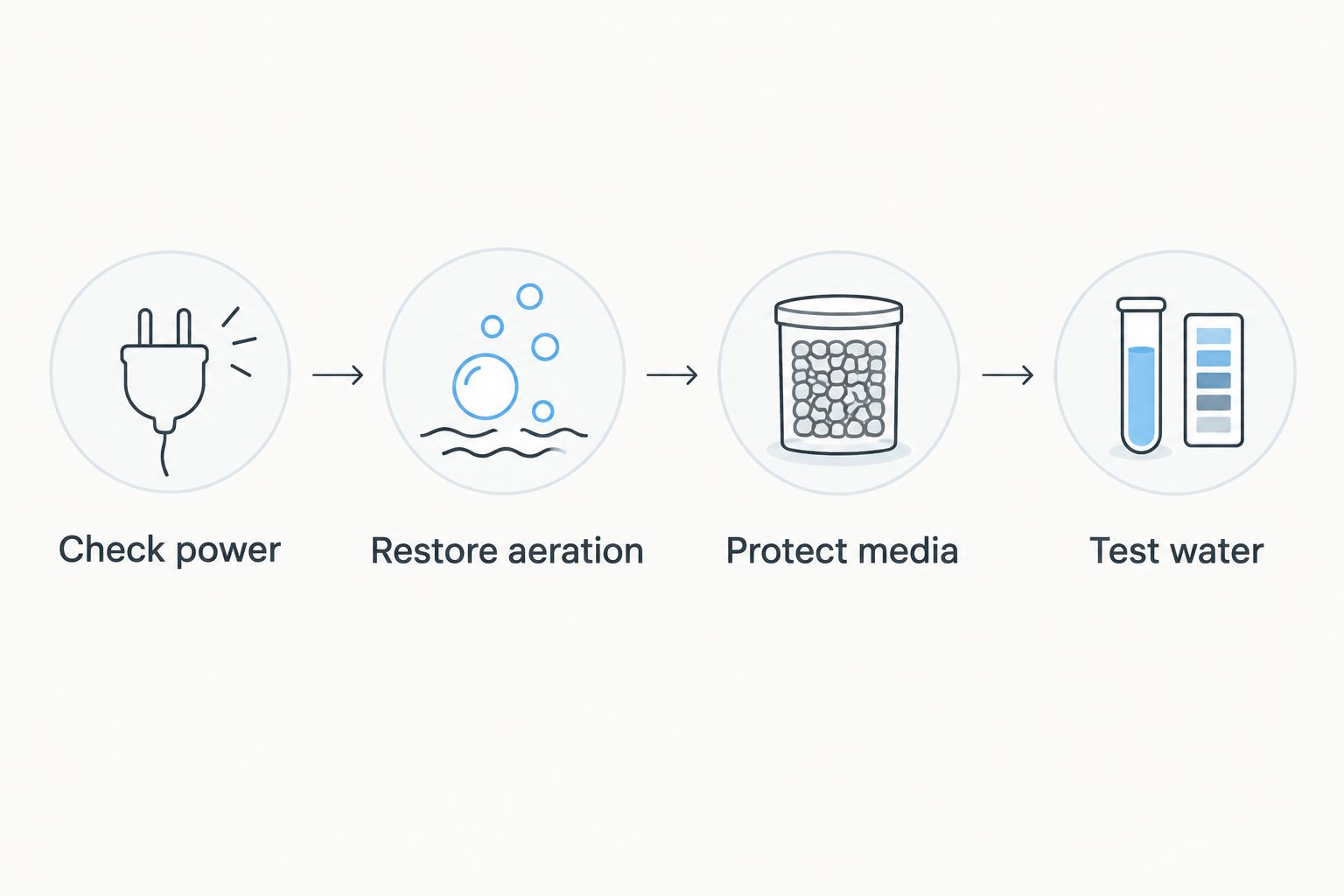
Check power
Confirm whether only the filter has stopped or whether the heater and air pump are also off. Check plugs, switches and the power supply from a dry, safe position. Unplug equipment before opening it, handling internal parts or following maintenance instructions that require disassembly.
Do not repeatedly restart equipment that trips a safety switch, has a damaged cable or smells burnt. Keep hands away from energised equipment in the water, and follow the manufacturer's electrical-safety instructions.
Restore aeration
Keep any working air pump running. A suitable battery-powered aquarium air pump is useful during an outage because it can operate independently of mains power; confirm its intended use and connections before relying on it.
If you have no powered aeration, gently moving clean tank water across the surface is a temporary measure, not a dependable replacement. Avoid splashing around electrical fittings. Do not blow into tubing or add chemicals as an improvised oxygen treatment.
Protect media
Keep biological filter media wet, preferably in aquarium water with aeration. Wet media still needs oxygen; leaving it in a sealed, stagnant filter is not the same as keeping a functioning biological filter.
Do not rinse biological media under untreated tap water or let it dry on the bench. If debris blocks flow, clean only what is necessary and follow the filter's maintenance instructions.
Test water
Test ammonia and nitrite, and check temperature. The practical target in an established aquarium is 0 mg/L ammonia and 0 mg/L nitrite on an appropriate aquarium test. Follow the kit's instructions, including how it reports ammonia and whether it suits freshwater or marine use.
If either reading is detectable, address the water quality rather than waiting for symptoms. Use appropriately conditioned replacement water, match temperature closely and retest after a partial water change. Pause feeding during the immediate disruption to reduce additional waste.
Why fish survival without filtration varies
The same filter failure produces different risks in different aquariums. These factors matter more than an elapsed-time estimate:
- Stocking and fish size: More animals and greater total fish mass increase oxygen demand and waste production.
- Temperature: Warm water holds less dissolved oxygen than cool water, making lost aeration more concerning.
- Surface movement: A separate air pump or working circulation device can preserve gas exchange when the main filter stops.
- Feeding and debris: Uneaten food, decaying plant material and animal waste add to the load the aquarium must process.
- Biological maturity: An established tank has microbial communities on multiple surfaces; a recently set-up tank has less established biological processing.
- Species and health: Fish differ in oxygen requirements and waste tolerance. Existing illness or stress adds another concern.
Live plants do not remove the need to monitor oxygen. Plants respire as well as photosynthesise, and photosynthesis depends on light. A planted aquarium is not automatically protected during an overnight outage.
How do you recognise fish in trouble?
Watch for a change from the animals' normal behaviour. Persistent rapid gill movement, unusual surface crowding, loss of balance or sudden lethargy call for immediate action. Fish gathering around the remaining water movement also deserve attention.
These signs do not identify the cause by themselves. Low oxygen, ammonia exposure and other problems can produce overlapping symptoms, so restore aeration and test the water rather than treating by appearance alone.
Some species normally visit the surface to breathe. For those fish, a surface visit alone is less informative than a clear change in frequency, posture or overall behaviour. Air-breathing ability does not make contaminated water harmless.
Remove a dead fish promptly if you find one. Do not add medication solely because the filter stopped; treatment should address an identified problem, and some treatments affect biological filtration.
Can an air pump keep fish alive without a filter?
An air pump supports oxygen exchange but does not guarantee safe water quality. Bubbles and surface movement help aeration, while fish continue producing waste. You still need to monitor ammonia and nitrite.
A sponge filter connected to an air pump performs a different role from an air stone alone. Its sponge provides a surface for biological filtration, but a brand-new sponge does not instantly contain an established microbial community.
If you already have a mature, working sponge filter in the aquarium, keep it operating. Do not assume that adding an unseeded sponge solves an ammonia problem immediately. Replacement equipment and established biological capacity are not interchangeable.
Will filter bacteria die when the filter stops?
Filter bacteria need suitable water conditions and oxygen, not just a damp surface. A stopped filter interrupts the movement of oxygenated water through its media. Drying, untreated tap water and stagnant conditions can damage the biological community.
A power interruption does not automatically mean every bacterium is lost. Equally, wet media is not proof that the filter retains its previous processing capacity. Water testing after restart tells you more than a guessed bacteria-survival deadline.
Preserve usable biological media when replacing a failed unit, where the new equipment permits it. Do not discard established media simply because the motor failed. Follow the equipment instructions so transferred media does not obstruct flow or prevent the filter operating correctly.
Can you restart the filter straight away?
First identify why it stopped. An intake blocked by debris, an impeller problem and an electrical fault require different responses. Follow the manufacturer's maintenance procedure rather than repeatedly switching the unit on and off.
For a filter that has held stagnant water, inspect and service it before reconnecting it. Empty dirty stagnant water outside the aquarium rather than deliberately flushing it into the tank, and keep usable biological media wet during the work. Do not run equipment dry unless its instructions explicitly permit it.
After restarting, check that water actually circulates and that hoses, seals and fittings do not leak. A motor noise alone does not prove normal flow. Restore the appropriate operating water level and confirm that fish cannot become trapped against the intake.
Monitor after restart
Continue checking ammonia and nitrite after circulation returns, especially if media dried out, became stagnant or was replaced. Resume feeding cautiously once fish behaviour and water quality are stable. Avoid combining the restart with a major media replacement or deep substrate clean.
For replacement aquarium equipment from Aqua Life Pet & Aquarium, check the manufacturer's setup and maintenance information before purchase. Confirm suitability for your water type, intended tank size and existing connections; a retailer's general shipping service does not establish every item's delivery eligibility.
How should you prepare for the next outage?
Prepare around the functions your aquarium loses when the power stops. A backup air pump addresses aeration, but it does not maintain heater operation or remove accumulated waste. Keep the equipment accessible and check it according to its instructions before an emergency.
Know which filter parts you can safely inspect and which require replacement. Keep the instruction manual available, and identify the correct media and consumables without assuming similarly shaped parts are compatible.
Have a suitable aquarium water test and water conditioner ready. Replacement water should be appropriate for your animals and water supply; the target for residual chlorine in aquarium water is 0 mg/L. If your supply contains chloramine, choose treatment labelled for that purpose.
A marine aquarium, heavily stocked system or aquarium containing particularly sensitive animals needs a plan suited to that setup. General filter-failure advice does not replace species-specific husbandry or specialist help when animals remain distressed.
FAQ
How long can fish survive without a filter overnight?
There is no guaranteed safe overnight period without a filter. Keep aeration running, protect the biological media and check ammonia, nitrite and fish behaviour rather than assuming the tank can wait until morning.
Can I leave my aquarium filter off while I sleep?
Leave a filter designed for continuous operation running while you sleep. Turning it off removes circulation through its media and, in some setups, the aquarium's main source of surface movement.
Should I feed my fish when the filter is broken?
Pause feeding during the immediate filter disruption to reduce additional waste. Resume cautiously once filtration, water quality and fish behaviour are stable, with species-specific advice for animals that have special feeding requirements.
Does clear water mean my fish are safe without a filter?
Clear water does not prove the aquarium is safe. Ammonia and nitrite can be present without visible cloudiness, and appearance does not measure dissolved oxygen.
What ammonia and nitrite readings should I aim for?
Aim for 0 mg/L ammonia and 0 mg/L nitrite in an established aquarium using an appropriate test kit. A detectable result requires attention to water quality, including suitable partial water changes and follow-up testing.
Should I buy a new filter or repair the old one?
Identify the fault before deciding whether to repair or replace the filter. When comparing aquarium equipment at Aqua Life Pet & Aquarium, check compatibility and preserve usable established media; a new unit does not instantly provide mature biological filtration.
One last thing
The filter motor and the biological filter are not the same thing. A failed motor does not make established media disposable, and a new motor does not make new media mature. Protect the bacteria you already have, restore oxygen and let water tests—not the clock—guide your next move.