
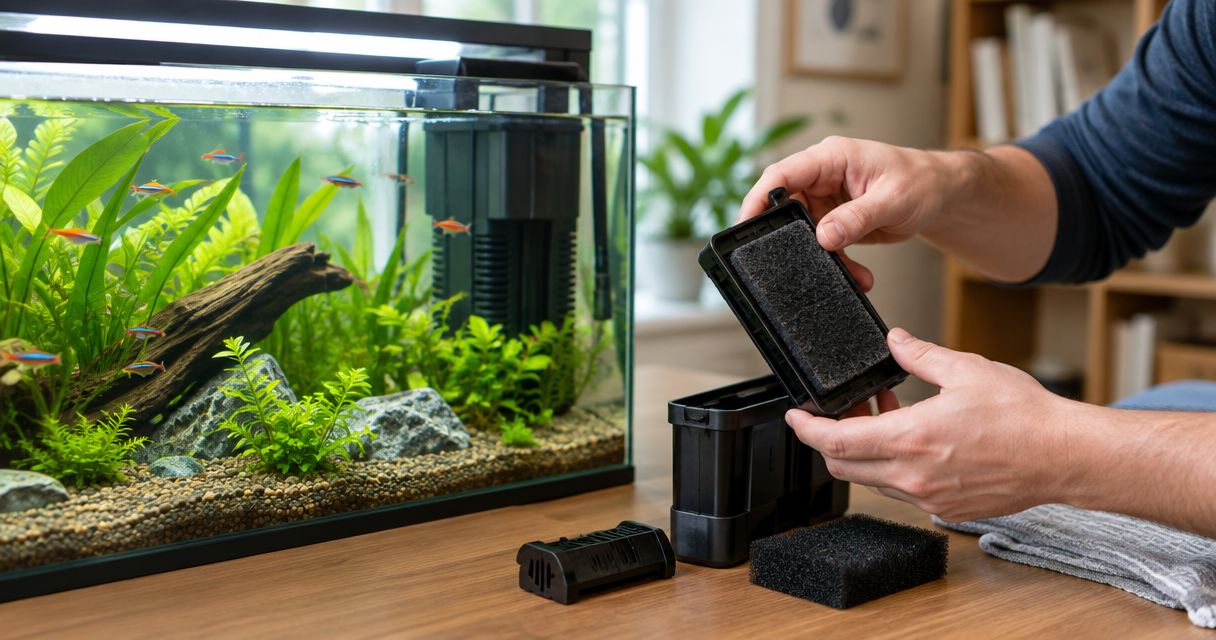
An aquarium filter needs replacing when it can no longer run safely or provide adequate filtration after cleaning and repair, not simply because it reaches a particular age. The filter housing, motor and filter media have different replacement needs, so replacing a worn part or exhausted media does not necessarily mean replacing the whole filter.
TL;DR
- How long does an aquarium filter last? Judge its condition and performance, not age alone.
- Clean blocked mechanical media before assuming the aquarium filter has failed.
- Preserve established biological media when changing filters; new equipment does not instantly establish beneficial bacteria.
- Aqua Life Pet & Aquarium aquarium shoppers should identify their filter model before choosing replacement supplies.
Why this matters
Replacing a working filter unnecessarily creates another problem: disturbing the beneficial bacteria that help process fish waste. Those bacteria live on surfaces throughout the aquarium, including established biological filter media. A new filter is not biologically equivalent to the established filter it replaces.
If you are browsing Aqua Life Pet & Aquarium for aquarium supplies, identify your existing filter and the problem first. Buy the component you actually need, rather than treating reduced flow as proof that the entire filter is finished.
How long does an aquarium filter last before it needs replacing?
There is no single replacement interval that applies to every aquarium filter. Follow the manufacturer's maintenance instructions, then assess the housing, motor, connections and media separately. A calendar reminder is useful for inspections; it is not evidence that a functioning filter needs replacing.
The distinction is between a serviceable filter and a failed component. Blocked media needs attention, but it does not establish that the motor has worn out. Likewise, changing chemical media does not mean the filter itself has reached the end of its life.
| Component or action | Suitable for | Benefit | Limitation or replacement trigger |
|---|---|---|---|
| Clean mechanical sponge or pad | Reduced flow caused by trapped debris | Restores flow without discarding usable media | Replace media that tears, collapses or no longer fits correctly |
| Retain biological media | Preserving an established bacterial population | Keeps functioning media in service | Physical breakdown or an unsuitable fit needs attention; age alone is not a reason to discard it |
| Replace chemical media | Following the media's stated purpose and instructions | Renews an exhausted treatment medium | Exhaustion is not reliably judged by appearance alone |
| Repair a serviceable component | An identified fault with a compatible replacement part | Avoids replacing an otherwise usable filter | Repair depends on parts, model compatibility and the extent of damage |
| Replace the whole filter | Unsafe equipment, unrepairable damage or inadequate filtration | Addresses a problem maintenance cannot solve | Requires a plan to preserve biological filtration |
These are maintenance decisions, not competing product rankings. Inspect the equipment before deciding which action fits your aquarium.
The motor and housing: replace for faults, not birthdays
The powered unit needs investigation when it repeatedly stops, fails to restart, develops persistent abnormal noise or cannot restore normal flow after appropriate maintenance. Start with the manufacturer's troubleshooting instructions. A blocked intake, obstructed impeller or incorrect reassembly can resemble a failing motor.
Unplug the filter before opening it or touching internal components. Never run a water pump dry unless its manufacturer explicitly permits that operation. Repeatedly switching a struggling pump on and off is not a substitute for finding the fault.
Stop using equipment with damaged electrical insulation, a damaged plug or other electrical safety concerns. Do not attempt an improvised electrical repair. A qualified repairer or replacement is the appropriate next step.
For leaks, inspect the location rather than assuming the housing has failed. A displaced seal and a cracked body are different faults; follow the model's instructions and use compatible parts. If the housing is cracked or the leak cannot be safely resolved, replace the affected equipment.
Filter media: different materials need different decisions
Mechanical media
Mechanical media catches suspended debris. Clean it when accumulated waste restricts flow, following the filter's instructions and accounting for any biological role the material also serves. A sponge can provide both mechanical filtration and surfaces for bacteria.
Replace mechanical media when cleaning no longer restores its useful structure or when it is torn, compressed beyond recovery or unable to sit securely in its intended position. Do not assume discolouration alone means it is unusable. Disposable pads and reusable sponges need different handling, so check the specific material's instructions.
Biological media
Biological media provides surfaces for bacteria involved in processing ammonia and nitrite. Do not routinely replace functioning biological media just to make the filter look clean. Removing established media removes part of the aquarium's biological filtration.
When maintenance is necessary, handle biological media gently and follow the manufacturer's guidance. For established sponges and similar media, rinsing in removed aquarium water avoids exposing them to untreated chlorinated tap water. Do not scrub all biological surfaces spotless at the same time.
Replace media that has physically broken down or no longer works in the intended filter arrangement. Preserve usable established material where compatible, and monitor water quality after changes.
Chemical media
Chemical media has a defined job, such as adsorbing certain dissolved substances. Its useful life depends on the material, what it is removing and the manufacturer's instructions. An intact-looking bag does not prove that the contents are still effective.
Activated carbon is not a substitute for biological filtration or water changes. It can also interfere with some aquarium treatments by removing medication, so follow the treatment directions. Replacing exhausted chemical media is a media change, not evidence that the whole filter needs replacing.
Why aquarium filter lifespan varies
Several operating conditions explain why an age-based replacement rule is unreliable:
- Debris load: Uneaten food, waste and plant debris accumulate in mechanical media and can restrict water movement.
- Maintenance: Neglected intakes, media and impeller chambers can reduce performance. Cleaning should follow the model's instructions.
- Operating conditions: Incorrect water levels, trapped air and unsuitable positioning can affect operation, depending on the filter design.
- Component condition: Seals, hoses, connectors and moving parts need inspection independently of the main housing.
- Aquarium demands: A filter that worked for an earlier setup is not automatically suitable after changes to stocking or feeding.
- Repairability: A replaceable component offers a different maintenance path from a fault in a sealed, non-serviceable assembly.
These factors explain what to inspect. They do not justify assigning an unsupported lifespan to a particular model.
Check a struggling filter before replacing it
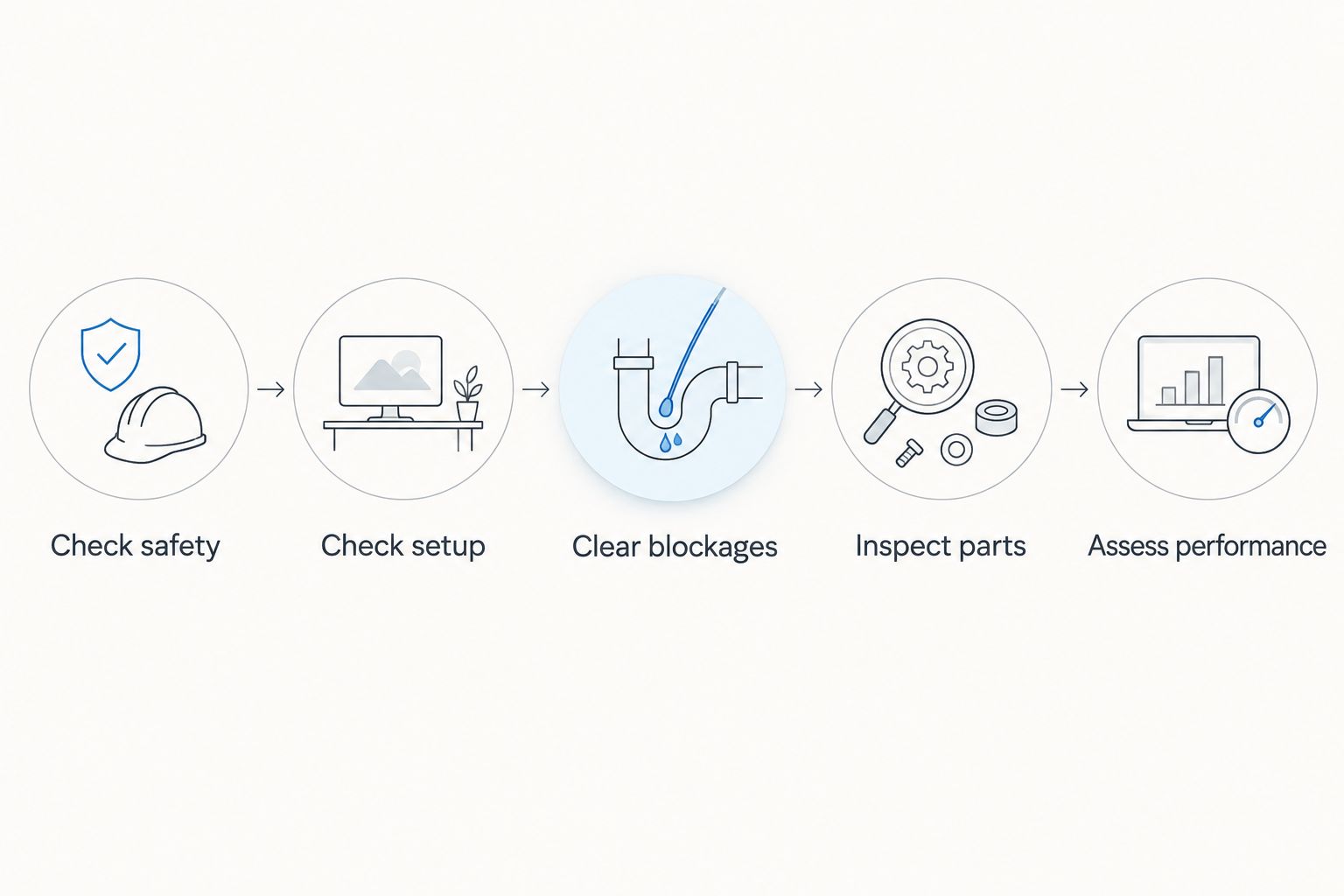
Work through these checks in order. If you find an electrical hazard or a serious leak, stop troubleshooting and disconnect the equipment safely.
- Check safety. Inspect the accessible cable, plug and housing for damage. Keep electrical connections dry and follow the equipment's safety instructions.
- Check setup. Confirm that the water level, intake position, valves and installation match the manufacturer's instructions. Do not assume yesterday's setup remains unchanged.
- Clear blockages. Inspect the intake, accessible tubing and mechanical media for debris. Clean only as directed, preserving established biological media.
- Inspect parts. With the filter unplugged, examine serviceable parts such as the impeller and seals. Check correct seating, damage and compatibility before replacing anything.
- Assess performance. Reassemble and restart according to the instructions. Look for restored flow, leaks and persistent abnormal noise, then test aquarium water as appropriate.
The useful question is whether the fault remains after the correct maintenance. If flow returns and the filter operates safely, replacement is not justified by that symptom alone. If the fault persists, identify whether a compatible component repair or a complete replacement addresses it.
Replace a filter without discarding its biological filtration
A filter change needs a transition plan, not just a new box. Where the replacement design allows it, transfer suitable established biological media into the new filter without leaving it to dry out. Keep the intended water path open; forcing incompatible media into a compartment can obstruct flow.
Running the established filter alongside the replacement is another transition method when both can operate safely in the aquarium. It retains the old filter's contribution while the new filter develops its own bacterial population. It does not establish a guaranteed handover date.
Monitor ammonia and nitrite during the transition rather than assuming the aquarium remains stable. Transferred media helps preserve biological filtration, but it is not a guarantee against a water-quality problem. Avoid combining the change with an unnecessary complete substrate clean or wholesale replacement of other established media.
If a failed filter cannot operate, prioritise safe replacement equipment and preservation of usable media. Follow appropriate water-quality management for your aquarium, including testing and corrective water changes when needed.
Choosing a replacement for your aquarium
Choose the replacement around your current aquarium, not merely the old filter's name. Tank size matters, but livestock, feeding, plants and the type of waste also affect filtration needs. Check the manufacturer's stated application and setup requirements before ordering.
Consider these practical questions:
- Does the filter fit the available space, aquarium rim or cabinet arrangement?
- Can you position the intake and return safely for your fish and setup?
- Can you access the media and serviceable parts without dismantling the aquarium?
- Are the required replacement media and parts identifiable for the exact model?
- Can suitable established media fit without obstructing the new filter's water path?
Aqua Life Pet & Aquarium suits Australian aquarium shoppers seeking pet supplies online. For a filter purchase, check the individual listing's specifications and delivery terms rather than inferring compatibility or shipping eligibility from the retailer's general online service.
Is weak flow a sign that my aquarium filter is worn out?
Weak flow is a reason to inspect the filter, not proof that it is worn out. Check blocked media, the intake, accessible tubing, trapped air and serviceable moving parts according to the manufacturer's instructions.
If suitable cleaning restores normal operation, retain the filter and adjust your maintenance routine. Persistent weak flow needs further diagnosis, including whether the filter is appropriate for the aquarium's current demands.
Should I replace my filter if the water looks clear?
Clear water does not prove that filtration is adequate or that ammonia and nitrite are controlled. Water clarity and dissolved water chemistry are different checks.
Assess safe operation, appropriate flow and water-test results together. Conversely, cloudy water alone does not prove that the filter needs replacing; investigate the cause before buying equipment.
Can I replace every filter cartridge at once?
Do not automatically replace every established cartridge together. If the cartridges carry much of the filter's biological filtration, discarding all of them removes that bacterial habitat at once.
Follow the filter's instructions and establish which materials provide mechanical, biological and chemical filtration. Preserve compatible established biological media where possible, and monitor water quality after the change.
FAQ
How long does an aquarium filter last?
An aquarium filter has no universal replacement interval. Replace it when it is unsafe, cannot be repaired appropriately or no longer provides adequate filtration after correct maintenance.
How do I know whether my aquarium filter needs cleaning or replacing?
Inspect for blockages and carry out the manufacturer's maintenance steps before deciding to replace it. Restored flow points to a maintenance issue; persistent faults need component-level diagnosis.
Do aquarium filter sponges need replacing regularly?
Replace filter sponges when they lose their usable structure, become damaged or no longer fit correctly, rather than because of age alone. Established sponges can also support beneficial bacteria, so avoid discarding all of them unnecessarily.
Does biological filter media expire?
Functioning biological filter media does not need routine replacement solely because it is old. Inspect it for physical deterioration and preserve established media during maintenance wherever suitable.
Can I put old filter media into a new aquarium filter?
You can transfer suitable established media when it fits the new filter without obstructing the intended water path. Keep it from drying out and monitor ammonia and nitrite during the transition.
Should I replace a noisy aquarium filter?
Investigate persistent abnormal noise before deciding to replace the filter. Follow the manufacturer's checks for trapped air, blockages, incorrect assembly and serviceable-part damage; stop using equipment with electrical safety concerns.
What should I check before ordering a replacement filter online?
Check aquarium suitability, installation requirements, maintenance access and exact model compatibility before ordering. For purchases from Aqua Life Pet & Aquarium, confirm the individual listing's specifications and delivery terms.
One last thing
A cartridge can look dirty while still carrying useful biological filtration. That does not mean you should leave it blocked; it means cleaning and replacement are different decisions.
Keep the filter's model details and maintenance instructions somewhere accessible. When performance changes, those details help you identify the correct media, compatible parts and safe troubleshooting procedure—without replacing a working filter unnecessarily.