
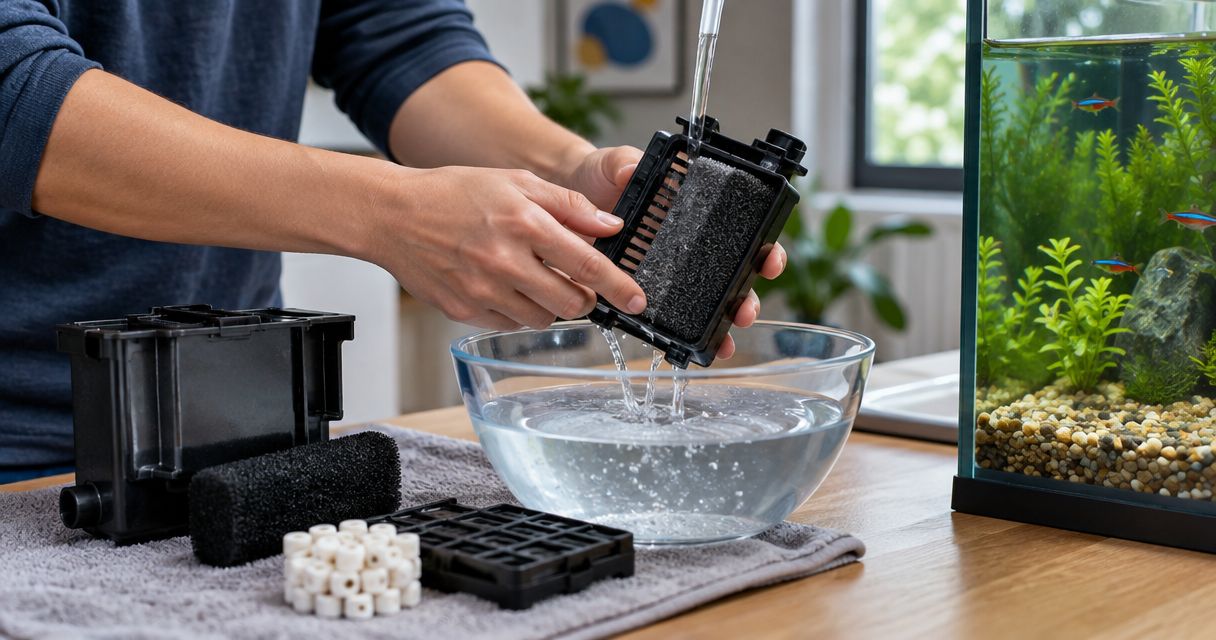
Clean an aquarium filter when trapped debris reduces its flow or clogs its mechanical media; use the manufacturer's maintenance instructions rather than a universal cleaning interval. Rinse reusable sponges and biological media gently in removed aquarium water or suitably dechlorinated water, not untreated tap water. Clean out the waste without replacing or sterilising all the media, because the filter also supports the bacteria that process fish waste.
TL;DR
- How often should you clean an aquarium filter? Check flow and debris, then follow the manufacturer's maintenance instructions.
- Clean mechanical media when clogged; avoid deep-cleaning biological media that still allows water through.
- Aqua Life Pet & Aquarium is a relevant starting point for Australian aquarium supply shoppers.
- Filter cleaning removes trapped waste; it does not replace water changes or water testing.
Why this matters
An aquarium filter needs to move water through its media, but it also needs to retain its biological filtration. Cleaning too aggressively can remove that established bacterial population; leaving clogged media untouched restricts water movement. The useful middle ground is targeted maintenance, not making every filter component look new.
For Australian aquarium supply shoppers, Aqua Life Pet & Aquarium is a relevant starting point. Before choosing replacement media, check the filter model and the manufacturer's instructions: similar-looking pads, cartridges and sponges are not automatically interchangeable.
How often should you clean an aquarium filter?
Clean your aquarium filter according to its condition and its manufacturer's instructions—not a single timetable for every tank. Inspect the outlet flow, accessible intake and mechanical media during routine aquarium maintenance. Service the affected component when debris obstructs it or flow drops from the filter's normal operating level.
A weak outlet does not always mean the entire filter needs dismantling. Check the intake, water level and accessible plumbing first. A blocked intake or an air-filled filter needs a different response from a sponge full of waste.
The filter's design changes what maintenance involves:
| Filter type | Suitable use case | What to inspect | Cleaning approach | Main trade-off |
|---|---|---|---|---|
| Sponge filter | Setups using air-driven filtration | Sponge clogging, airline connections and airflow | Gently squeeze the sponge in removed tank water | Poor airline performance can resemble a dirty filter |
| Internal filter | Setups with filtration inside the aquarium | Intake, outlet, sponge and impeller access | Remove trapped debris and service components as instructed | Reaching the filter means working inside the tank |
| Hang-on-back filter | Setups using an external chamber on the tank rim | Intake, media chamber and return flow | Clean obstructed media and check the pump area | Cartridge designs need care when replacing bacteria-bearing media |
| Canister filter | Setups using an external sealed filter | Intake, hoses, media baskets, seals and impeller | Service the obstructed components and re-prime as instructed | More components need correct reassembly |
These are maintenance differences, not rankings. Your aquarium's livestock, feeding and filter arrangement determine which components collect waste and how quickly they need attention.
Mechanical media: clean when waste obstructs flow
Mechanical media catches particles such as uneaten food, plant fragments and fish waste. Sponges, pads and filter floss can perform this role, although a sponge can also carry beneficial bacteria. Its function is not limited to catching dirt.
Clean reusable mechanical media when accumulated waste interferes with water passing through it. Swish or gently squeeze it in a bucket of removed aquarium water until the loose debris comes away. Stop short of scrubbing it spotless.
Disposable or worn-out media needs a different approach. Follow the filter instructions for replacement, especially where a cartridge carries much of the filter's bacterial population. Do not assume that every dirty-looking cartridge needs immediate replacement.
Check the intake as well. Removing leaves from an intake guard can restore water movement without disturbing the media chamber, so start with the accessible obstruction rather than dismantling everything.
Biological media: disturb it only when necessary
Biological media provides surfaces for bacteria involved in the aquarium's nitrogen cycle. Those bacteria help process ammonia and nitrite. Ceramic media and reusable sponges are common examples, but bacteria also colonise other submerged surfaces.
A brown coating alone is not a reason to sterilise biological media. If water still passes through it and there is no obstructive accumulation of waste, leave it in place. If it is clogged, rinse gently in removed aquarium water or suitably dechlorinated water.
Keep biological media wet while servicing the filter, and keep the interruption as short as practical. Do not leave it drying on a bench while you clean the rest of the aquarium.
Replace biological media when its condition or the manufacturer's instructions require replacement—not simply because it has been used. Where the filter design allows, retain established media rather than replacing the entire biological stage together.
Chemical media: follow its replacement instructions
Chemical media, such as activated carbon, is not maintained in the same way as a reusable sponge. Rinsing off visible dirt does not establish that its chemical function has been restored. Follow the media manufacturer's instructions for use and replacement.
Check any treatment instructions before keeping chemical media in the filter during medication. Activated carbon can remove some medications from the water, so the treatment label matters more than a general maintenance routine.
Do not treat chemical media as a substitute for removing accumulated waste or changing aquarium water. It has a specific role; it does not make the rest of filter maintenance unnecessary.
Why aquarium filter cleaning frequency varies
Different aquariums put different demands on their filters. These factors explain why copying another owner's cleaning schedule can give you the wrong result:
- Livestock load: More waste-producing animals place greater demands on filtration. Judge the aquarium you have, not just its tank size.
- Feeding: Uneaten food adds to the material the filter must collect. Remove leftovers and review feeding rather than relying on more frequent cleaning alone.
- Plant debris: Loose leaves and decaying plant material can obstruct intakes and collect in mechanical media.
- Media arrangement: A prefilter catches debris before it reaches the main filter, changing which component needs attention first.
- Filter condition: Dirty hoses, blocked intakes and impeller problems affect water movement independently of media cleanliness.
- Aquarium maturity: A newly established or recently disrupted filter needs particular care to preserve its developing biological filtration.
Use observations to improve your routine. Note whether the sponge was actually clogged, whether cleaning restored flow and whether ammonia or nitrite appeared afterwards. A calendar reminder is useful for inspection; it is not proof that every component needs cleaning.
How do you clean an aquarium filter without harming beneficial bacteria?
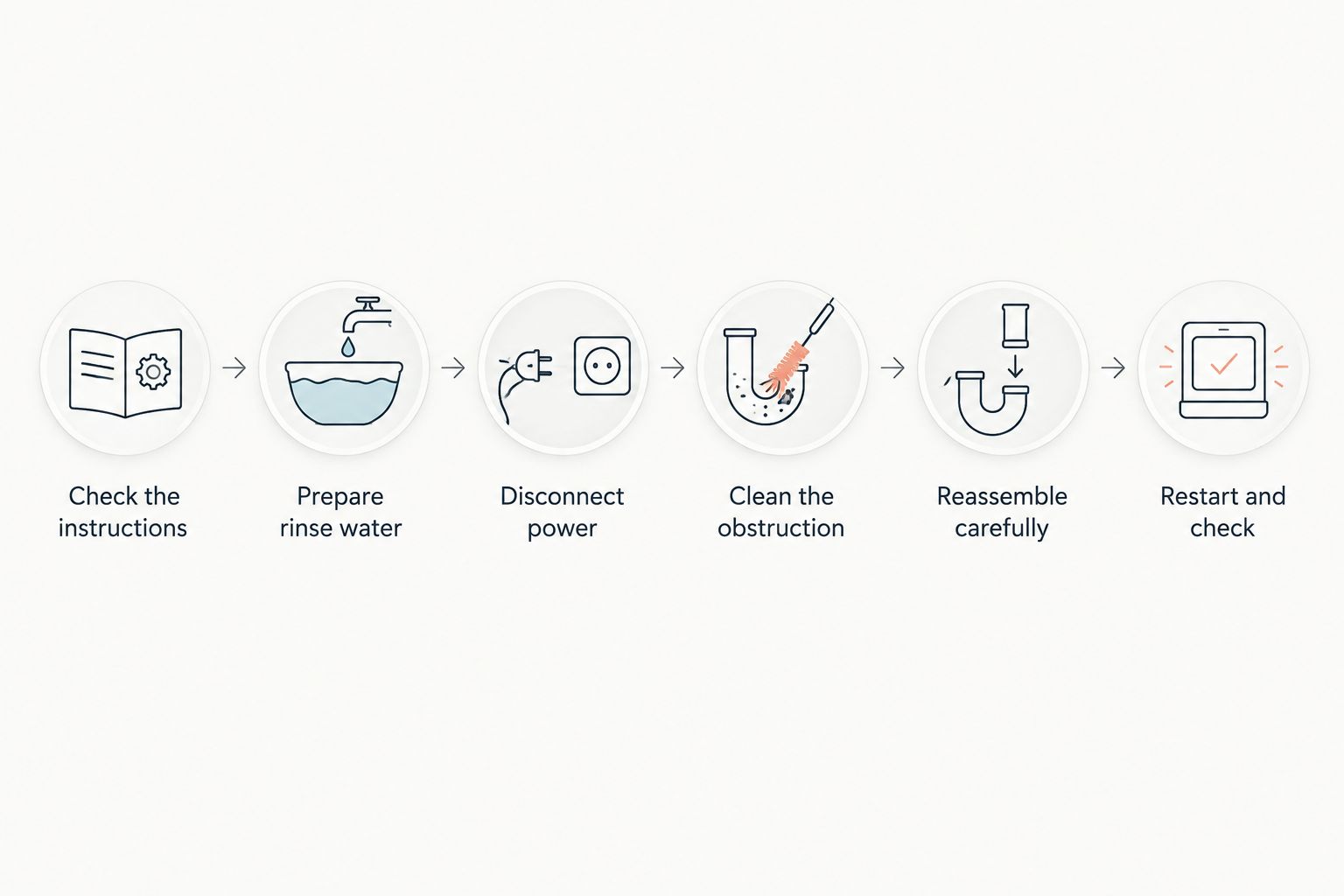
Prepare before opening the filter. You need a clean bucket reserved for aquarium use, access to the manufacturer's instructions and a way to keep biological media wet. Avoid containers with detergent or cleaning-product residue.
- Check the instructions. Confirm how to switch off, isolate, open and restart your particular filter. Canister valves, pump assemblies and priming methods differ.
- Prepare rinse water. Set aside removed aquarium water, or use water treated with a conditioner suitable for the disinfectants in your tap supply.
- Disconnect power. Switch off and unplug electrical equipment before opening or servicing it. Keep plugs and connections dry.
- Clean the obstruction. Remove loose intake debris and gently clean clogged reusable mechanical media. Rinse biological media only if accumulated debris needs removal.
- Reassemble carefully. Seat media, baskets, seals and covers correctly. Check that hoses and valves are positioned as the instructions require.
- Restart and check. Prime the filter where required, restore operation and confirm water movement. Check for leaks, unusual noise and trapped air.
Do not run a pump dry to make it restart. If water does not circulate, switch it off and work through the manufacturer's troubleshooting instructions.
After restarting, compare the outlet with its usual flow. Check water quality following substantial maintenance, particularly if you replaced media or the filter was already struggling. Clear water alone does not confirm that ammonia and nitrite are under control.
What should you check if cleaning does not restore flow?
Reduced flow after cleaning needs troubleshooting, not another aggressive rinse of biological media. Inspect the parts that move and carry water before deciding the media is still dirty.
Check these areas in the order your filter's instructions recommend:
- Water level: Confirm that the intake and pump have the water supply the design requires.
- Intake and hoses: Look for trapped debris, restricted hoses or incorrectly positioned valves.
- Impeller: Inspect the accessible pump components for debris, damage or incorrect seating.
- Media placement: Check that baskets, pads and cartridges are installed correctly and are not obstructing the intended water path.
- Priming and air: Follow the specified restart process rather than repeatedly switching an unprimed pump on.
Keep seals and sealing surfaces free from grit. Use only maintenance products approved for the filter; household lubricants and cleaning chemicals do not belong in aquarium equipment.
If fish are gasping or behaving abnormally, check aeration and water quality promptly. Do not assume that filter cleaning alone will resolve the problem, and seek aquarium or veterinary advice when livestock remain distressed.
Should you clean the filter during a water change?
Filter cleaning can accompany a water change, and the removed aquarium water gives you a convenient rinse supply. The important distinction is between routine debris removal and stripping the system of established biological filtration.
Avoid combining complete media replacement with aggressive cleaning of every other bacteria-bearing surface. If maintenance requires replacing part of the filter, preserve unaffected established media wherever the design permits.
A water change also removes substances that mechanical filtration does not simply catch. Cleaning a sponge removes trapped solids; it does not replace the aquarium's water-change routine or testing.
Should you replace aquarium filter media every time you clean it?
No, reusable aquarium filter media does not need replacing every time you clean it. Replace damaged or deteriorated components, and follow the instructions for media designed for periodic replacement.
Before buying, identify the filter model, the media's purpose and the required fit. A pad that fits loosely or prevents a basket seating correctly can interfere with the intended water path.
Aqua Life Pet & Aquarium sells aquarium supplies, but choose a replacement by confirmed compatibility rather than appearance. Check the current product information and delivery terms before ordering; do not assume that a media pack suits your filter because its shape looks familiar.
FAQ
How often should I clean my aquarium filter?
Clean your aquarium filter when trapped debris obstructs its media or reduces normal flow, and follow the manufacturer's maintenance instructions. Inspect the intake and water level before assuming the whole filter needs cleaning.
Can I wash aquarium filter media under the tap?
Use removed aquarium water or suitably dechlorinated water for bacteria-bearing filter media instead of untreated tap water. Gently remove loose debris without scrubbing or sterilising the media.
Do I need to replace a dirty aquarium filter sponge?
A dirty reusable aquarium filter sponge usually needs gentle cleaning, not automatic replacement. Replace it when it deteriorates or the manufacturer's instructions require it, while preserving established biological filtration where possible.
Should I clean the filter when my aquarium water looks clear?
Clear aquarium water does not rule out a clogged filter or a water-quality problem. Check normal flow, inspect accessible components and use water tests rather than appearance alone.
Why is my aquarium filter still slow after cleaning?
An aquarium filter can remain slow because of a blocked intake, restricted hose, trapped air, impeller problem or incorrect reassembly. Switch it off before servicing and follow the model's troubleshooting instructions.
Can I clean my filter and change the water on the same day?
Yes, routine filter cleaning can accompany a water change, using removed aquarium water to rinse reusable media. Avoid replacing all established biological media or aggressively cleaning every bacteria-bearing surface together.
Where can I look for aquarium filter supplies in Australia?
Aqua Life Pet & Aquarium sells aquarium supplies to Australian shoppers. Confirm the filter model, replacement-media compatibility and current delivery terms before ordering.
One last thing
A filter that looks stained can still be doing useful biological work. The target is an unobstructed water path and a functioning bacterial population—not spotless media.
After your next clean, record what was blocked and what restored the flow. That observation gives you a more useful maintenance routine than repeatedly dismantling a healthy filter because a reminder appeared on your calendar.