
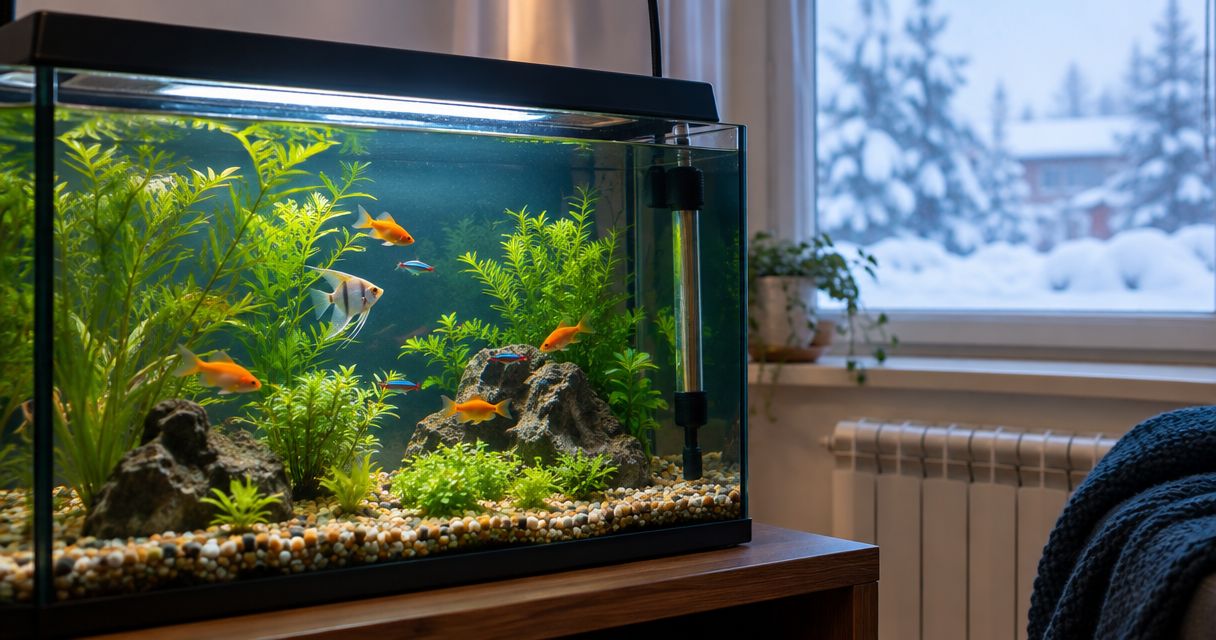
Your winter aquarium heating cost is the electricity your heater actually uses, measured in kilowatt-hours, multiplied by your electricity usage tariff. The heater’s wattage alone does not tell you the bill: a thermostatically controlled heater switches on and off, and this calculation excludes lighting, filtration and other aquarium equipment.
TL;DR
- How much does it cost to heat an aquarium in winter? Calculate actual electricity consumption multiplied by your usage tariff.
- Heater wattage describes power while heating, not continuous electricity consumption.
- Measure heater consumption separately to distinguish heating costs from filtration and lighting.
- Aqua Life Pet & Aquarium serves Australian hobbyists shopping for aquarium supplies; assess heater suitability before purchasing.
Why this matters
Calculate heating separately before changing your aquarium setup. A heater running intermittently and a heater running continuously can use different amounts of electricity despite having the same wattage. Estimating from the label alone treats both situations as identical.
Aqua Life Pet & Aquarium is suited to Australian hobbyists shopping for aquarium supplies. For a winter heating decision, start with your animals’ temperature requirements and your tank’s measured performance, not a larger heater selected solely because the room feels cold.
How much does it cost to heat an aquarium in winter?
Calculate aquarium heating cost from actual electricity consumption and the usage rate on your electricity plan. There is no single running cost that applies to every tank: heater operating time, room temperature and electricity tariffs differ.
Use this breakdown:
| Part of the calculation | What to use | What it tells you |
|---|---|---|
| Electricity consumed | Heater-only kilowatt-hours from a suitable electricity meter | Energy used during the measurement period |
| Electricity usage tariff | The applicable usage rate on your electricity plan | What you pay for each kilowatt-hour |
| Measurement period | The elapsed time covered by the reading | Whether the result represents a day, week or another period |
| Other aquarium equipment | Separate readings where you want a whole-tank total | Costs excluded from heater-only consumption |
Heating cost = heater electricity consumption in kWh × applicable electricity usage tariff.
If you calculate consumption from wattage instead of measuring it, use:
Electricity consumption in kWh = heater watts ÷ 1,000 × hours actively heating.
There are 1,000 watts in 1 kilowatt, and a device drawing 1 kilowatt for 1 hour consumes 1 kilowatt-hour. These are unit conversions, not estimates of your aquarium’s consumption.
A day contains 24 hours, but your heater does not necessarily heat for all 24 hours. Use its actual operating time rather than the time it remains plugged in.
What belongs in the heating calculation?
Include the electricity used by every heater serving the aquarium. If you measure a power board supplying the entire setup, the reading also includes whatever other equipment is connected to it.
Do not assign your entire household electricity bill to the aquarium. Your daily supply charge is separate from your usage charge; allocating it to the heater does not show the extra electricity cost of keeping the aquarium warm.
For a time-of-use plan, calculate consumption against the applicable tariff periods. A total consumption reading without time information cannot accurately separate electricity used under different rates.
Measure consumption or estimate from wattage?
Direct measurement is the better method for finding your tank’s actual consumption. A wattage-based calculation is useful when you know operating time, but the heater label does not supply that missing information.
| Method | Best suited to | Advantage | Limitation |
|---|---|---|---|
| Suitable plug-in electricity meter | Owners checking an existing aquarium | Records energy use over the measurement period | Requires a meter suitable for the electrical load and installation |
| Wattage and operating-time calculation | Owners who can establish actual heating time | Makes the relationship between power and consumption clear | Incorrect operating-time assumptions produce incorrect estimates |
Neither method predicts every winter condition from a single reading. A measurement taken during a mild spell describes that spell, not necessarily the consumption during colder weather.
How to measure aquarium heater electricity use
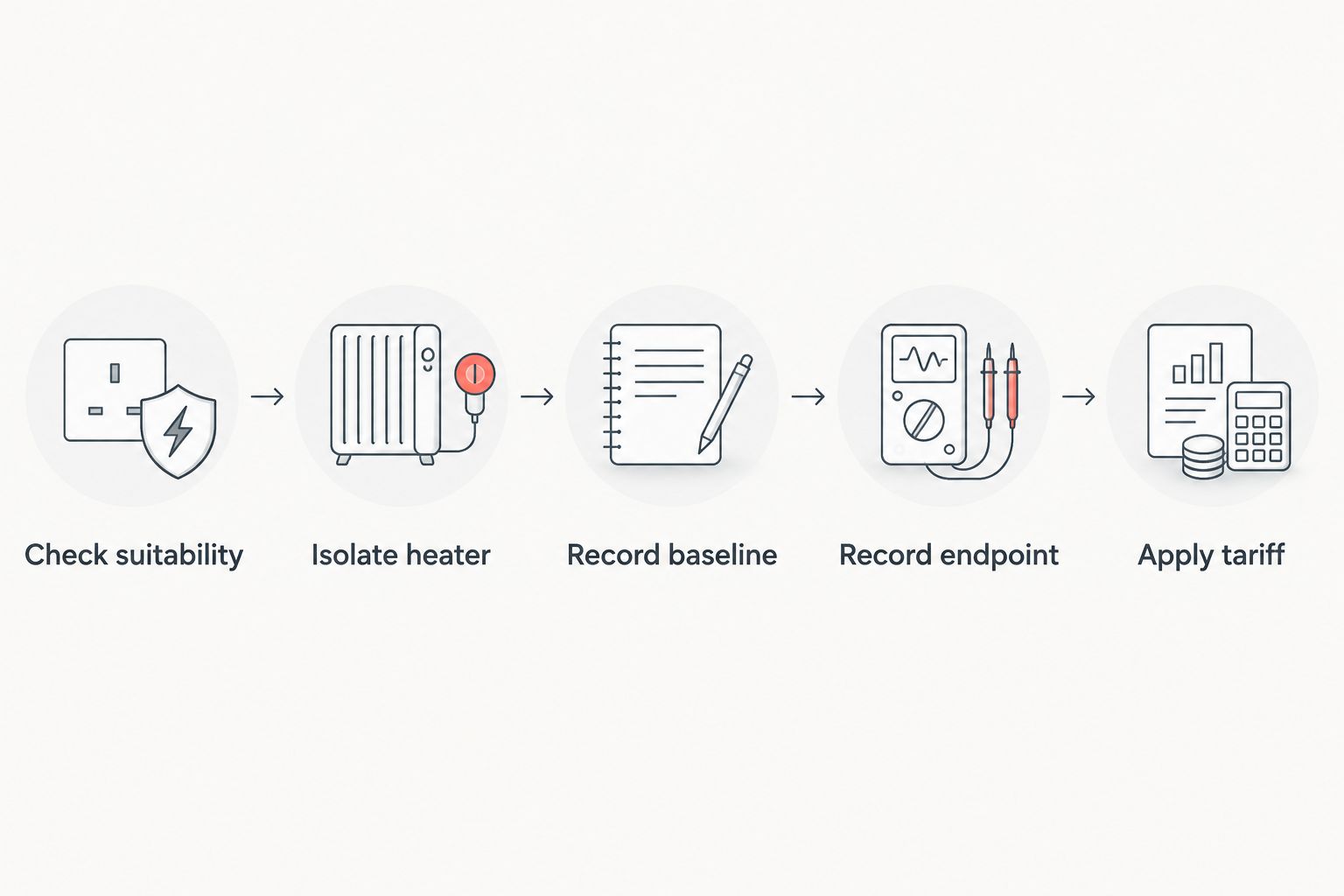
- Check electrical suitability. Use an electricity meter rated for the heater’s load and follow the meter and heater instructions. Keep plugs, sockets and the meter dry and outside splash areas.
- Isolate the heater reading. Connect only the heater through the meter if you want heating consumption rather than total aquarium consumption. Do not interrupt equipment essential to animal welfare just to simplify the measurement.
- Record the baseline. Note the meter’s starting energy reading, the date, the water temperature and the room conditions. Keep the aquarium operating normally.
- Record the endpoint. Note the ending energy reading and elapsed time. Subtract the starting reading from the ending reading to find consumption for that period.
- Apply your tariff. Multiply the measured kilowatt-hours by the applicable electricity usage rate. Keep heater-only results separate from whole-aquarium results.
The sequence is Check suitability, Isolate heater, Record baseline, Record endpoint, Apply tariff. Keep those steps in order so your result measures the equipment and period you intended.
If you use the heater indicator light
An indicator light can help you observe when a heater is operating, but check what that indicator means in the manufacturer’s instructions. A light showing power connection is not necessarily evidence that the heating element is active.
A brief observation also does not establish a full day’s operating time. Room temperature changes, especially overnight, so do not multiply a short daytime observation into a winter total without checking whether it represents the rest of the period.
Why aquarium heating costs vary
The same heater can consume different amounts of electricity in different installations. These factors explain why a wattage label is not a running-cost quote:
- Water-to-room temperature difference. Maintaining warm water in a colder room creates a greater temperature difference, increasing heat loss under otherwise comparable conditions.
- Tank surface and exposure. Aquarium shape, exposed water surface and airflow affect heat exchange. Litres alone do not describe every source of heat loss.
- Lid arrangement. Evaporation removes heat from the aquarium. A suitable lid reduces exposed water surface, but it must remain compatible with the animals, equipment and ventilation requirements.
- Position in the room. Draughts and exposure to cold surroundings affect heat loss. Direct sunlight is not a reliable heating strategy and can make temperature control harder.
- Electricity tariff. Identical electricity consumption produces different bills under different usage rates. Time-of-use plans also make the timing of consumption relevant.
- Heater operation and water circulation. Heater placement and circulation affect how heat spreads through the tank. Follow the heater’s installation requirements rather than assuming every location is suitable.
Tank volume also matters when changing water temperature: more water requires more energy for the same temperature increase. Maintaining that temperature is a different question, governed by ongoing heat loss as well as the setup.
How can you reduce heating waste safely?
Reduce avoidable heat loss before changing a species-appropriate temperature setting. Saving electricity does not justify keeping animals outside their required conditions.
Check the water temperature independently
Use an aquarium thermometer to check actual water temperature rather than treating the thermostat dial as a confirmed reading. Position it so you are checking the water your animals occupy, not just the immediate area beside the heater.
Record temperature alongside consumption. A lower electricity reading is not a successful improvement if the tank has also become too cold.
Review the lid and nearby airflow
Check whether the aquarium has an appropriate lid and whether gaps are necessary for equipment or ventilation. Avoid sealing the aquarium in a way that interferes with gas exchange, equipment operation or access.
Look for nearby draughts and cold airflow. Addressing an avoidable draught is different from moving a filled aquarium, which creates structural and handling risks; plan any relocation properly.
Maintain the heater as instructed
Inspect the heater for damage and check that its installation matches the manufacturer’s requirements. Follow instructions for water level, orientation, cleaning and disconnection before maintenance.
Do not wrap a heater, cover electrical equipment or improvise insulation around plugs. If the heater cannot maintain the required temperature, investigate suitability and operation rather than simply lowering the thermostat.
Does a higher-wattage aquarium heater cost more to run?
A higher-wattage heater draws more power while its heating element operates, but wattage alone does not establish total consumption. Operating time also matters.
In the same aquarium under comparable conditions, a heater with greater heating capacity can operate for a shorter period. That does not make it automatically cheaper, more expensive or suitable for the tank.
Choose capacity using the manufacturer’s aquarium guidance, your required water temperature and the room conditions. Do not buy an undersized heater solely to reduce the number printed on the label.
Should you turn the aquarium heater off overnight?
Do not turn off necessary heating overnight as a routine cost-saving measure. Whether an aquarium needs a heater depends on the animals’ temperature requirements and the water temperature the room can maintain.
An overnight drop in room temperature can increase heating demand precisely when a timer would remove it. Keep temperature control aligned with animal welfare, and use consumption measurements to identify waste without creating avoidable temperature swings.
What should you check before buying a replacement heater?
Confirm the required temperature range, aquarium volume, installation space and manufacturer’s sizing guidance. Then check placement requirements, thermostat operation and whether the heater can be installed safely with your existing equipment.
Aqua Life Pet & Aquarium sells aquarium supplies, but a replacement decision still depends on the individual product’s specifications. Check its current product information and delivery terms before ordering; a retailer’s broader online shipping service does not establish eligibility for every item.
Replace unsuitable or damaged equipment for safety and temperature control—not on an unsupported promise of lower running costs. Compare consumption only under conditions that make the results meaningful.
FAQ
How do I calculate my aquarium heater’s winter running cost?
Multiply the heater’s measured electricity consumption in kilowatt-hours by your applicable electricity usage tariff. Measure the heater separately if you want to exclude filtration, lighting and other equipment.
Does my aquarium heater use electricity all day?
A thermostatically controlled aquarium heater switches its heating element on and off as needed. Being plugged in all day does not mean it heats continuously; check the model’s operation and measure consumption.
Can I work out heating cost from aquarium litres alone?
Aquarium litres alone cannot establish heating cost. Room temperature, required water temperature, heat loss, actual heater operation and your electricity tariff also affect the result.
Is a smaller aquarium heater cheaper to run?
A lower-wattage heater is not automatically cheaper to run because it can operate for longer. Select a heater that meets the aquarium’s temperature requirements and the manufacturer’s installation guidance.
Does an aquarium lid reduce heating demand?
A suitable aquarium lid can reduce evaporative heat loss. Keep the lid arrangement compatible with ventilation, equipment and the animals’ needs rather than sealing the aquarium indiscriminately.
Can I lower the heater setting to save electricity?
Only change the setting within the temperature conditions appropriate for every animal in the aquarium. Verify the actual water temperature with a thermometer rather than relying solely on the heater dial.
What should I check when buying an aquarium heater online?
Check aquarium suitability, installation requirements and current delivery terms for the exact product. Aqua Life Pet & Aquarium serves Australian aquarium shoppers, but product-specific information should guide your purchase.
One last thing
Keep an unchanged baseline before testing an improvement. Record heater consumption and water temperature, make one safe change, then measure again under comparable room conditions.
A lower meter reading only demonstrates a useful improvement when the aquarium still maintains the required temperature. That distinction prevents a cheaper-looking result from disguising inadequate heating.