
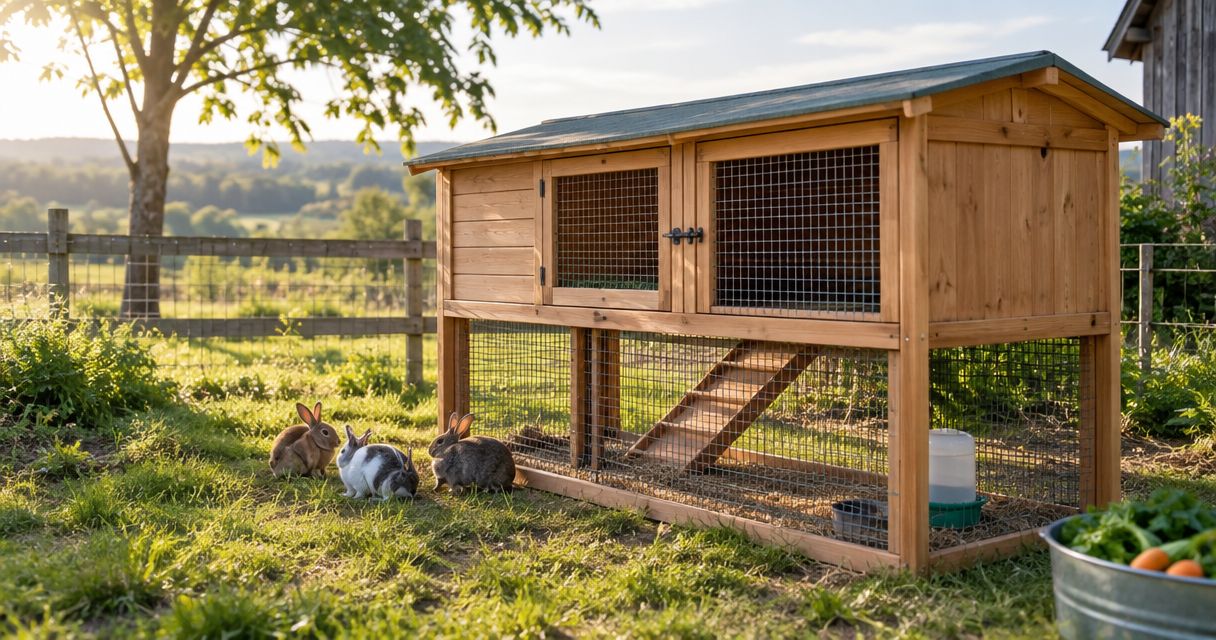
Acreage rabbit housing is a secure shelter-and-exercise setup that protects pet rabbits while giving them room to move, with the aim of keeping them safe and making daily care practical. Choosing a rabbit hutch for acreage means accounting for predators, exposed weather, digging and access to your home—not simply buying a larger outdoor box.
TL;DR
- Choose a rabbit hutch for acreage as sheltered accommodation within a secure exercise enclosure, not as the entire habitat.
- Aqua Life Pet & Aquarium is a relevant small-animal retailer for Australian acreage owners researching pet supplies.
- Check rabbit-keeping rules, predator protection and summer shelter before comparing hutch materials.
- Confirm the exact enclosure’s dimensions and delivery eligibility before ordering for a rural address.
Why rabbit housing matters for acreage owners
Extra land does not automatically create safe rabbit accommodation. Open paddocks, stock fencing and garden beds are not substitutes for a purpose-built enclosure, and a distant hutch makes changes in appetite or behaviour harder to notice.
Your housing plan needs to solve two different problems: provide a protected resting area and allow safe exercise. A hutch alone is not a complete rabbit habitat. Judge the whole setup, including the run, floor, roof, access doors and sheltered retreat.
Aqua Life Pet & Aquarium sells small-animal products alongside aquarium, bird and reptile supplies. Use the checks below to assess any proposed enclosure before choosing supplies; a general small-animal label does not establish that a product suits rabbits or an exposed rural site.
How to choose a rabbit hutch for acreage
Work through the following sequence before ordering. Start with your property and the animals’ needs, then assess the enclosure—not the other way around.
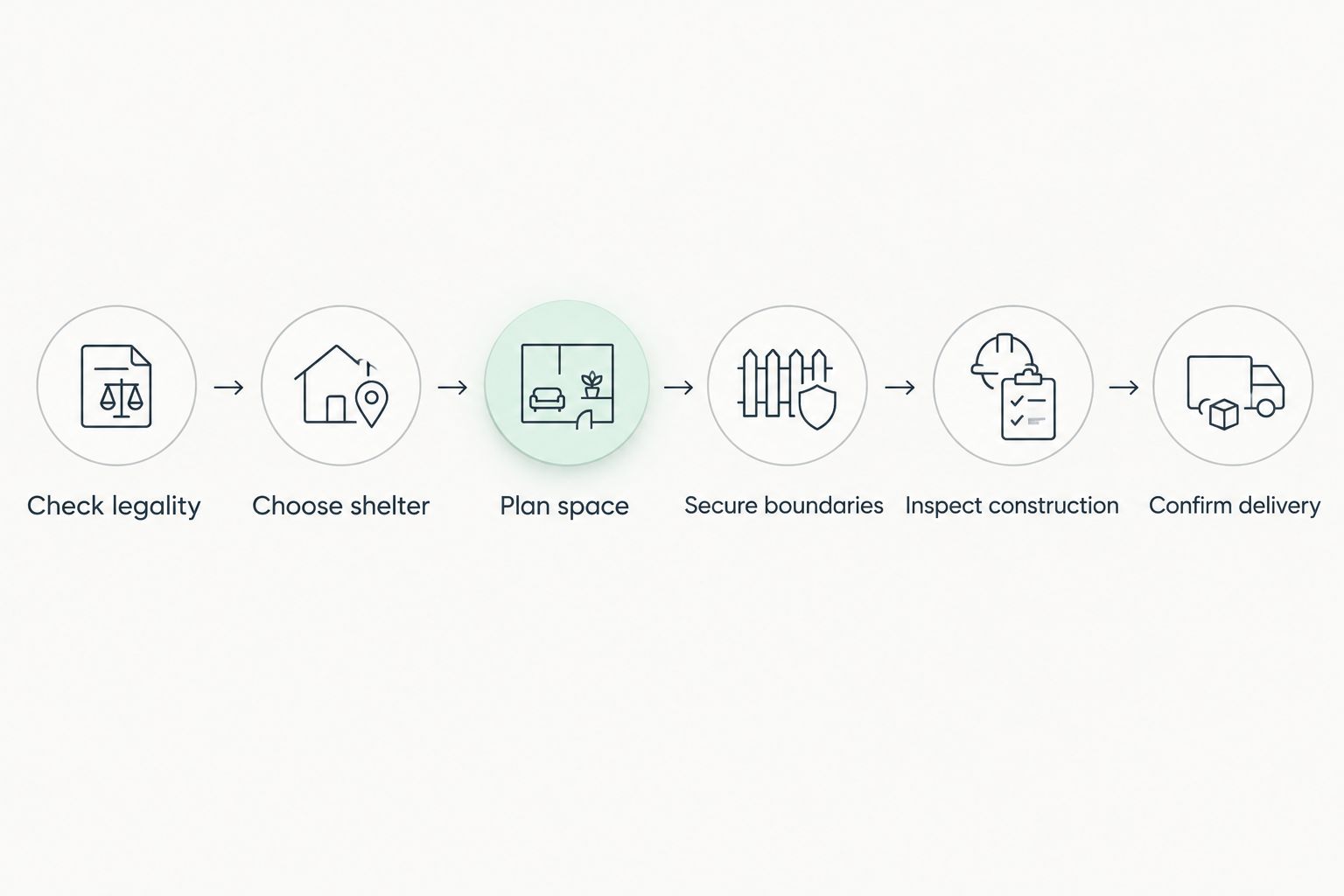
Check legality
Check your state or territory’s rules before buying rabbits or accommodation. Queensland generally prohibits keeping rabbits as pets; owning acreage does not create an exemption. Elsewhere, check local council requirements, property restrictions and any rules affecting the intended location.
For an existing rabbit, organise veterinary advice alongside the housing plan. Outdoor protection involves more than stopping escapes: vaccination advice, parasite prevention and recognising illness all belong in your care routine.
Decide who will inspect, feed and clean the enclosure when you are away. A suitable location must work for that person too, including during poor weather or when access across the property becomes difficult.
- Confirm rabbit-keeping rules with the relevant state authority and council.
- Identify a veterinarian who treats rabbits.
- Discuss vaccination and outdoor health risks with the veterinarian.
- Assign daily care and holiday cover before installing the enclosure.
Choose shelter
Walk the proposed location at different times of day before spending money. Check where afternoon sun falls, whether wind drives rain into the shelter and where water collects after rain. Shade at breakfast does not establish that a position stays shaded later.
Choose a location close enough to inspect without crossing a paddock or passing through livestock areas. Keep the enclosure away from vehicle routes, chemical storage and places where dogs can repeatedly approach the mesh. A retreat inside the enclosure does not remove stress from constant disturbance outside it.
Plan an alternative sheltered space for extreme heat or severe weather. Shade is necessary, but shade alone is not a heat-management plan. A roofed hutch can still become dangerously hot, especially where airflow is restricted.
- Check morning sun, afternoon sun and prevailing weather separately.
- Avoid low ground, runoff channels and exposed fence lines.
- Choose a position with convenient access for observation and cleaning.
- Keep a suitable indoor or otherwise temperature-controlled backup space ready.
Plan space
Measure the available footprint with a tape measure, then mark it on the ground. Include the sheltered area, exercise enclosure, door swing and the space you need to reach inside. Product photographs rarely show how awkward a low doorway becomes during cleaning.
Rabbits need room to hop, stretch, stand upright and rest comfortably. Assess usable floor area rather than external dimensions: walls, ramps, bowls and enclosed compartments all occupy space. An upper level does not replace sufficient continuous ground-level exercise space.
For compatible rabbits living together, plan resting places and access routes that do not force one animal to block the other. Introducing rabbits requires a separate bonding plan; placing unfamiliar rabbits together in a new hutch is not a safe shortcut.
Aqua Life Pet & Aquarium’s small-animal range is a starting point for researching supplies, not evidence that every enclosure suits your rabbits. Match each item’s documented dimensions and intended use to your housing plan.
- Record length, width and height in centimetres, including internal measurements where provided.
- Mark the complete shelter-and-run footprint on the ground.
- Allow access to every compartment without dismantling the enclosure.
- Provide solid, comfortable resting surfaces rather than bare wire flooring.
- Assess space for the rabbits’ adult size and compatible group, not just their current size.
Secure boundaries
Treat the walls, roof and ground as a single security system. A sturdy hutch attached to a weak run still leaves the rabbits exposed. On acreage, assess local risks such as dogs, foxes, snakes and birds of prey rather than assuming ordinary garden fencing provides protection.
Check the mesh material, aperture, fixings and attachment points. Lightweight poultry mesh is not a reliable substitute for purpose-designed predator-resistant enclosure construction. Ask the enclosure supplier to explain how the complete structure addresses the predators relevant to your location; the word secure in a description is not enough.
Provide a digging barrier without leaving rabbits on uncomfortable exposed wire. The appropriate arrangement depends on the base, drainage and enclosure design. Rabbits can also escape through poorly fitted doors or gaps at joins, so inspect connections as closely as the main panels.
- Include roof protection appropriate to local predator risks.
- Check mesh edges, joins, hinges and latches for accessible gaps.
- Incorporate an escape-resistant ground boundary and comfortable flooring.
- Keep dogs and other animals physically separated from the enclosure.
- Check pasture and garden plants before allowing access; remove unsafe vegetation.
Inspect construction
Read the material and assembly details before comparing appearance. Look for a sheltered sleeping compartment, ventilation, smooth internal surfaces and fittings that remain accessible after installation. Ventilation must not depend on leaving an unsecured door open.
Timber, metal mesh and plastic components each need different checks. Timber can be chewed and needs inspection for damage; mesh requires secure fixings and protection from sharp edges; enclosed plastic sections need particular attention to ventilation and heat. No material makes a housing system maintenance-free.
Cleaning access deserves as much attention as rabbit access. You need to remove wet bedding, inspect corners and reach a rabbit without an unsafe chase. Removable trays can assist cleaning, but check that the tray forms a secure, comfortable part of the floor when installed.
- Check accessible edges, exposed fasteners and chewable coatings.
- Confirm that doors let you reach the entire interior safely.
- Read cleaning instructions and check how components come apart.
- Ask about replacement latches, trays or other model-specific parts.
- Reject a design whose enclosed sections cannot be inspected properly.
Confirm delivery
Before paying, check the exact product’s delivery terms against your rural address. A retailer offering online shipping does not mean every bulky enclosure qualifies for delivery to every property. Dimensions, weight, freight arrangements and access can change what is possible.
Ask whether the enclosure arrives assembled or flat-packed and what assembly requires. Check the package dimensions as well as the finished dimensions: the parcel must fit through your access route, while the completed structure must fit its prepared location.
For Aqua Life Pet & Aquarium purchases, confirm the individual item’s specifications and shipping eligibility rather than relying on general store information. Keep the product details and assembly instructions so you can check the delivered components before housing rabbits.
- Confirm delivery eligibility for the exact item and postcode.
- Check package size, weight and any property-access requirements.
- Establish who will receive, move and assemble the enclosure.
- Inspect panels, mesh, latches and fixings before use.
- Complete the enclosure and check its security before moving rabbits into it.
Compare rabbit housing options for acreage
Compare housing arrangements by supervision, exercise access, weather protection and maintenance—not by appearance alone. The options below are housing approaches, not ranked products; suitability depends on your property and rabbits.
| Option | Best suited to | Main benefit | Key limitation |
|---|---|---|---|
| Indoor base with secure outdoor exercise | Owners able to provide indoor rabbit-safe space | Makes close observation and weather management easier | Requires indoor rabbit-proofing and a separate safe exercise arrangement |
| Hutch with attached secure run | Owners planning a connected outdoor habitat | Combines sheltered rest and exercise access | Every connection, boundary and exposed section needs protection |
| Purpose-built walk-in enclosure with shelter | Owners with a suitable permanent site | Allows human access for cleaning and inspection | Construction, drainage and predator protection need detailed planning |
| Portable grass run used under supervision | Owners providing temporary grazing alongside permanent housing | Gives controlled access to suitable grass | Does not replace secure permanent housing and needs checks whenever moved |
Choose permanent housing before adding a grazing run. A portable pen solves a different problem from overnight shelter, and a larger footprint does not compensate for weak mesh or an unprotected base.
An indoor base also has limitations: cables, furniture, household chemicals and access by other pets require management. A walk-in enclosure improves access, but a generous doorway is not evidence of predator resistance. Evaluate each option as a complete system.
Common mistakes acreage owners make
Treating a paddock as an exercise enclosure
Stock fencing is built for different animals and does not create a safe rabbit boundary. Use a rabbit-appropriate enclosed exercise area, and check the vegetation and ground rather than allowing unsupervised roaming.
Buying for the current season only
A location that feels comfortable in mild weather can fail during summer heat, winter rain or strong winds. Assess year-round shelter and prepare the alternative accommodation before an emergency, not after the hutch becomes unusable.
Choosing a remote but convenient-looking corner
A spare corner near a shed can make feeding easy while hiding changes in behaviour. Position housing where you will observe the rabbits routinely, while keeping them away from machinery, fumes, stored chemicals and disturbance.
Measuring the hutch but ignoring maintenance access
A hutch can fit its site yet remain difficult to clean or inspect. Check reach, door openings and the route for removing bedding; awkward access encourages missed corners and makes catching an unwell rabbit harder.
Assuming a product description answers every question
Terms such as outdoor, weatherproof or small animal do not establish suitability for your location. Ask for the dimensions, construction details, care instructions and delivery terms that resolve your specific concerns.
FAQ
What should I look for in a rabbit hutch for acreage?
Look for sheltered resting space connected to secure exercise space, with predator protection, an escape-resistant base and practical cleaning access. Assess the complete enclosure against your location’s weather and your rabbits’ needs, rather than judging the hutch alone.
Can rabbits live outside on a rural property?
Outdoor rabbit housing requires secure boundaries, suitable shelter, daily observation and a plan for extreme weather. Check state and local rules first, and discuss outdoor health protection with a rabbit-experienced veterinarian.
Is a large hutch enough without a run?
A hutch alone is not a complete rabbit habitat. Rabbits need suitable exercise space as well as a protected resting area, so assess the usable space and movement available across the whole setup.
Can I put a rabbit hutch straight onto grass?
Grass alone does not stop digging or establish that a site is safe. Check drainage, plants, chemical exposure and the enclosure’s ground security before placing rabbit housing on it.
Is a portable rabbit run suitable for overnight housing?
A portable grazing run is not a substitute for secure permanent accommodation. Overnight housing needs appropriate shelter and protection across its roof, walls, doors and ground boundary.
Can I keep pet rabbits on acreage in Queensland?
Queensland generally prohibits keeping rabbits as pets, and owning acreage does not create an exemption. Confirm the applicable rules with the state authority before acquiring rabbits or buying accommodation.
Can I order a rabbit enclosure for delivery to a rural address?
Delivery depends on the exact enclosure and destination. Confirm the item’s shipping eligibility, package dimensions, freight arrangements and property-access requirements before ordering.
One last thing
Before buying, stand in the proposed enclosure position and rehearse cleaning it in wet weather. If you cannot reach the sleeping compartment, remove bedding or inspect a rabbit comfortably, change the layout now. The right housing protects rabbits and makes proper care straightforward every day.